

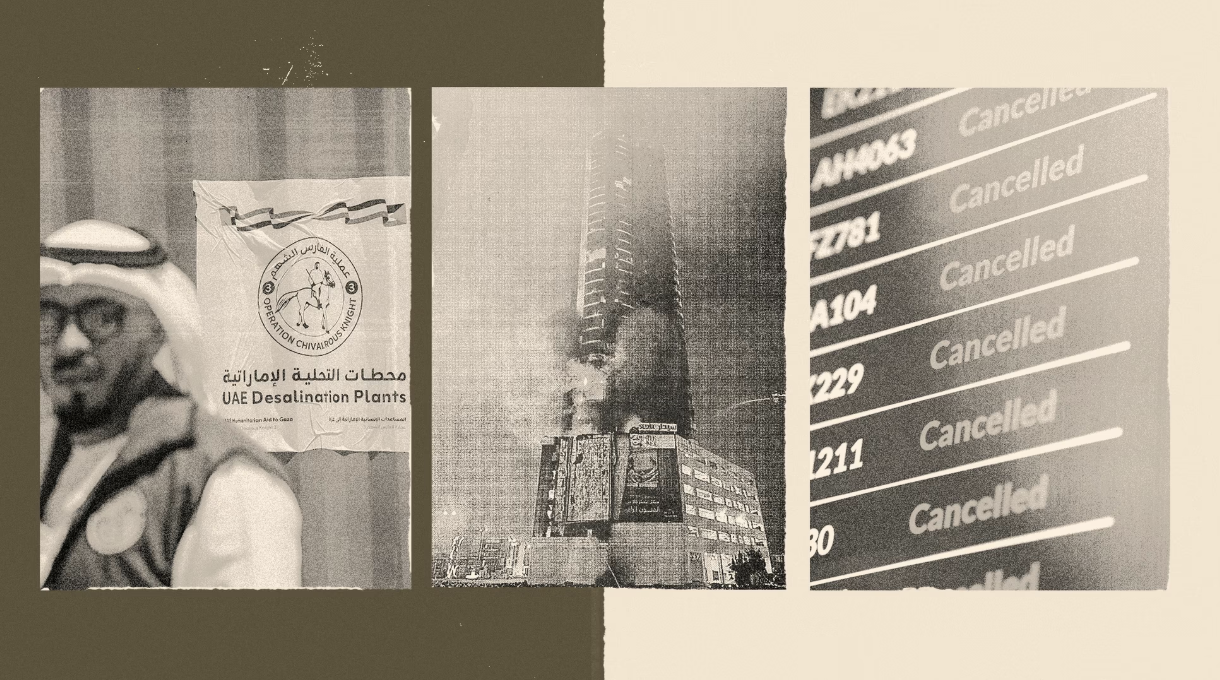
Iran is exposing their vulnerabilities.
From the moment the first Iranian missiles appeared in the sky over the Persian Gulf this past weekend, the target countries’ effort to intercept them was accompanied by an equally vigorous effort to reassure residents, tourists, and investors that they had nothing to worry about. The president of the United Arab Emirates was filmed calmly strolling through a Dubai mall, and an army of online influencers downplayed the images of burning hotels and closed airports. “Given Europe’s crime rates, Dubai is statistically safer even with missiles flying,” Pavel Durov, the CEO of the messaging app Telegram, wrote on X. “Can’t wait to be back.”
But even the optimists acknowledge that the longer the war goes on, the more the Gulf region’s extraordinary vulnerabilities will be exposed. The risks to the UAE, Saudi Arabia, Qatar, Bahrain, and Kuwait go beyond interrupted oil and gas sales: In an arid region with few other resources, everyone is dependent on a daily influx of food and desalinated water along supply routes and pipelines that could be struck from the air. The Gulf has transformed in the past half century from a sparsely populated desert into a postmodern hub of migration and commerce with some 60 million residents. All of that prosperity rested on the slender premise that Iran would never do what it is doing now.

