

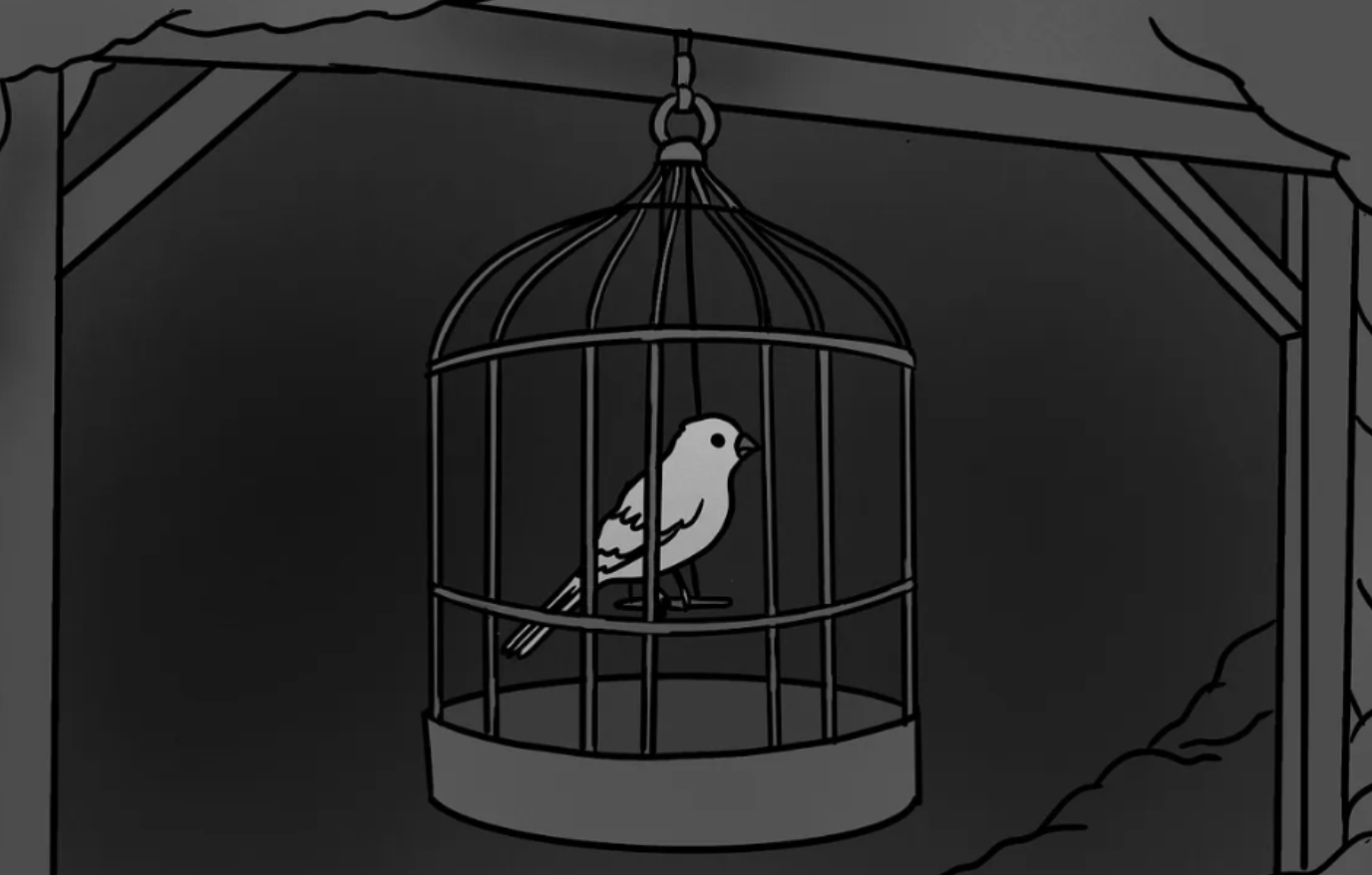
Sometimes the canary in the coal mine is an early warning system. Other times, a dead canary is a false positive that causes panicked miners to stampede to the surface, crushing each other in the rush for air that was never poisoned. The panic is the poison.
Currently, global markets are pricing in the economic fallout of the U.S.-Israel war on Iran and the near-closure of the Strait of Hormuz — a chokepoint for 21% of the world’s oil and 20% of global liquefied natural gas. Equity markets in the EU, India, Japan, South Korea, and the UAE have declined 8% to 17% since February 28. Oil hit $127/barrel. The VIX spiked to 42 (anything above 30 signals panic). Former Defense Secretary Don Rumsfeld would’ve called this a “known known” — we saw it coming, we just didn’t stop it.
But known knowns don’t kill markets. Unknown unknowns do.
September 11th wasn’t on anyone’s risk model. The 2008 subprime mortgage crisis was “contained to subprime,” until Lehman collapsed and nearly took the global financial system with it. COVID-19 was “just a flu” until we shut down the world economy for two years.
The pattern is always the same: We’re staring at the obvious threat (oil prices, inflation, recession) while the real contagion is hiding in plain sight, waiting to metastasize. So let’s talk about the market collapse scenario nobody’s pricing in — the one that doesn’t show up in Bloomberg terminals or Goldman Sachs reports until it’s already eating the global financial system from the inside out.

Oil Shock
On the Paramount+ show Landman, oil fixer Tommy Norris (Billy Bob Thornton) describes the oil market’s Goldilocks nature: “You want oil to live above $60 a barrel, but below $90. Gas gets up over $3.50 a gallon, it starts to pinch. Oil hits $100, every product in America has to readjust its price.” U.S. gas prices reached $3.70 per gallon this week, prompting fears of 1970s-style stagflation and anxiety among Republicans, as the party in power typically pays a political price in an economic downturn. Neither of these outcomes is likely to lead to additional economic shocks as the markets have already priced in these scenarios. American leadership looks out the window and sees itself, and a world that reacts as we’d hope/expect. First off, the Trump administration is just so incredibly incompetent as to not recognize, in war, the enemy gets a say. Another blind spot? A: The rest of the world. Specifically, emerging economies … where governments are already rationing fuel.
The question isn’t where oil prices peak, but how long they remain elevated. As one analyst told Bloomberg, “The biggest risk in the market is the Strait of Hormuz remaining constrained for a longer stretch and the market feeling the U.S. and its allies have a limited capacity to alter the dynamic.” Some signs that risk may be underappreciated: Last week the U.S. and other International Energy Agency members released 400 million barrels of oil from their reserves — the largest distribution in history. This week, Trump asked NATO, Japan, South Korea, and even China to send their navies to help open the strait; they declined. Turns out, showing a total lack of respect for your allies weakens an alliance. Meanwhile, Trump added shavings of shit to his shit salad by suspending sanctions on Russian oil, undermining Ukraine’s war effort. Finally, Treasury Secretary Scott Bessent told CNBC the U.S. is “letting” Iran continue to ship its oil via the strait to supply the rest of the world. If it sounds like Trump is flailing, trust your instincts.
Death Zone
Above 26,000 feet, the human body cannot acclimatize — it can only deteriorate. The world’s most fragile economies have been living in the financial equivalent of the death zone for years: Unsustainable debt, thin reserves, and no margin for error. When oil prices spike, energy-dependent emerging economies get hit from three directions at once. The cost of importing energy rises, their currencies weaken against the dollar — oil is priced in dollars and everyone needs more of them — and the investors who lent them money start doing the math. That last part is the killer, as dollar-denominated debt is a hidden oil bet. When a country borrows in dollars, it’s implicitly betting that its local currency won’t weaken. Oil price spikes strengthen the dollar and crush local currencies simultaneously, making the country’s debt more expensive to service at exactly the moment it’s least able to pay it. That’s not one problem, it’s the same problem expressed twice. Since the war began, oil has spiked and the dollar has hit a 10-month high. Essentially, Trump ordered the surf and turf and, when the bill arrived, asked the server to split it 193 ways.

Outbreak
It’s often said that when America sneezes, the world catches a cold. For Bangladesh, Egypt, Pakistan, and Sri Lanka, this war is the equivalent of RFK Jr. dictating health policy to an unvaccinated population. A week into the war, Egyptian President Abdel Fattah el-Sisi said his country is in a state of “near-emergency.” Domestic fuel prices have spiked 17%, the Egyptian pound has declined 11% against the dollar, and traders have sold an estimated $5 billion to $8 billion in Egyptian bonds. A Goldman Sachs analyst told Bloomberg that Egypt is “exposed, but more resilient” than in previous crises, citing the country’s $52 billion in currency reserves. But according to Khalid Azim at the Atlantic Council, Egypt holds enough economic and geopolitical importance that, “if financing conditions tighten or external shocks intensify, stress in Egypt could serve as an early signal that broader financial instability is beginning to emerge across the region.”
Pakistan may be the most symptomatic patient on the ward. Just six days after the war’s start, the Pakistani government raised fuel prices 20% to stop hoarding. Meanwhile, the country carries external debt equal to 315% of its export revenue — meaning for every dollar of value created abroad, it’s already promised three to a foreign creditor. That’s not an economy; it’s a pawn shop selling grandma’s fillings. Pakistan’s equity markets are down 21% year-to-date, while its dollar bonds are down 5% since the start of the war. Exacerbating the problem, long-running border tensions with Afghanistan erupted into war last month. As one analyst told Bloomberg, Pakistan is experiencing “the double shock of a military and an oil price surge.” According to Pakistan’s army chief, the border war could end … just as soon as the Taliban ceases to support militants. Good luck with that. None of this is new for Pakistan, however. The IMF is less a lender of last resort to the country than a permanent fixture of its financial architecture, having provided 24 bailouts since 1958. The 25th check may already be in the mail.
Sri Lanka is the ghost of Christmas future. It already completed the full cycle — dollar debt, energy dependence, currency collapse, IMF bailout, political implosion — and is being asked to absorb another generational shock before it’s recovered from the last one. The island nation is also recovering from a 2025 cyclone that caused $3.5 billion in damage. On the positive side, Sri Lanka has 1% to 2% inflation and is predicted to see GDP grow by 5% this year. Central Bank Governor Nandalal Weerasinghe told Bloomberg Sri Lanka is in a “good position” to absorb price shocks from the Middle East war … assuming the conflict ends in five or six weeks. In the meantime, the country is rationing fuel.
Then there’s Bangladesh, which imports 95% of its energy. The government lifted fuel restrictions after nine days of rationing, not because the situation had improved, but to celebrate the end of Ramadan. That doesn’t make economic sense, as Bangladesh risks blackouts and the collapse of its garment industry, the source of 85% of its exports. But in a country fresh off a 2024 student-led revolution that leveraged outrage over a previous financial crisis, the political options are a choice between awful and worse: It can use the military to guard fuel depots, or placate the population and hope the crisis in Iran ends before the summer heat spikes energy demand.

Contagion
In 1997 the Thai Baht collapsed. On its face, Thailand’s economic meltdown was containable … until it wasn’t. Within months, the crisis had spread across Asia, wiping out equities by 70% and sending $80 billion in foreign capital fleeing the region. The pathogen was fear. Banks didn’t stop to calculate losses in each country, they chose instead to pull back all at once. Thirteen years later, Greece — representing just 2% of eurozone GDP — threatened the entire European economy, not because it was too big to fail, but because European banks had pledged Greek debt as collateral, packaged it with other assets, and built a financial architecture that had no firewall once the first bond was written down. The question markets asked wasn’t “how much Greek debt does Deutsche Bank hold?” It was “what else is on their balance sheet that we don’t know about?”
I believe Bangladesh, Egypt, Pakistan, and Sri Lanka each have the potential to be patient zero. Among European banks, HSBC and Standard Chartered are most exposed. The Middle East accounts for 9% of HSBC’s revenue and 12% of Standard Chartered’s profit before tax — different metrics, same direction of risk. Barclays, BNP Paribas, Deutsche Bank, ING, and Société Générale have limited exposure, at less than 1% of revenue. The danger, however, is one the markets can’t see. The IMF’s Global Financial Stability Report, published just months before the war began, warned explicitly about “limited visibility into balance sheets and the interconnectedness of nonbank financial institutions.” Debt crises share a common feature: The threat isn’t the institution or nation that defaults first, but the opaque financial instruments that make everyone else an unwitting co-signer. The unknown unknowns aren’t the emerging economies, they’re derivatives in Zurich, London, or New York that nobody stress-tested for $110 oil.
Infection
I was a teenager during the two major oil shocks of the 1970s. Those shocks weren’t abstract basis points; they upended my mother’s household math — take the bus vs. the car, wear sweaters instead of raising the thermostat. There are hundreds of millions of mothers in Bangladesh, Egypt, Pakistan, and Sri Lanka doing the same math right now. The bankers in London and New York will be fine, but for millions of kids in emerging markets, studying will cease at sunset.
Life is so rich,

P.S. Join me live on Substack on Wednesday March 25 at 1 p.m. ET, where I’ll be discussing my latest book, Notes on Being a Man, and answering your questions about the crisis facing young men. Prof G+ subscribers can sign up here.

