

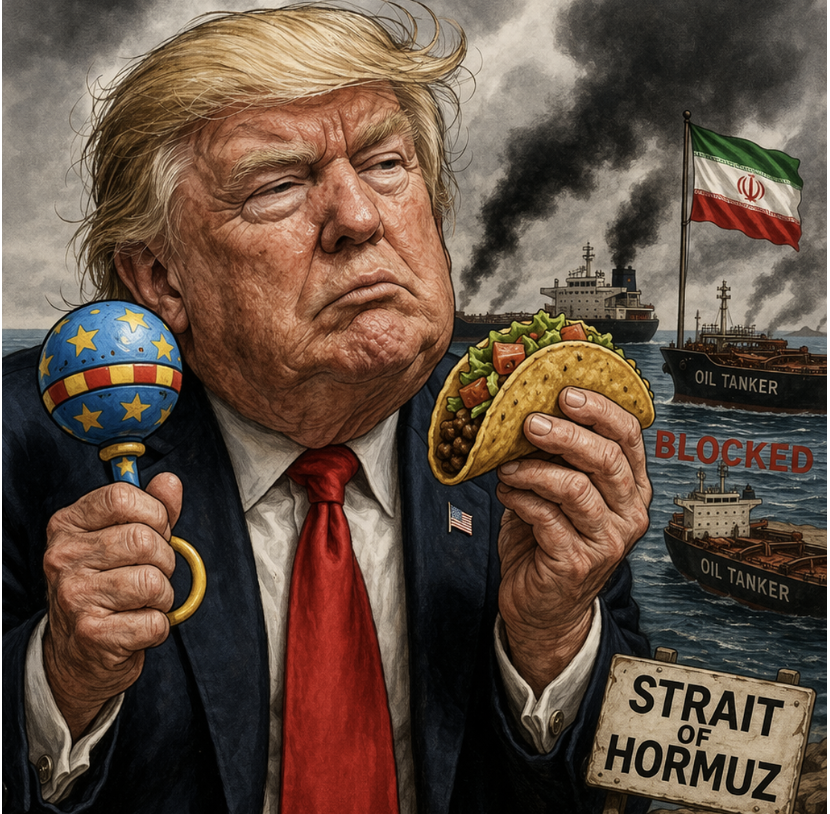
How Trump went from saying Strait of Hormuz ‘will open itself’ to acknowledging Iran’s power to control the waterway
If Iran doesn’t comply? Trump has said he’ll respond “quickly and violently.”
But in spite of his repeated demands, Iran has held the line and continues to police shipping in the area, dropping ship passage to a tiny fraction of where things stood before the war.
Trump’s approach to the Strait of Hormuz has followed a repeated pattern: issue a maximal threat, set a hard deadline, then retreat when reality intervenes. What begins as certainty — “it will open itself” or face overwhelming force — turns into delay, negotiation, or tacit acknowledgment of Iran’s control. The result is an erosion of credibility and a growing perception that Iran holds more leverage. Markets are not reassured that a deal will get done — especially as repeated reversals continue to unfold against a backdrop of falling prices.
Taco Timeline
March 9 – Says Strait will “remain safe” → hours later threatens Iran will be hit “20x harder” if oil flow disrupted
March 10 – Issues second ultimatum focused on mines / interference
March 13 – Announces strikes on Kharg Island → threatens escalation to oil infrastructure if shipping disrupted
Mid-March – Seeks international help policing the Strait → shortly after reverses, saying “WE DO NOT NEED THE HELP OF ANYONE”
Mid-to-late March – Claims Strait will “open itself” (minimizing Iran’s leverage)
~March 22 (last Saturday) – 48-hour ultimatum: open Strait or U.S. will “obliterate” power plants
~March 24–25 – Walks back ultimatum citing “productive conversations”
March 26 – Cabinet meeting: acknowledges Iran is controlling shipping and beginning to charge passage fees
March 26 – Notes limited ship passage and praises cooperation (“we were dealing with the right people”)
March 27 – Extends deadline to April 6, delaying threatened strikes
Late March – Raises possibility of ending hostilities and leaving Hormuz situation unresolved

