

Trump’s ceasefire deal with Iran
By Ian Bremmer
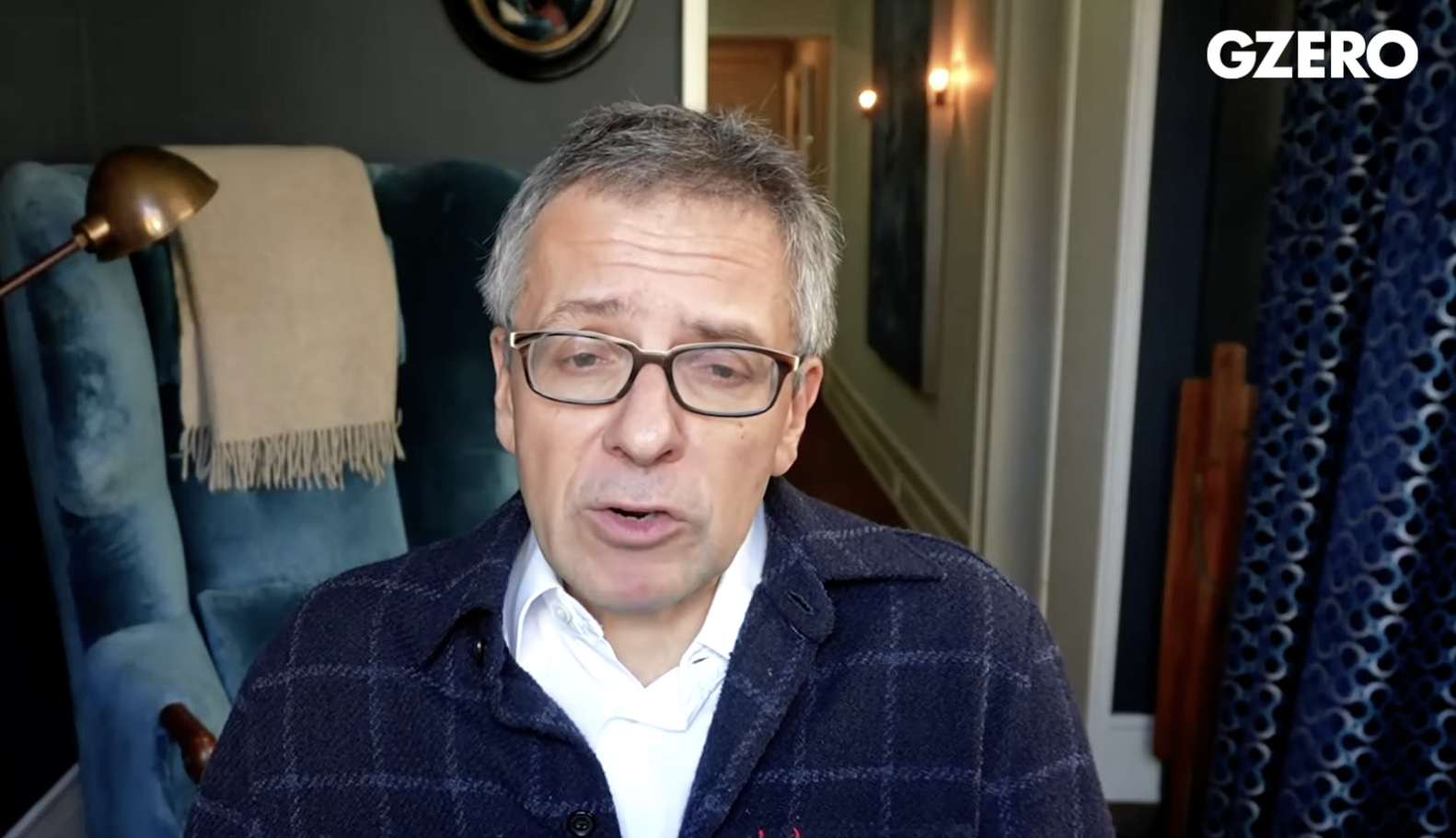
In this “ask ian,” Ian Bremmer breaks down the newly announced two-week ceasefire between the US and Iran and whether it can hold.
Timeline
0:00 – Ceasefire announced; sharp reversal from prior escalation
0:34 – Trump declares victory and unilaterally de-escalates
0:59 – Iran maintains control demands over Strait of Hormuz
1:39 – No real U.S.–Iran agreement on shared control
1:53 – Immediate reduction in escalation risk
2:19 – Early signs of ceasefire instability (Lebanon confusion)
2:40 – Israel continues heavy strikes in Lebanon
3:12 – Regional splits emerge (UAE vs Gulf states)
4:00 – Key improvement: U.S. and Iran not striking each other
4:36 – Ceasefire may hold because Trump controls the narrative
5:14 – “Regime change” claim not reflected in reality
5:36 – Nuclear issue unresolved
6:05 – U.S. underestimated Iranian missile capabilities
7:28 – Core issue: long-term control of the Strait
8:28 – Future conflicts likely more costly for the U.S.
8:58 – Ceasefire reduces global economic risk
9:29 – No winners; regional damage widespread
10:05 – Both Iran and U.S. weakened; alliances strained
10:53 – Durability uncertain; watch regional actors
11:23 – Risk of decentralized actors breaking ceasefire
11:48 – Conclusion: improved situation but still fragile
Transcript
Hi everybody, Ian Bremmer here. Big news out of the war in Iran: an announcement of a two-week ceasefire. This is a big change, almost a 180 from President Trump. Not entirely surprising—earlier he had declared that Iranian civilization might be over within a very specific timeframe. He escalated maximally before eventually climbing down.
This was frankly the best-case scenario for weeks: that Trump would declare victory unilaterally, regardless of Iran’s terms, and reduce the conflict so reconstruction and economic normalization could begin. The ceasefire is Trump’s. Iran hasn’t really changed its demands. They still want access to and influence over the Strait of Hormuz. They are willing to allow ships through if those ships effectively pay a toll.
Trump is now saying the strait must be completely open, but if Iran is charging a toll, that implies control. If this is described as a joint arrangement, it suggests shared control between the U.S. and Iran, which is not actually what exists. There is no real agreement here—this is a unilateral climbdown by the United States.
That said, it reduces the likelihood of Iranian retaliation, meaning less risk of major infrastructure damage, tanker attacks, and broader escalation.
There are already signs of strain. There were reports about the Lebanon front that were quickly contradicted, and we’ve since seen heavy Israeli strikes continue, including in Beirut. Israel is clearly continuing its war aims against Hezbollah regardless of what happens with Iran.
There are also early, unconfirmed indications that the UAE may have been involved in strikes on Iranian energy infrastructure. This highlights a regional divide: countries like Saudi Arabia and Qatar want the war to end, while Israel, the UAE, and Bahrain have been more supportive of continued pressure on Iran.
Iran has also carried out strikes on an oil terminal in the UAE, claiming retaliation. Still, the key point is that the U.S. and Iran are not striking each other 12 hours into the ceasefire, which is a meaningful improvement.
There’s a reasonable chance this ceasefire holds because Trump can declare victory and move on. Since this was his war—he chose the timing, scope, and objectives—he can also decide it’s complete. He has already framed it as achieving regime change, though that’s not reflected in reality. Iran’s leadership remains, and the country is not fundamentally transformed.
There are also claims about removing enriched uranium from sites in Iran, but there is no actual agreement in place, and even if there were, execution would be extremely difficult. Still, if Trump presents this as achieved, it reduces the need for further strikes.
Meanwhile, the U.S. military has growing concerns. Iran appears to have more advanced missile capabilities than expected—longer range and more effective at evading defenses. This has made the Pentagon hesitant about near-term ground operations.
Despite the ceasefire, U.S. forces are still moving into the region. Additional carrier groups and troops are being deployed, and plans remain in place. Trump could still change course.
The central unresolved issue is the Strait of Hormuz. The question is whether the U.S. is willing to accept a situation where Iran effectively controls which ships pass through. Iran could frame tolls as reconstruction funding, while asserting dominance over the strait. Other countries might accept this arrangement, but it would increase the long-term cost of future U.S. intervention.
The immediate takeaway is that the ceasefire is positive. It reduces the risk of a major global economic shock that could have rivaled pandemic-level disruption.
But there are no real winners. Gulf economies have been hit, and even countries benefiting from rerouted oil flows face long-term damage to investment confidence. Iran is significantly weakened, with damaged infrastructure and leadership losses. The United States is also weakened, having initiated a war it could not fully achieve its goals in, and facing strained alliances.
This also sends a signal to countries like Russia and China that the U.S. may struggle with sustained conflict.
The big question now is whether the ceasefire holds. Watch Israel, the UAE, and proxy groups like Hezbollah and the Houthis. There is also the risk that Iran itself cannot fully control all actors on its side, leading to continued attacks even if leadership wants restraint.
So there are still major risks, but the situation is clearly better than it was over the past several weeks. And for now, that counts as good news.

