

This is a summary of the transcript from Peter Zeihan’s “What Does This Ceasefire Actually Mean? ~ Apr. 9, 2026”, which is subscription-based so I can’t share the video for a week. You can find more from Zeihan here >
“What Does This Ceasefire Actually Mean? ~ Summary
Peter Zeihan frames the current ceasefire between the United States and Iran as increasingly inconsistent and potentially destabilizing, especially when compared to the long-standing U.S. negotiating position. For years, across multiple administrations, the United States has held three core demands in dealing with Iran: no long-range missile program, no uranium enrichment (effectively blocking any path to a nuclear weapon), and a complete end to Iran’s support for sectarian militant groups throughout the Middle East. These have functioned as non-negotiable pillars of U.S. policy.
Iran’s position, however, has always been the inverse. Tehran has insisted on maintaining control over the Strait of Hormuz, continuing its missile development, preserving its uranium enrichment capabilities, and retaining its network of regional proxy groups—what it calls the “axis of resistance.” These opposing frameworks set the stage for the current conflict and subsequent ceasefire negotiations.
According to Zeihan, just 24 hours before his own self-imposed deadline, Donald Trump rejected all of Iran’s conditions outright, which aligned with traditional U.S. policy. However, in a sharp and confusing reversal, Trump then signaled upon accepting the ceasefire that those same Iranian demands were “things we can talk about.” If taken literally, it would represent a major departure from decades of U.S. strategy—one that could amount to a significant concession of American influence in the Middle East.
Zeihan places this moment in a broader context, arguing that it comes alongside what he characterizes as a wider pullback of U.S. global engagement, including a weakening of alliances. This combination marks a historically significant turning point in American foreign policy.
At the same time, the situation remains fluid. Direct negotiations between U.S. and Iranian officials have not yet truly begun, with the first face-to-face meeting scheduled to take place in Pakistan. Up to this point, discussions have largely been indirect, relying on intermediaries rather than direct engagement. This lack of clarity has allowed both sides to operate under very different interpretations of what the ceasefire actually entails.
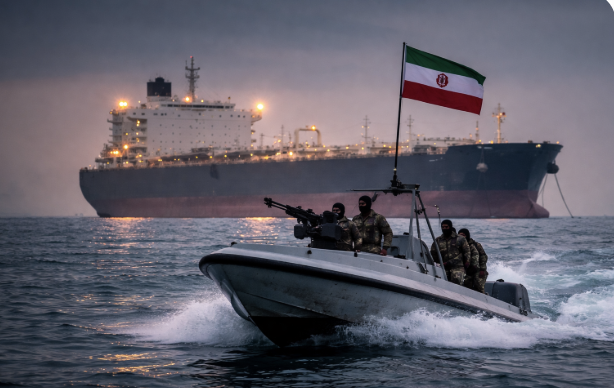
On the ground, Iran appears to be acting decisively based on its own understanding. Zeihan highlights that Iranian authorities have increased oil exports while continuing to exert control over the Strait of Hormuz. Rather than reopening it as a neutral passageway, Iran is reportedly requiring ships to apply for transit, declare their cargo, and pay what amounts to a fee—approximately $1 per barrel or around $2 million per ship—in exchange for partial escort through the region. In effect, Iran is not relinquishing control of the Strait but instead formalizing and monetizing it.
This stands in direct contrast to Trump’s public claim that the ceasefire would result in the Strait being open and free for global shipping. Zeihan emphasizes that this is “clearly not the case,” pointing to a growing disconnect between U.S. messaging and the operational reality in the region. If this gap persists, it risks undermining U.S. credibility while reinforcing Iran’s leverage.
The political fallout is not limited to international perception. Zeihan notes that criticism is emerging even from within Trump’s own political orbit. Figures such as Laura Loomer have publicly condemned the agreement, describing it as a strategic failure and framing it as a major victory for Iran. This internal dissent suggests that the ceasefire is not only controversial abroad but also destabilizing domestically.
Ultimately, Zeihan portrays the situation as highly uncertain and increasingly unpredictable. The upcoming face-to-face talks are likely to be a critical inflection point, where rhetoric will be tested against reality. However, given what he describes as inconsistent decision-making and shifting positions within the White House, he doesn’t offer a clear forecast.
What is clear, in his view, is that the ceasefire is not a resolution but the beginning of a new and potentially more complicated phase—one where the gap between stated policy and real-world outcomes may continue to widen.

