

Courtesy of Pam Martens.
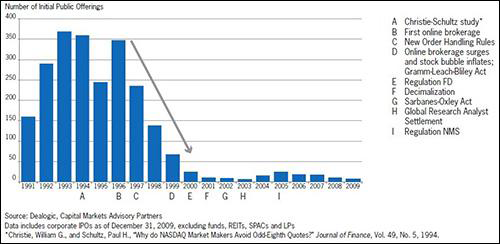
Graph from Grant Thornton Study on the IPO Crisis
On Monday, the SEC announced it was going to study decimalization — that’s the pricing of stocks in pennies instead of using the historic practice of pricing stocks in fractions. What the SEC really means is that it is going to study the death of IPOs on U.S. stock exchanges, how that is contributing to the death of jobs in the economy, and how all of that may rest at the doorstep of high frequency traders who remain in business only because of the pricing of stocks in pennies. If stocks were priced in fractions, it would be far too expensive for high frequency traders to exist.
There are two words to explain this sudden exuberance by outgoing SEC Chair Mary Schapiro. Those two words are: Grant Thornton. The big accounting firm has been making waves with a comprehensive study on the sickly listing of new companies on U.S. exchanges, i.e., IPOs or Initial Public Offerings. One of the key culprits says Grant Thornton is high frequency trading.
It should have been very easy for both Congress and the SEC to figure this out using common sense. If you are an entrepreneur and have built a solid business that is making slow but steady progress, you have two options: continue on the path that is clearly working or list your stock on a public exchange and risk the following: a flash crash, a huge embarrassment on the day you go public as has happened with other high profile listings of late, run the risk there is no interest in the market for your stock and end up humiliating yourself and your family by being delisted and ending up on the pink sheets (a marketplace for delisted or penny stocks).
The majority of trading on exchanges now comes from high frequency trading. What these traders care about is penny pricing – so they can get in and out cheaply; big cap companies that have lots of liquidity – so they can get in and out cheaply. No flack from the SEC – so they can get in and out cheaply.
What the high frequency traders do not care about is the dying IPO market, the U.S. job market, or the competitive future of the United States.
…

