

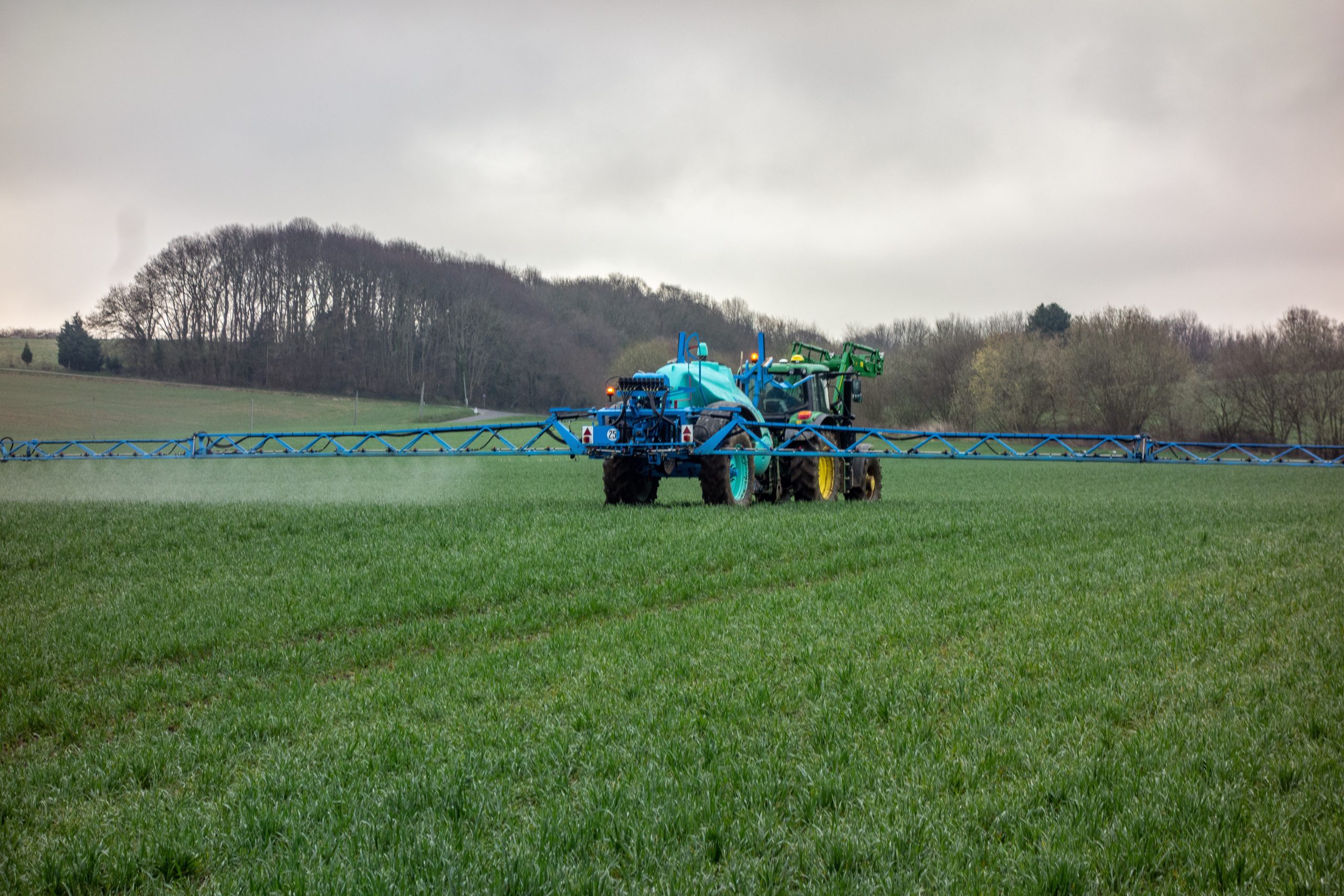
Now that the Strait of Hormuz is shut down due to the Iran war, the impact is beginning to hit global food systems. This is coming in the form of fertilizer production disruptions in the Persian Gulf.
Hey everybody, Peter Zeihan here, coming to you from Colorado, where we are getting a significant unexpected storm.
Anyway, obviously we’re going to talk about the Persian Gulf today. Ever since the straits closed, it’s been a question of how soon before things get really nasty—and now we’re there. We’ve got missile and drone attacks regularly punching through the defensive envelope on the western side of the Persian Gulf, with Kuwait and the United Arab Emirates clearly, if not out, almost very nearly out of interceptors. Things are getting through into those two countries regularly, attacking strategic targets like airports and energy infrastructure.
Today we’re going to talk about the impact that this is going to have on global food supplies, which is pretty damning.
There are three types of fertilizer.
The first is potash, which is a potassium-based fertilizer that is primarily mined. Most of that comes from the Canadian province of Saskatchewan, Belarus in the former Soviet Union, and a bit more from Russia. Those three places account for the vast majority of global production. That supply, thankfully, is not affected.
The second is phosphate, which is basically fossilized bird droppings. Major producers include a small amount from Saudi Arabia—which could be an issue—a lot from Morocco, which seems fine at the moment, and additional supply from Peru and Florida. The Saudi portion is only a single-digit percentage of global supply, so even if it’s impacted, it likely won’t be critical since it can be transported westward by land, even if that’s not ideal.
The third category is where the real problem lies: nitrogen-based fertilizers. These are typically derived from oil-based naphtha products or natural gas. The key player here is Qatar, that small peninsula on the western side of the Persian Gulf.
Qatar’s South Pars natural gas field is one of the largest in the world. They produce condensate there—a hybrid oil-natural gas product—but as a byproduct, they also get massive amounts of natural gas. The lifting cost is effectively negative, and since it’s offshore, it’s very easy to transport to processing facilities.
They use this gas to produce liquefied natural gas, accounting for about 10% of global supply. That’s now gone—the facility has already been hit. Even if the war ended tomorrow, it likely wouldn’t be back online within six months.
More importantly for this discussion, they use that natural gas to produce ammonia, which is then converted into urea—a nitrogen-based fertilizer that can be applied in pellet or powder form. This one facility in Qatar is responsible for about 11% of global urea production. Urea is the primary method used worldwide to apply nitrogen to crops.
There are other nitrogen fertilizers, but they are also ammonia-based, and collectively the Persian Gulf accounts for 30–35% of global ammonia production. All of that has now gone to zero.
Of the three nutrients, nitrogen is actually the one I’m least concerned about in the short term, because it can be produced from either natural gas or oil. Oil can be refined into naphtha, which can then be used to make nitrogen-based fertilizers.
The problem, of course, is that about 20% of global oil supply is offline because of the situation in the Persian Gulf.
In the United States, we’re relatively insulated. We’re a net oil exporter, we have abundant natural gas, and we already produce most of the nitrogen fertilizer we need. We could ramp up production further if market conditions push us in that direction—which they almost certainly will.
But most of the rest of the world cannot do that.
So in the short term, thanks largely to U.S. capacity, we’re probably not going to see massive shortages of nitrogen fertilizers. Prices will go up, but there won’t be outright shortages.
However, if you fast forward 1, 2, 3, 10, 20, or even 50 years, the rest of the world is likely to face a chronic nitrogen deficit from this point forward. That’s before even considering potential shortages in the other fertilizer components over time.
So we should prepare for an environment where global food production first stalls, and then declines—possibly sharply—with some regions affected far more than others.
At the top of the risk list is China, which imports most of the inputs needed to produce fertilizer or imports fertilizer directly. South Asia—particularly India—also looks likely to face significant pressure, unless it can secure direct access to the Persian Gulf. That is a feasible option, but it would require a major shift in India’s security policy.
Now, however, they have a strong incentive to consider exactly that.

