

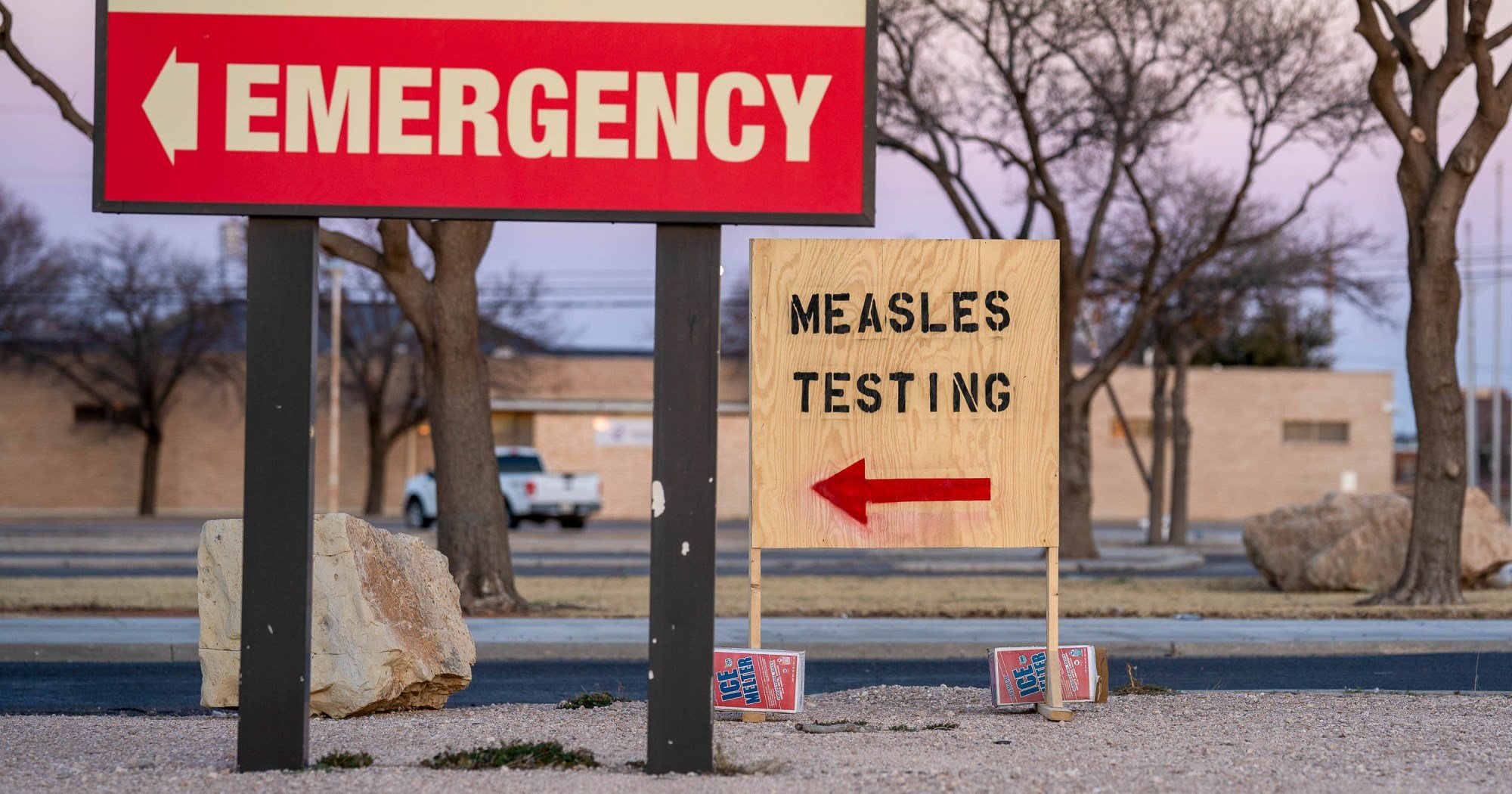
Measles Used to Be in Our Rearview Mirror. Now Cases Are Reaching Record Highs.
In other parts of the world that have let their guard down to vaccine-preventable diseases, long-forgotten scourges have roared back and killed and disabled children.
ProPublica is a nonprofit newsroom that investigates abuses of power. This story first ran in Dispatches, our weekly newsletter from our reporters about their recent investigations. Sign up to receive stories like this one in your inbox every Saturday.
The U.S. recently reached a grim milestone: As of July 23, more measles cases have been reported to the Centers for Disease Control and Prevention than in any year since 1991. It took less than seven months to blow past the three-decade high recorded last year.
This potentially deadly disease is easily prevented. Shots are widely available and, in many cases, free. Still, since the beginning of last year, more than 4,850 people here have been infected, and three have died. Among them were two unvaccinated girls in West Texas whose deaths made national headlines.
It may feel like the continuous stream of cases is just the way things are now. But it is dangerous to shrug off the resurgence of measles. In a story I reported earlier this year, I showed what’s happened in parts of the world that have let their guard down to vaccine-preventable diseases. My reporting found that long-forgotten scourges roared back, killing and disabling children. Even countries that made what seemed like subtle changes to immunization policies suffered disastrous consequences years later.
Babies were born blind, deaf and with intellectual disabilities because their mothers caught rubella in the early weeks of pregnancy. Parents saw why diphtheria used to be known as “the strangling angel of children.” Doctors told me they couldn’t undo the damage when these horrors returned. Modern medicine can do a lot of things, but it can’t reverse paralysis from polio.
The story also showed how Robert F. Kennedy Jr., the nation’s top health official, and President Donald Trump have been transforming a government that for decades promoted the lifesaving benefits of shots into one that sows doubts about their safety. Last week, the president issued another executive order that’s sure to fuel further hesitancy about the shot that has protected children from measles, mumps and rubella for decades.
It’s a sharp departure for a government that, since the 1960s and with bipartisan support, built vaccination programs that shielded kids from deadly and disabling diseases. Federal and state health leaders strengthened those policies based on lessons learned from measles outbreaks. That’s because measles, among the most contagious diseases in history, is almost always the first vaccine-preventable disease to strike when immunization rates fall.
In my many months of reporting for that story, I learned that measles is like the bright dye that plumbers flush through pipes to find leaks in a complex system. The continued appearance of the virus’ telltale rash in state after state since last year warns of cracks in our once-solid protection, leaving communities vulnerable to other deadly contagions.
My reporting also found that access to vaccines may be in peril: Since last year, Kennedy has been considering changes to an obscure but crucial government program that could prompt the few companies that make vaccines for American kids to flee the U.S. market. If that were to happen, even parents who still want vaccines for their kids wouldn’t be able to get them.
A spokesperson for the Department of Health and Human Services said the agency has not limited access to vaccines. In an email, the spokesperson wrote, “Secretary Kennedy believes that trust is rebuilt through an open review of safety data, the willingness to ask the hard questions, and ensuring the American people have all emerging information as soon as we know it.”
Several dozen people who’ve worked on U.S. government vaccination programs here and around the world conveyed to me a sense of foreboding about America. They fear that children will wind up fighting for their lives against infections that have long been preventable.
“I think there always was a worst-case scenario,” said Dr. Melinda Wharton, who retired last September after more than three decades leading CDC immunization programs. “I don’t think I imagined it could or would be this bad.”
Doctors I spoke to told me they had seen images of those diseases in textbooks, but these were problems medicine had solved long ago. They never thought they’d see an actual patient until an unvaccinated child lay before them, gravely ill with one of these ancient scourges.
I’ll never forget what one German doctor, whose hospital treated an unvaccinated boy who later died of diphtheria, told me of the infection: “It was taught as history,” he said.
Here in the U.S., measles was taught as history, too. Now it isn’t.

