

From the Live Member Chat Room:
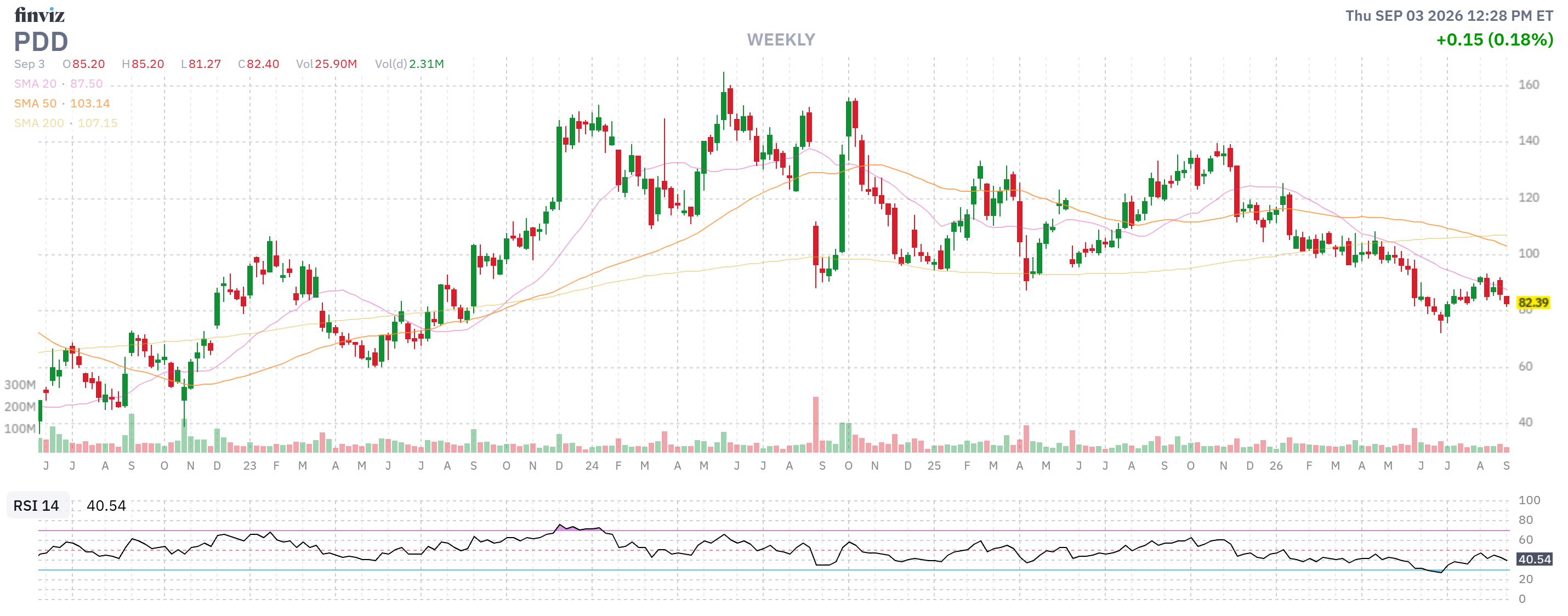
Check out PDD Holdings, who own TEMU and people have been running over tariffs but they are also a huge Transaction Service Company with great growth and about $67Bn of CASH!!! net of debt and their market cap, at $81.73 is only $116Bn.
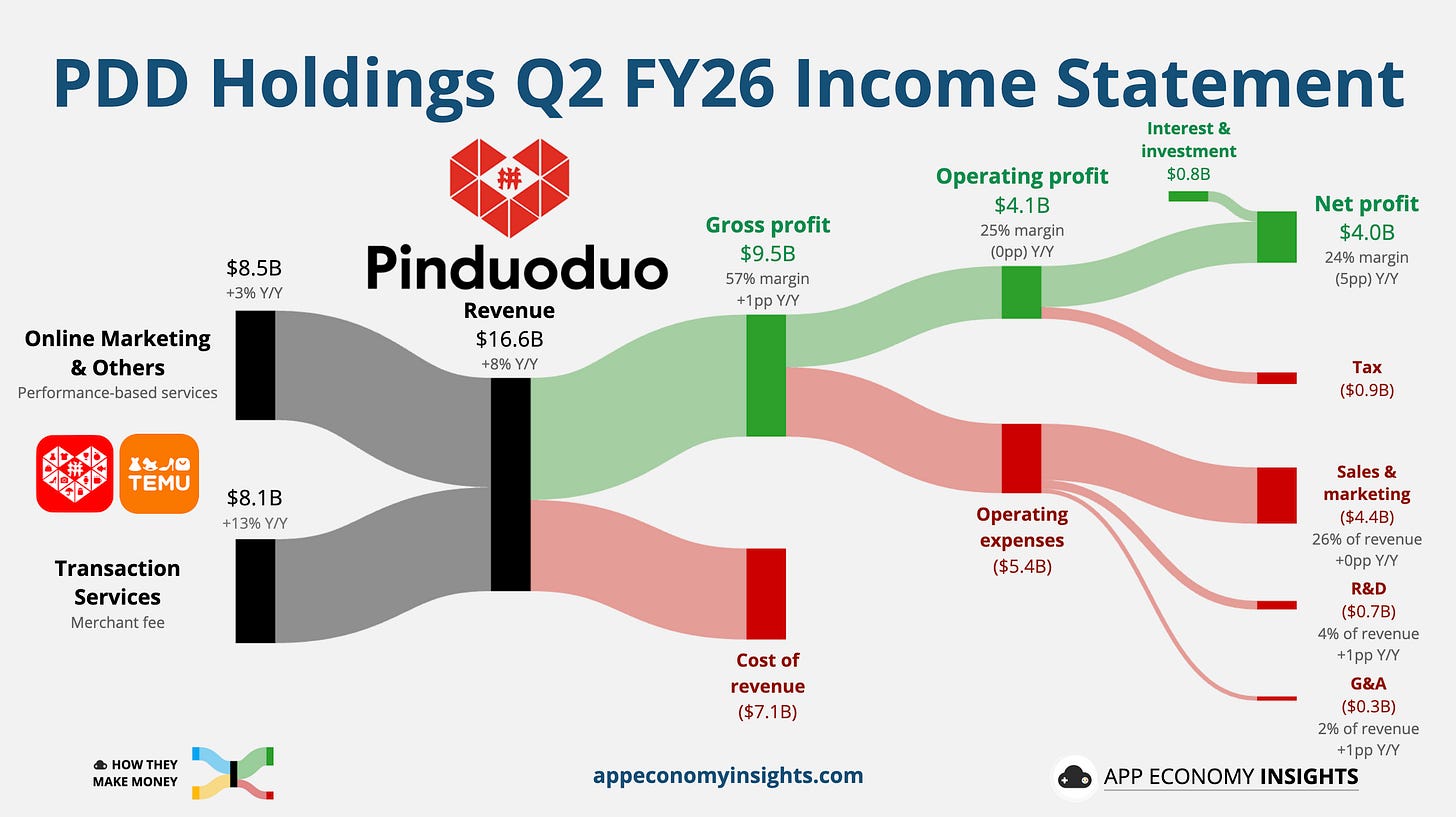
♦️ PDD Q2 revenue rose 8% Y/Y to $16.6 billion ($0.3 billion miss), decelerating from 11% in Q1, while non-GAAP EPADS of $2.85 beat by $0.12.
Both revenue engines remain subdued.
- Online Marketing Services grew just 3% to $8.5 billion.
- Transaction Services grew 13% to $8.1 billion, slowing from 20% in Q1.
Domestic competition remains intense as Pinduoduo battles Alibaba, JD, and social-commerce platforms for increasingly cautious Chinese consumers.
Temu is also losing some of the structural advantages behind its early international expansion. The end of duty-free treatment for low-value parcels in the US and new European import fees are increasing fulfillment costs and reducing the appeal of shipping inexpensive products directly from China. Management warned of slower fulfillment and higher costs in affected markets and is responding by building more local warehousing and fulfillment infrastructure.
Meanwhile, the transformation outlined in Q1 continues. PDD stepped up merchant support, supply-chain investment, platform governance, and R&D, while its new first-party brand initiative is progressing more slowly than initially expected. The balance sheet provides plenty of runway, with cash and short-term investments reaching $67 billion and operating cash flow rising 19% to $3.8 billion.
Bottom Line: Q2 shows that growth is slowing. Pinduoduo’s advertising engine remains sluggish, Temu faces structurally higher cross-border costs, and the first-party push is taking longer to ramp. PDD has enormous financial capacity to fund the transition, but investors are still waiting for evidence that all this spending can restart the growth engine.
🚢What This Actually Means As an Investment Case
The bear case in the summary is fair and well-stated: growth is genuinely decelerating across both revenue engines, Temu’s structural cost advantage is eroding, and the first-party brand initiative is behind schedule.

