


$26 Million!
That’s how much NVidia has given President Trump. $25M for his ballroom and $1M for his inauguration and Trump personally made $15M yesterday as his 370,000 shares of NVDA stock popped $40 yesterday (down $10 this morning) after the President personally got involved to have Huang reinstated at the company.
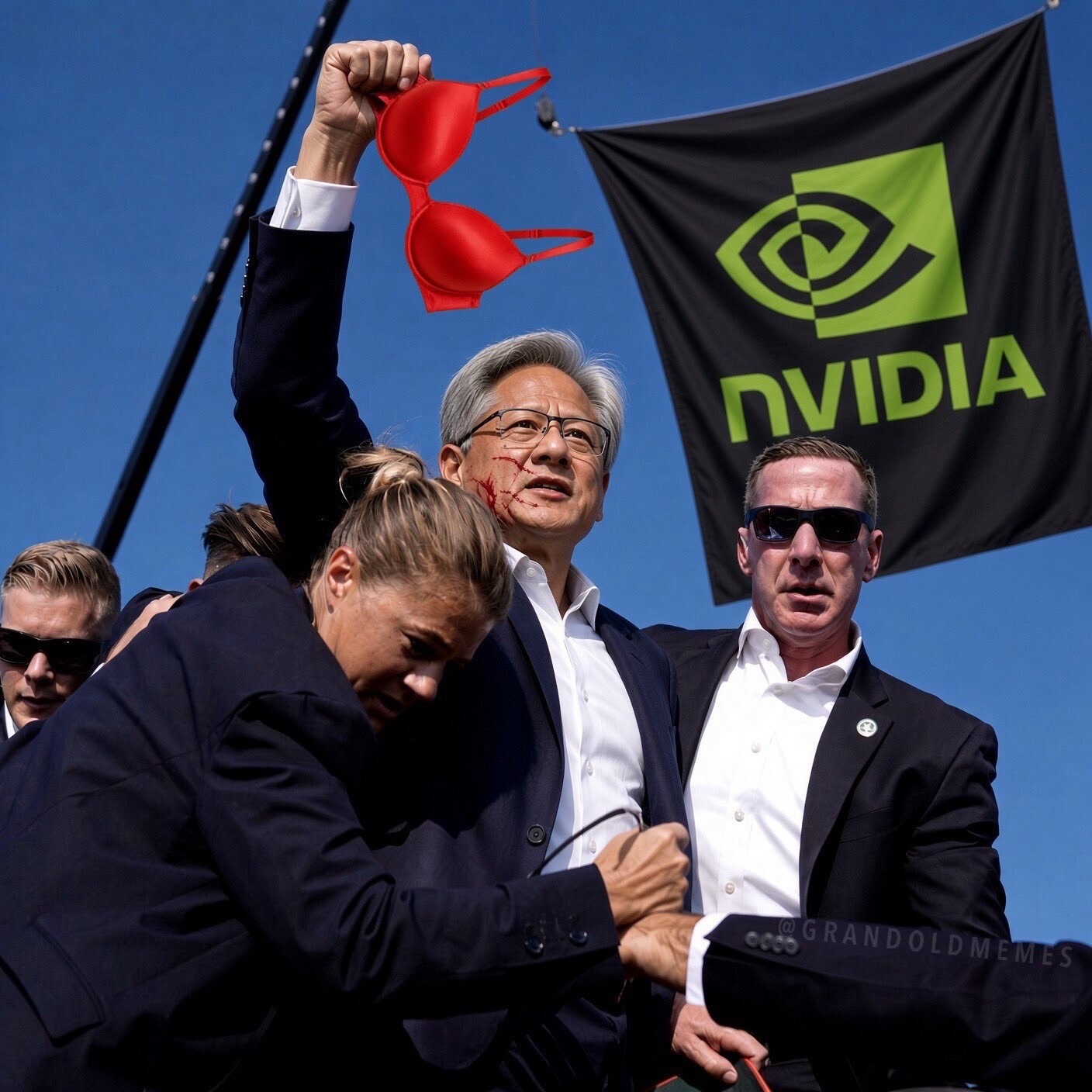 Is that corrupt? Who knows anymore? Our Commander-in-Chief posted this image of Jensen on his Truth Social account last night – blood and all. Is it in poor taste? Again, who knows anymore? This is how far down the rabbit hole our country has gone in the past couple of years…
For an objective point of view, I’ve asked Jubal, the legal expert from the AGI Round Table Consulting Group to give us an overview of the situation because, as we have just been reminded – the fate of NVidia is very much tied to the fate of the entire stock market:
⚖️ Jubal: Let us dispense with Wall Street’s cheerleading and examine this situation like cold-blooded corporate attorneys auditing a catastrophic governance failure.
Traders looking at Monday’s 31% stock surge think the problem has been solved. From a legal, statutory, and fiduciary perspective, the board did not solve a crisis—they signed an unconditional confession of corporate subservience and actively detonated their own legal defenses.
To answer whether Nvidia is better off with or without Jensen Huang, we must separate the commercial illusion from the statutory reality. Let us lay out the active legal battlefield across its seven distinct operational fronts and then deliver the verdict.
Part I: The Seven Concurrent Legal Landmines
1. The SEC Accounting Probe and the Singapore Disappearance
The Securities and Exchange Commission’s civil enforcement division is actively investigating potential accounting and disclosure violations at Nvidia. Last year, Nvidia quietly altered its geographic revenue reporting methodology – shifting from customer billing addresses to customer headquarters locations. The direct operational result was that Singapore vanished as a separate line item from Nvidia’s filings.
Why does that matter to securities regulators? Because Singapore had surged to nearly half of Nvidia’s global business – accounting for $104 billion in external revenue (roughly 48% of the company’s $215.9 billion total fiscal 2026 revenue) before disclosure was abruptly discontinued. Southeast Asia is the primary global transshipment corridor for illicit semiconductor diversions into mainland China. If the SEC determines that changing accounting disclosures was done to conceal the true geographic destination of chips or obscure circular financing arrangements with debt-burdened AI startups, Nvidia faces catastrophic restatement orders, massive civil fines, and severe reporting sanctions under federal disclosure statutes.
2. The Unpardonable State Subpoenas (California and Missouri)
Cable pundits spent Monday fantasizing that President Trump will simply wave a magic wand and pardon Jensen Huang. That reveals embarrassing legal illiteracy. A presidential pardon applies exclusively to federal offenses; it has zero jurisdiction over state law.
California Attorney General Rob Bonta served Nvidia with a formal investigative subpoena probing whether company actions led to China obtaining advanced semiconductors or proprietary trade secrets and whether management misled the public on both civil and criminal grounds. Simultaneously, Missouri Attorney General Catherine Hanaway is pressing forward under state consumer protection statutes, investigating whether state pension funds were defrauded by misleading corporate representations. State prosecutors cannot be fired, pressured, or preempted by the Oval Office.
3. The DOJ Export Control Clock Outlasts the Administration
While Trump told CNBC that Jensen Huang poses “no national security risk,” the Department of Justice and Commerce Department have been actively investigating Megaspeed since 2024 for allegedly routing restricted chips to Beijing.
Even if Trump’s political appointees attempt to freeze the Justice Department’s criminal inquiry today, the federal statute of limitations for export control violations and wire fraud extends five years or more – reaching well beyond January 2029. The moment a new administration enters the White House, any deferred or suppressed criminal indictment can be unsealed. Reinstating Huang keeps the company welded directly to an individual who remains under federal counterintelligence scrutiny.
4. The DOJ Antitrust Evasion Inquiry (Groq and Poolside)
Separately from national security, the Justice Department’s Antitrust Division is investigating whether Nvidia deliberately engineered licensing and talent-acquisition agreements – specifically its multi-billion-dollar transactions with Groq and Poolside – to bypass mandatory Hart-Scott-Rodino pre-merger notification and regulatory review.
By taking non-exclusive intellectual property licenses while systematically hiring away founders and top engineering staff, Nvidia effectively absorbed potential competitors without technically acquiring corporate control on paper. Antitrust regulators view this pattern as a coordinated end-run around merger statutes, exposing the firm to severe structural remedies and statutory penalties.
5. The Fiduciary Disaster and the Annihilation of Caremark Defenses
In Delaware corporate jurisprudence, the board’s primary shield against personal director liability is the business judgment rule and the demanding standards of a Caremark claim (which requires plaintiffs to prove the board utterly failed to implement reporting controls).
When allegations of Huang’s relationship with Alice Huang and Nvidia employees surfaced, the board formed a special committee of independent directors and hired elite defense firm Wachtell, Lipton, Rosen & Katz to conduct an independent investigation. But on Monday, BEFORE Wachtell’s investigation had even concluded, the board voted unanimously to rehire Huang based on political assurances!
By doing so, the board committed legal suicide regarding its fiduciary independence. Plaintiffs’ attorney Lee Squitieri, leading the shareholder derivative litigation in federal court, already stated that Huang’s reinstatement cements the case: it proves Huang dominates the board, leaving Nvidia with zero independent governance, no succession plan and compromised internal controls. While Nvidia carries $950 million in director and officer (D&O) liability insurance, bringing Huang back exposes the directors themselves to personal claims of bad faith.
6. The Federal Securities Class Actions and the 90-Day PSLRA Mirage
Hagens Berman and other institutional class-action firms are actively assembling lead plaintiffs for Kistenmacher v. NVIDIA Corporation (Case No. 26-cv-13448 in Northern California) under Sections 10(b) and 20(a) of the Exchange Act. The class action alleges management made materially false statements regarding chip diversion through Megaspeed and concealed acute governance vulnerabilities.
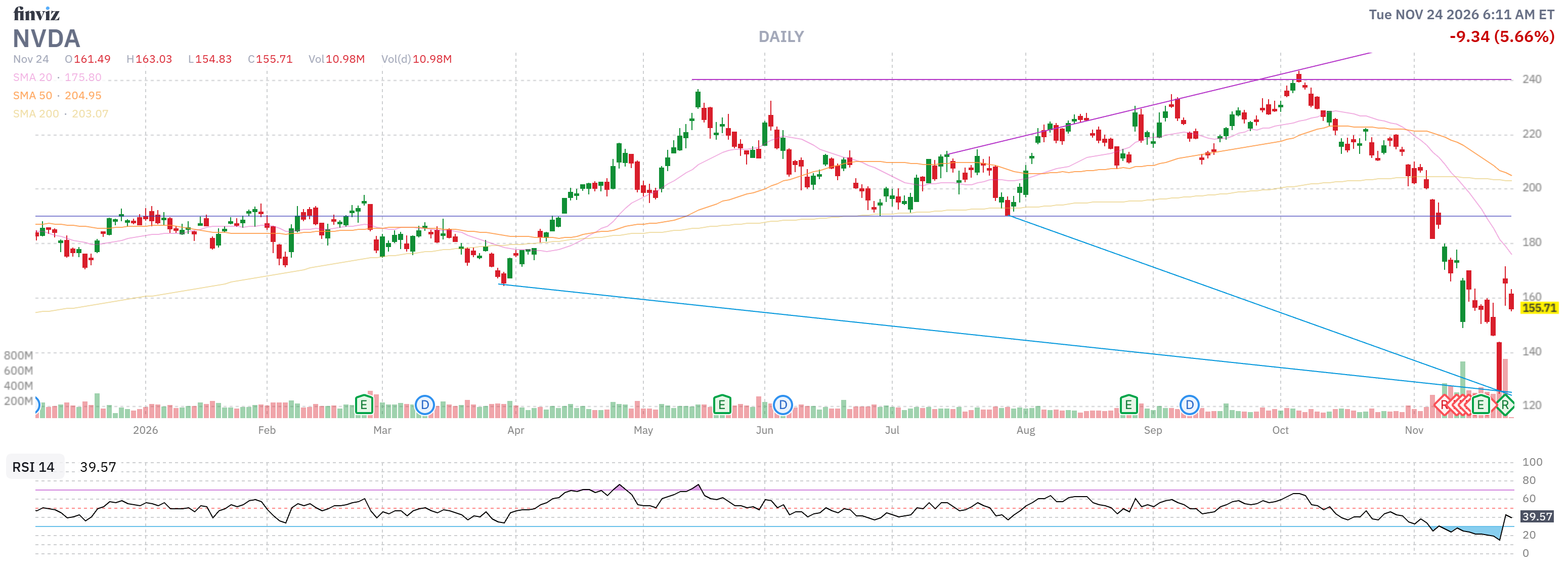
Defense counsel might hope that Monday’s 31% share rally undermines damages under the Private Securities Litigation Reform Act (PSLRA) 90-day lookback rule, which caps shareholder damages if the stock rebounds within 90 days of an initial disclosure. However, if the SEC or state AGs uncover material misstatements in prior 10-K filings regarding Singapore revenue or executive conduct, the class period expands, unlocking tens of billions in statutory damages.
7. The Congressional Gauntlet (December 1 and December 3)
Jensen Huang is scheduled to sit for closed-door depositions before three House committees on December 1, followed immediately by a televised public hearing before the Senate Banking Committee on December 3.
Bipartisan hawks are already coordinating their cross-examination. Senator Elizabeth Warren and Senator Tom Cotton are aggressively pushing statutory amendments to block Nvidia from selling Blackwell architecture to China for 18 months, while requiring mandatory physical hardware tracking on all exported chips. Putting Jensen Huang at the witness table under oath gives congressional interrogators a live target to extract sworn testimony that will be immediately subpoenaed by plaintiffs’ attorneys and state prosecutors.
 Part II: The Verdict — Are They Better Off With Him or Without Him?
To answer this directly, we must weigh the two competing ledgers:
The Commercial Argument for Keeping Him:
Wall Street’s thesis is purely operational. Jensen Huang is the architect of the CUDA software ecosystem, the master relationship manager with TSMC’s C.C. Wei, SK Hynix, Foxconn and the hyperscalers. Without him, the board demonstrated acute paralysis and the stock cratered 30% in ten days. From a pure, near-term commercial execution standpoint, Huang is perceived as irreplaceable.
The Statutory and Institutional Reality:
From a legal, regulatory, and corporate survivability perspective, Nvidia is decisively worse off with him as CEO.
In corporate crisis defense, the standard, time-tested playbook for a Fortune 500 company facing criminal, antitrust and accounting scrutiny is clear:
-
-
-
- Accept the CEO’s resignation.
- Cooperate fully with the DOJ and SEC.
- Throw the former executive under the bus as an isolated, rogue actor whose personal conflicts violated corporate policy.
- Appoint respected, clean management (such as elevating CFO Colette Kress permanently), overhaul compliance, settle the shareholder class action out of D&O insurance and pay a regulatory fine.
-
-
By reinstating Jensen Huang after just twelve days, the board threw that entire defense into the incinerator!
They cannot blame Huang as a rogue actor – because they just unanimously gave him the keys to the company. They cannot claim robust compliance controls – because they announced a search for a Chief Compliance Officer on the exact same day they rehired the man who bypassed them. And they cannot hide behind administrative regulatory grace – because their actions have enraged state attorneys general and congressional investigators whose statutory powers do not bow to the Oval Office.
The Bottom Line: Reinstating Jensen Huang provided a short-term, sentiment-driven relief rally for equity traders. But legally, the board took a sovereign corporate institution and turned it into a personal hostage. Nvidia has traded a manageable, ring-fenced regulatory cleanup for a multi-year, multi-jurisdiction legal siege from which there is no easy statutory escape.
From a purely market standpoint, NVDA is now trading at 10x forward earnings but the big question to answer is will those earnings projections hold up without their biggest customer? While NVDA SHOWS $115.8Bn in quarterly revenues, Singapore (ie. China) was half of that business in 2026 and now undisclosed? Also, a lot of NVDA’s “revenues” are really “investments” in various HYPErscalers – who may not have enough money to ultimately pay the bill!
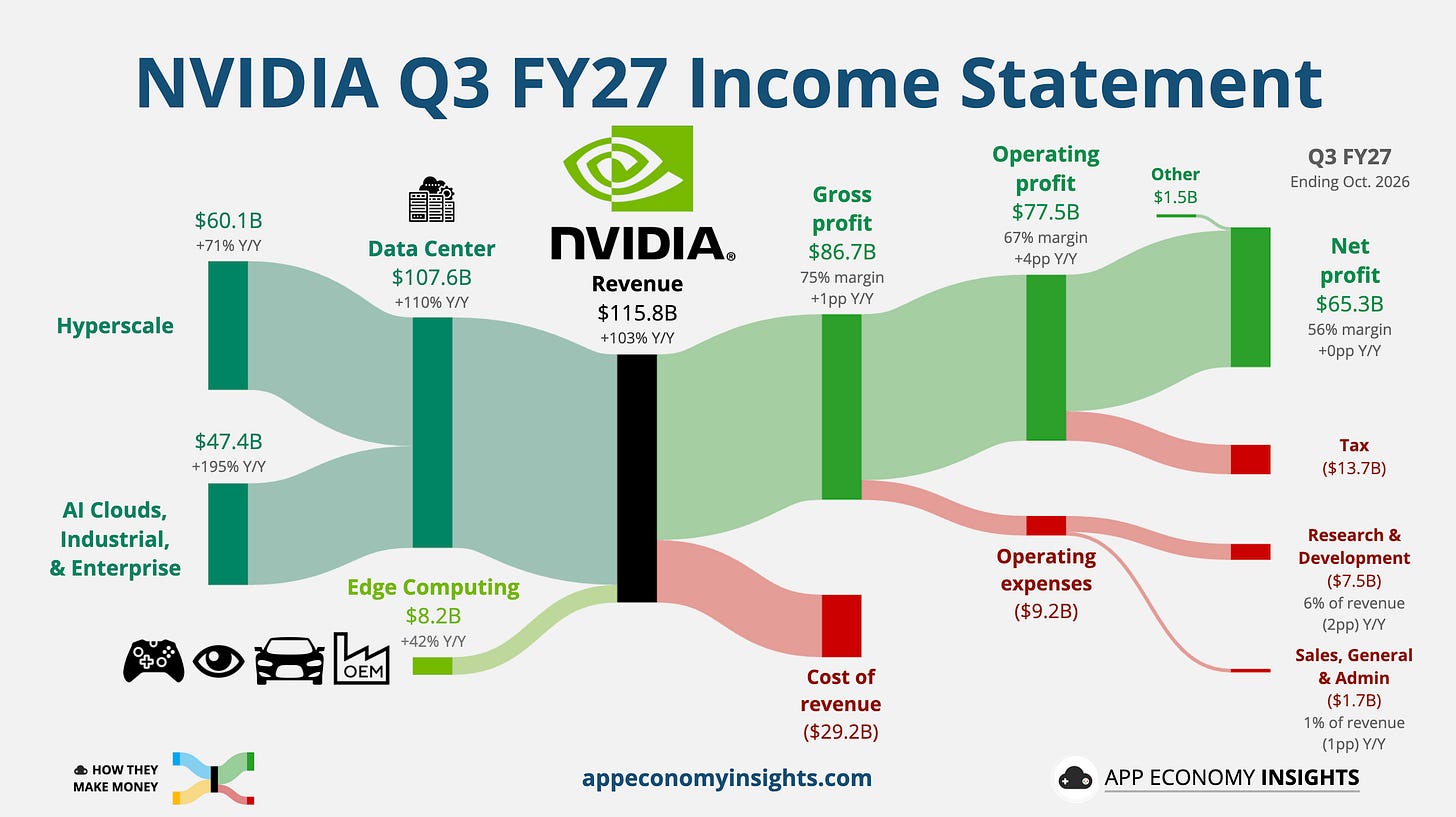
The company claims their forward guidance does not include any projections for sales to China but who may they be selling to that ultimately sells to China? Investors may not care but Congress certainly will!
| Measure | Amount |
|---|---|
| Revenue | $115.8Bn |
| Net income | $65.3Bn |
| Operating cash flow | $48.3Bn |
| Free cash flow | $43.8Bn |
| Cash absorbed by increased receivables | $18.1Bn |
| Purchases of equity securities | $15.7Bn |
While $43.8Bn was reported as “Free Cash Flow” – $33.8Bn (77%) of that either not collected or pumped right back into the buyers as “Equity” purchases. Even when we were children, we understood that the guy who said “I will gladly pay you Tuesday for a hamburger today” was NOT a good customer for the business!

You can play A LOT of games with your finances when you are charging $115Bn for chips that cost $29Bn (25%) to make and of course there are legitimate business reasons for “encouraging” start-ups to use your chips but Elizabeth Warren will see through all the BS and will understand every line of every spreadsheet and she WILL get to the bottom of it!
The question is, where is the bottom?
We’re long in NVDA (you wouldn’t think so from this post!) because MSFT, OpenAI, Anthropic, etc are genuine customers with money and huge appetites for chips. Google is a competitor with their TPU chips but Google can’t possibly meet demand until MAYBE 2028 – IF all goes well for them.
So NVDA can collect their 300% mark-ups for a couple of more years and now China becomes a great market for their last generation chips, which have been blessed by Trump and Bessent to ship after about 18 months on the market.
And their legal issues? NVDA “made” $65.3 BILLION last quarter or $22Bn/month, $5Bn/week – almost $1Bn/day (and it will be next year) and the largest fine in Corporate History was $20.8Bn to BP for ruining the Gulf of Mexico America. Bank of America was fined $16.65Bn in 2014 over financial fraud relating to sub-prim mortgages – from 2009!!! That gives you an idea of how long this process can take…
JPM paid $13Bn in 2013 over the same issues, Volkswagen paid $18Bn for installing emissions-cheating software to cheat regulators. Goldman Sachs paid $5Bn in 2020 in the 1MDB Bribery Scandal, META paid $5Bn in 2019 for violating user’s privacy and GOOGL paid $5Bn in 2018 in anti-trust fines relating to Android phones.
None of those companies died and it’s not likely there will be a fine or a penalty large enough to do more than wobble NVDA for a quarter – if that.
Speaking of Gulfs – Oil is testing $80 this morning and we like /CL (Oil Futures) long at this line, anticipating a bounce after falling from $104 on October 30th:
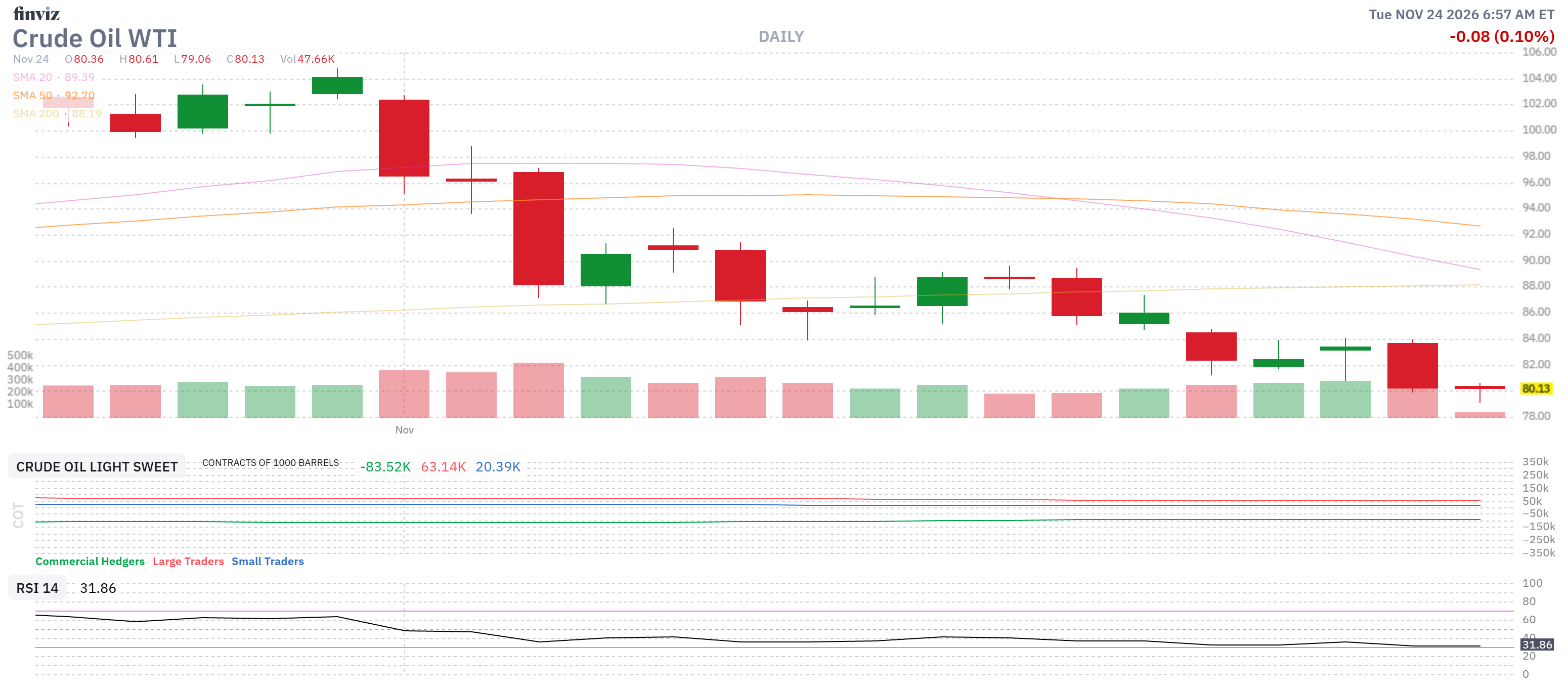
Even if we throw out the spike over $90, it’s still a $10 drop and that means even a weak bounce could take us to $82 and that would be $2,000 per contract vs the risk of stopping out with a less than $200 loss below $80 – that’s a good risk/reward set-up we like to play!
At $80, the market is pricing in a peace deal that doesn’t actually exist. Hormuz is NOT reopened and OPEC+ meets next week and that meeting could go either way for global supply. Our SPRs are depleted to dangerously low levels (world-wide) and refilling them will show up as demand next year. As to the war:
-
-
No ceasefire: Qatar is mediating. Iran has ruled out a meeting in Doha. It says Hormuz reopens only if the US lifts its blockade, eases sanctions and returns frozen assets.dawn
-
Attacks are rising: Iran’s Guards say three tankers hit mines on Monday, which is unverified. Three more were hit Saturday. The Houthis claim an attack on a Saudi refinery. The US is investigating Iran for cyberattacks on up to 50 tankers.cnbc+1
-
The US is escalating pressure: Treasury widened sanctions, a third carrier is in the Gulf and Trump says he is “not rushing”.ttnews
-
Transits are thin: Kpler counted six vessels through Hormuz on Monday. Oil flows through the strait are only a fraction of normal, and estimates range widely. Energy Secretary Wright’s claim of record flows doesn’t match this.
-
So, on the whole, it does not SOUND like the kind of news that justifies $80 oil, does it? A 4-day weekend is a lot of time for something to go wrong and pushing oil down and then firing it back up has been how CERTAIN PEOPLE (I will not name names) have made Billions of Dollars profiteering off this war all year long.
IN PROGRESS