Guest View
User: Pass: | become a member

Bank of America Bears Buy Puts

www.interactivebrokers.com

Today’s tickers: BAC, PBR, F, FXI, NXY, KFT, DELL & HPQ

BAC – Bank of America Corp. – Bearish option traders purchased put options on Bank of America today with shares of the firm trading 3% lower to $14.52. The number of put options purchased at the March $14 strike price surpassed existing open interest at that strike, suggesting many investors are bracing for continued near-term share price erosion. Approximately 33,000 puts were purchased for an average premium of $0.59 apiece at the March $14 strike. Investors picking up the put options perhaps anticipate B of A’s share price could slip beneath the effective breakeven point on the trade at $13.41 ahead of March expiration. The 12% increase in the reading of options implied volatility on Bank of America to 43.74% today points to increased fluctuation in the price of the underlying shares going forward.

PBR – Petroleo Brasileiro SA ADR – The Brazilian oil company’s shares recovered slightly today, rising 0.65% to $39.03, amid higher commodity prices and a rebound in the price of crude oil. Option traders are still initiating bearish trades on the stock though, which suggests today’s modest rebound could be short-lived. One investor purchased a put spread in the January 2011 contract, establishing long-term downside protection. It appears the trader bought 5,000 in-the-money puts at the January 2011 $40 strike for a premium of $6.50 each, marked against the sale of 5,000 puts at the lower January 2011 $30 strike for an average premium of $2.13 apiece. The net cost of the transaction amounts to $4.37 per contract. The parameters of the trade indicate an effective breakeven share price of $35.63, which marks the price at which shares must trade at (or below) before downside protection kicks in for the put-spreader.

F – Ford Motor Co. – Shares of the American automaker, whose sales increased 24% year-over-year in the month of January, rallied 3.40% to $11.28 today. Notable options activity on the stock involved long-dated put options in the January 2012 contract. It looks like at least one investor purchased 20,000 puts at the January 2012 $5.0 strike for a premium of $0.58 per contract in combination with the purchase of an equivalent number of shares of the underlying stock. The ‘married-puts’ picked up by options players provide long-term downside protection should Ford’s shares collapse in the next two years. But, the trader(s) are most probably taking a long-term bullish stance…


This article will become free after 48 hours (see below for free content). To read the rest of this article now, along with Phil's live intra-day comments, live trading ideas, Phil's market calls, additional member comments, and other members-only features - Subscribe to Phil's Stock World by clicking here.


Monday Market Movement

We love patterns!

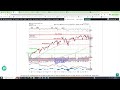
Pattern recognition is the basis for human thought so it’s always fun to look at charts like this one from InTheMoneyStocks and think we may see something we recognize.  It’s interesting that looking at some of our other PSW Chart School posts from the weekend that look at virtually the same charts but spot different patterns.  Fallond, makes a convincing case that we have confirmed sell signals and Corey at Afraid to Trade also feels we’re in the middle of our correction

MarketTamer is looking for Dow 9,750, which is the middle of our worst-case targets at around the 10% rule, something I touched on in my own Weekend Wrap-Up, where I did my own humble best to paint a picture that’s worth 1,000 words.  Fortunately (although maybe not for you), coming up with 1,000 words has never been a problem for me so I will stick mainly to the Fundamentals, thank you very much! 

I did some soul-searching on the situation in Greece, as outlined in our Weekend Reading post and I am comfortable with last week’s gut reaction that we have now adequately priced in both Greece and Portugal’s problems.  Our outlying concern is a spread to Spain, Italy and France, which I don’t believe is likely as the cost of bailing out Greece, Portugal, Spain, Italy, France, Turkey and the UK would not even be what the US spent to bail out AIG.  The same way we gave the hyenas a bone back in November of 2008 and they attacked any financial institution that showed even a hint of weakness, the pack is now all over any country that is vulnerable to panic.  It’s a simple game, short the bonds (sell bonds at low rates), drive rates high, buy back the bonds, collect high yields. 

Sure the fact that this sort of activity can disrupt the lives of millions of people might give some people pause but I’m sure someone like PimpCo’s Mahamed El-Erian feels like he’s doing God’s work when he is done loading up on bloated rate bonds and then suddenly announces, as he did this morning (and we predicted he would last week): "The risk of Greece defaulting is low."  El-Erian said that, although the Greek government is in need of external financial aid, it likely will not default

Oddly enough, it was just this past Thursday that PimpCo’s Michael Gomez said: "Stay away from the Euro" which (funny coincidence) drove Greek bonds and CDS swaps to…


This article will become free after 48 hours (see below for free content). To read the rest of this article now, along with Phil's live intra-day comments, live trading ideas, Phil's market calls, additional member comments, and other members-only features - Subscribe to Phil's Stock World by clicking here.


Weekend Reading - Greecing the Wheels

I’m done with Greece.

I was getting sick of it last week and now I’m really done after doing some research:  First of all, Greece’s deficit (as we discussed last week) is a shocking 12% of their GDP and their national debt is 120% of their GDP (ours is about 100% now so something about glass economies and stones comes to mind) BUT, their whole GDP is $343Bn so we’re looking at a grand total of $41Bn to completely bail them out this year - the boyz at Goldman probably took about that much home in bonuses just betting on Greece to fail!  

Do we really believe the $16,000,000,000,0000 EU economy is going to go down over $42,000,000,000 (0.26%)?   Kind of hard to imagine when put in perspective.  Of course it’s not just Greece, there’s Spain, Portugal and Ireland, although Ireland was last year’s worry with a $100Bn debt that they ended up fixing themselves by tightening their belts.  For the Greeks, it’s more a matter of is there a will than a way as Greece has long been the EU’s least productive economy (followed by Portugal), which has historically made them uncompetitive with their northern cousins. 

All it would take to fix Greece ($343Bn GDP) and Portugal’s ($220Bn) deficits is for Germany ($3,235Bn) and the UK ($2,200Bn) to buy a few extra Greek and Portugese goods and the factories would be humming again.  The two countries each have about 1M people out of work (10% of the population) and if we assume 5% is close to full employment then we’re just talking about employing 1M people.  Even if we pay those people $50,000 a year each, that’s "just" $50Bn and suddenly, everyone in Greece and Portugal is back at work, off the dole, paying taxes (iffy in Greece) and contributing to the GDP, which fixes the deficit. 

$50Bn is just 1% of the GDP of Germany and the UK and back to 0.3% of the EU’s GDP.  Hell, the global markets have lost $4,000,000,000,0000 in the last two weeks worrying about this $50,000,000,000 - THAT’s the magic of Credit Default Swaps - we get to leverage relatively small and correctable global problems into market catastrophes so fast that heads of state don’t even have time to call a meeting before the bankers have slashed and burned their economies

So I was leaning this way at the end of last week and, now that I’ve had a chance to dig into it, I’ve decided it’s…


This article will become free after 48 hours (see below for free content). To read the rest of this article now, along with Phil's live intra-day comments, live trading ideas, Phil's market calls, additional member comments, and other members-only features - Subscribe to Phil's Stock World by clicking here.


Weekly Charts + The Reverse Cup & Handle Chart Pattern

Courtesy of Market Tamer

Weekly Charts

Dow Jones


S&P 500


NASDAQ


The Reverse Cup & Handle Chart Pattern

- The inverse of a Cup & Handle Chart Pattern.


-The stock bounces off of a support level and moves higher on unremarkable volume.


- A “Rounded Top” forms and then subsequently moves lower on increasing volume producing “The Cup”.


- The pattern is completed when a Bear Flag forms producing the handle.


- The breakdown occurs when the stock breaks the low of the handle on increasing volume.


Weekly Wrap-Up, it’s Only a 55-Point Drop You Wimps!

That’s right, I said WIMPS! 

I have never heard so much whining and crying and complaining about a market drop as I have the past few weeks.  Last week, I pointed out that we had only fallen 105 points from the prior week (10,172 to 10,067) and this week we fell ALL THE WAY to 10,012 to finish the week and you would think the world was ending (again) from the way the MSM has been acting.

By Friday the panic was palpable as we gave up Monday and Tuesday’s bogus gains to test new lows for the year - testing, in fact, the lowest levels the market has hit since last November and I pointed out in Friday’s post that it reminded me of when BSC and LEH went under and everyone panicked and sold Financials off to the point where Warren Buffet was willing to give GS $5Bn AFTER they bounced 50% - THAT’s how undervalued the financials were in November of 2008. 

Fear and Greed are market driversWhat do we do while people are panicking?  We BUY!  We don’t BUYBUYBUY like Cramer’s Pavlovian Peons but we sure do BUY and take some nice entry positions with sensible hedges.  I was finally motivated to finish updating our Buy List on Friday and 18 of our 38 positions were highlighted (immediately actionable) on Friday.  Sure they may go lower, but we’re buying them with 20% buffers built into the positions and then we can double down if they drop 40% (back to Nov 2008 lows) and then we’ll have our entries down 10% from the lowest levels of the past decade or so that we can hold until the next decade - what’s there to panic over?

If I wanted to buy IBM in January but thought it was a little pricey at $134, why would I not be HAPPY to have the opportunity to make an enty at $122, back at where they were pre FABULOUS October earnings?  I can buy IBM for $122 and take advantage of the panic-induced VIX at 26 to sell July $125 calls for $6.60 and the July $120 puts for $6.65 for a net entry of $108.75 with a call away at $125 for a $16.25 profit (15%) in 5 months.  If IBM should fall below $120, we will have a second round of the stock put to us as $120 for an average entry of $114.38, another 6.2% lower than it is now.  If we were more worried, we…
continue reading


How to Make Profits in Your Spare Time

The Only Three Questions That Count: Investing by Knowing What Others Don't

Option Sage submits:

I saw an infomercial from Fisher Investments where Ken Fisher mentioned 3 attributes that he believes are keys to successful investing which can be crudely summarized as follows:

[1]  Focus on long-term investing

[2]  Expect surprises

[3]  Stay ahead of the crowd by knowing what others don’t

The first point is certainly critical and weeds out the greedy ‘get-rich-quick’ traders from the patient traders.  Our policy here is that of ‘play-to-win’.  We like to be aggressive in seeking profits with short-term plays but we also recognize that if those trades don’t work out that we can still rely on longer term plays to end up profitable in the end. 

The second point regarding expecting surprises asks the trader the question “Are you managing risk well and do you have contingency plans in mind each time you enter a trade?”  While the second part of the sentence is important, the first is paramount!  No matter what you do, never violate risk management rules which we have discussed here in the past.

The third point is a luxury in my view.  Of course, it would be nice to know what others don’t but it’s not critical.  By definition only a small number can have information that the rest of the crowd does not have so if you are not trading full-time you have to find another way of making money without relying on staying ahead of the crowd.

As I was scanning for trades over the weekend, I came across one trade which might in fact fall into the category of offering relatively attractive profits by relying on options rather than additional information.  In fact, I know many of our members find it hard to focus on the daily trades and would like to construct portfolios with the longer-term in mind.  As Phil mentioned in his classic "James Bond Investing" article, playing short-term positions requires constant vigilance and you need to ready to turn on a dime with small windows of opportunity and this kind of trading is not for everyone.  Even Phil has a rule of thumb that 75% of a portfolio should be in long-term positions like calendar spreads, buy/writes and covered calls, which generate lower returns but are easier to manage and have a wider margins for error.

So, I set out with the goal in mind of finding a trade that could produce a 10% annual return, noting that this would lead to a doubling of your…


This article will become free after 48 hours (see below for free content). To read the rest of this article now, along with Phil's live intra-day comments, live trading ideas, Phil's market calls, additional member comments, and other members-only features - Subscribe to Phil's Stock World by clicking here.


Phil's Favorites

BLS Seasonal Adjustments Gone Haywire; 11% Unemployment Coming by May?

BLS Seasonal Adjustments Gone Haywire; 11% Unemployment Coming by May?

Courtesy of Mish

Over the weekend I received an email from Irishscot2, a poster on MarketWatch, regarding seasonal adjustments to the unemployment rate. Hi Mish

I believe the seasonal adjustment is no longer valid given that anticipated job creation down the road has not and will not be happening. I expect late spring to reverse the January effect heading into the elections. If so, a perfect political storm brewing because of their models!

Irishscot2

Irishscot2 compared the unadjusted numbers to the seasonally adjusted numbers on a percentage basis. I could not tell much from the raw data he sent, so I asked for his spreadsheet and he gracious...


more from Ilene

Zero Hedge

The Ever Increasing Parallels Between AIG And Greece... And The CDS Puppetmaster Behind It All

Courtesy of Tyler Durden

David Fiderer's below piece, originally published on the Huffington Post, continues probing the topic of Goldman and AIG. For all intents and purposes the debate has been pretty much exhausted and if there was a functioning legal system, Goldman would have been forced long ago to pay back the cash it received from ML-3 (which in itself should have been long unwound now that plans to liquidate AIG have been scrapped) and to have the original arrangement reestablished (including the profitless unwind of AIG CDS the firm made improper billions on, by trading on non-public, pre-March 2009, information), and now that AIG is solvent courtesy of the government, so too its counte...


more from Tyler

Chart School

THE MARKET IS FOLLOWING A SCRIPT YOU CAN PROFIT FROM

THE MARKET IS FOLLOWING A SCRIPT YOU CAN PROFIT FROM 

Courtesy of David Grandey

All About Trends


Is The Market Following A Script? If you ask Elliott it is. From Our Recent Blog: "There is also a good possibility that the whole move down off the January highs traces out ABCDE (5 Waves down before all said and done). But we'll take it a step at a time." The S&P 500 chart below has more of a 3 waves (abc) look to it just like we talked about in advance to be on the lookout for. The only problem was it's prime entry took place in the form of a gap and within minutes traced out the bulk of Thursday's move. But still it's all about trends and it's locked in a downtrend channel. One look at last week's action in the OTC Composite below (remember this area of the...

more from Chart School

Trading Goddess

Pivotfarm Support and Resistance Levels 9th February 2009

After dropping from the 1063.75-1064.25 PowerZone just before stocks opened on Monday, the ES was sold on the open and fell to the 1056.25-1055.50 PowerZone.
As stated last night: "if a pullback can hold the
initial support, the up-trends will remain intact and
the market should head back up."
That was reversed and after getting over the 1063.50-1064.00 area the move continued to a 1068.50 high. After a small dip, a 123 top set up from 1068.00 and the ES dropped to the new support at 1064.00-1063.50 zone. A bounce failed at 1067.00 and that was it for the upside. The market rolled over and all of the bounces failed as the ES went trend-down to 1053.00 at the 4pm close for stocks.
The early rally off of a good support area was sold on Monday, and for the second half of the day it was all down hill. After the Friday run-up, that was not impressive for a follow-up. The market is back into oversold status, but for now it looks lik...

more from Goddess

Oxen Group Trades

The Oxen Report: Unemployment Numbers to Boost Market and Continue Rally?

Hello Oxen Report Readers,

Yesterday, I recommended an more from David

The Options Report

By Andrew Wilkinson


Bank of America Bears Buy Puts

Today’s tickers: BAC, PBR, F, FXI, NXY, KFT, DELL & HPQ

BAC – Bank of America Corp. – Bearish option traders purchased put options on Bank of America today with shares of the firm trading 3% lower to $14.52. The number of put options purchased at the March $14 strike price surpassed existing open interest at that strike, suggesting many investors are bracing for continued near-term share price erosion. Approximately 33,000 puts were purchased for an average premium of $0.59 apiece at the March $14 strike. Investors picking up the put options perhaps anticipate B of A’s share price could slip beneath the effective breakeven point on the trade at $13.41 ahead of March expiration. The 12% increase in the reading of options implied volatility on Bank of America to 43.74% today points to increased fluctuation in the...


more from Andrew

Insider Zone


INSIDER BUYING & SELLING REMAINS BEARISH

INSIDER BUYING & SELLING REMAINS BEARISH

Courtesy of The Pragmatic Capitalist

After a brief respite last week, insider buying and selling trends returned to their regularly scheduled bearishness.  The recent market dip has not attracted many buyers to the market as total insider buying for the latest week totaled just $10.2MM.   Total selling surged to $490MM from last week’s reading of $250.1MM.

The insider selling and buying trends continue to reflect the low level of confidence that insiders have in the future performance of their own shares.  This has been best reflected in the continuing weak trends in the labor markets and the...


http://www.insidercow.com/ more from Insider

OpTrader


Swing trading portfolio - week of February 8th, 2010

This post is for live trades and daily comments. 

To learn more about the swing trading portfolio (strategy, membership etc.), please click here

- Optrader

...

more from OpTrader


February 2010
M T W T F S S
« Jan «-»  
1234567
891011121314
15161718192021
22232425262728


FeedTheBull - Top Stock market and Finance Sites

Locations of visitors to this page

As Seen On:


About Phil:

Philip R. Davis is a founder Phil's Stock World, a stock and options trading site that teaches the art of options trading to newcomers and devises advanced strategies for expert traders...

Learn more About Phil >>

About Ilene:

Ilene is editor and affiliate program coordinator for PSW. She manages the Favorites backup site (blogroll, archives, more). Contact Ilene to learn about our affiliate and content sharing programs.

Favorites Site >>