


Courtesy of Pam Martens
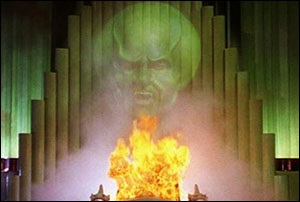
There Is a Wizard of Oz Quality to the Federal Reserve These Days
There is a time for scientists and carefully vetted facts and a time for men who tell the public that everything is great, nothing to see here. It’s clearly a time for the former and less delusional chatter from the latter.
The latest magical thinking is that if Fed Chairman Jerome Powell and U.S. Treasury Secretary Steve Mnuchin get on a phone call this morning with the other G7 finance ministers and central bank governors, they can seduce or strongarm the group to announce rate cuts or fiscal stimulus to keep stock markets from further steep declines and GDP from contracting. (For how this played out previously, we recommend Nomi Prins’ brilliant book, Collusion: How Central Bankers Rigged the World.)
Unfortunately, the Fed Chair and the U.S. Treasury Secretary are fighting the last war, the financial crisis of 2008, when multiple interest rate cuts were enough to buoy spirits on Wall Street and fiscal spending buoyed economic growth. But interest rates are already hovering at or near historic lows in much of the developed world. Further cuts would likely be akin to “pushing on a string.” (More on that in a moment.)
This is a brand new war where U.S. consumers, who represent more than two-thirds of GDP in the country, are disincentivized to consume because almost every venue of consumption represents a potential threat to their health and the health of their families.
To protect oneself from the coronavirus COVID-19, the World Health Organization recommends “social distancing,” that is, maintaining “at least 1 meter (3 feet) distance between yourself and anyone who is coughing or sneezing.” Other scientists recommend a distance of 6 feet. That’s impossible to do on airplanes, in crowded grocery stores, in movie theaters, on cruise ships, in restaurants, in department stores and many other places where consumers spend their money and help the economy grow.
…

