

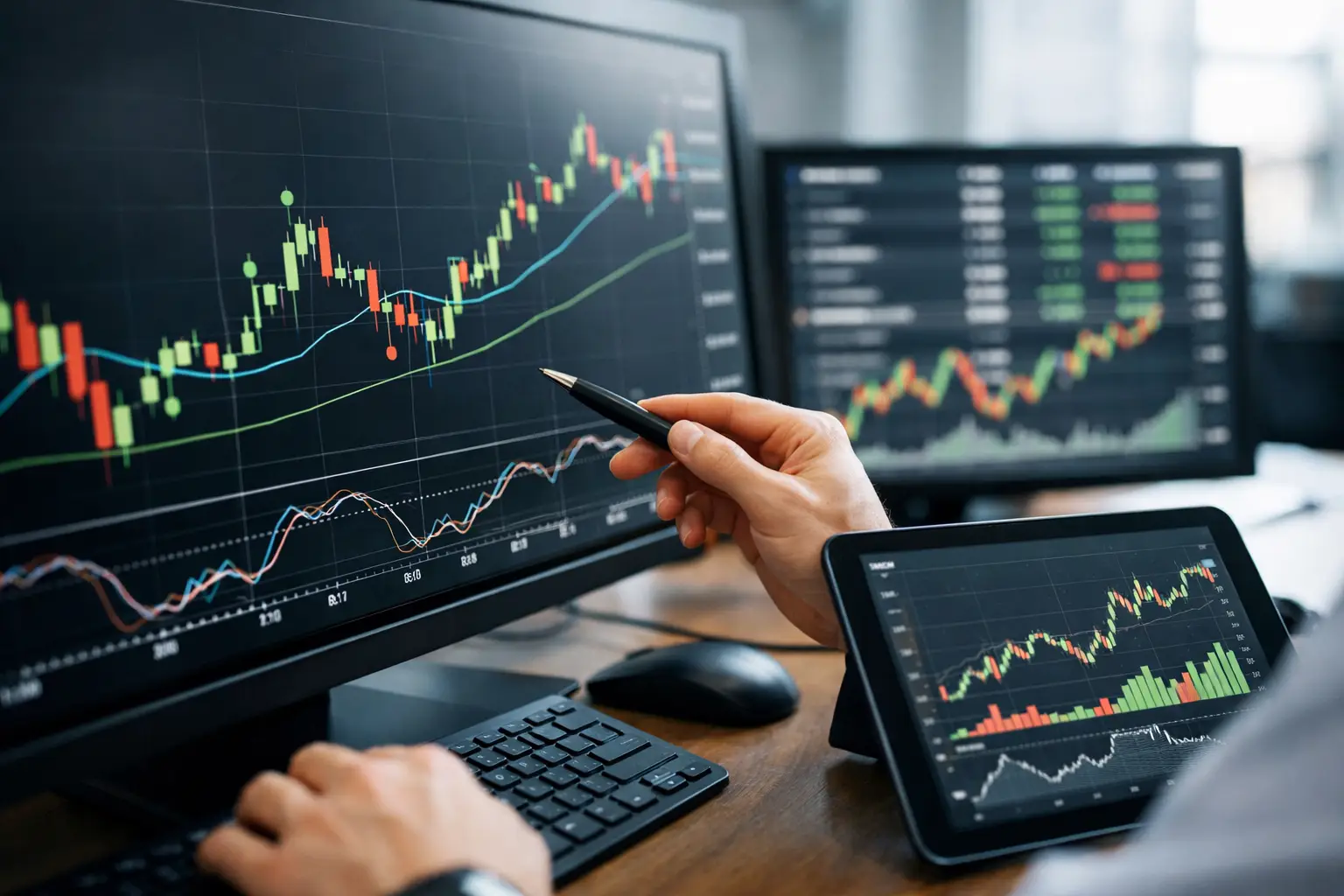
A stock pops 6% on a headline, FinTwit starts chest-thumping, and by lunch the move is gone. That is exactly why traders obsess over top trade signals – not because signals are magic, but because they help separate real opportunity from market theater.
The problem is not a lack of information. It’s the opposite. Traders get buried in earnings chatter, Fed soundbites, analyst upgrades, geopolitical noise, and social media momentum all at once. If you do not have a framework, every flashing number looks important. If you do have a framework, most of that noise gets tossed in the trash where it belongs.
What top trade signals really tell you
A good signal is not a prediction machine. It is evidence. It suggests that buyers or sellers are gaining conviction, that risk is being repriced, or that a market narrative is starting to matter in a way that can actually move capital.
That distinction matters. Newer traders often treat signals like green lights. See RSI oversold, buy. See unusual options volume, buy. See a breakout, chase. That is how people end up long the top of a one-day wonder.
Experienced traders use signals more like a checklist. Is price confirming the story? Is volume real? Is macro working with the trade or against it? Is the options market hinting at hedging, speculation, or nothing useful at all? One signal can get your attention. Several aligned signals can earn your capital.
The top trade signals worth watching first
Price action still sits at the top of the pile, and there is no need to get cute about it. If a stock cannot hold support, reclaim a key moving average, or build higher lows after good news, the market is telling you something. Price is the final vote. Everything else is commentary.
Volume comes next because it tells you whether anyone serious showed up. A breakout on light volume is a rumor. A breakout on expanding volume, especially after consolidation, can be institutions building a position. The same logic works in reverse. Heavy-volume selling into what should have been bullish news is often a warning shot.
Relative strength is another one that traders underestimate. If the S&P is flat and your name is up 3%, pay attention. If the Nasdaq is ripping and your stock cannot get off the mat, also pay attention. Leadership and lagging behavior are signals in their own right because money tends to flow where conviction is strongest.
Then there is volatility. A sudden expansion in implied volatility ahead of earnings, a Fed meeting, or a sector-specific event can be informative, but context is everything. Rising volatility can mean the market expects a major move. It does not tell you direction by itself. Traders who confuse expected movement with bullish conviction usually pay tuition.
How macro turns ordinary setups into real trades
This is where a lot of retail traders lose the plot. They find a nice chart pattern and ignore the fact that Treasury yields are spiking, crude is jumping, and the Fed just reminded everyone that cuts are not a sure thing. That is not analysis. That is hope with candles on it.
The best top trade signals often appear when macro and micro line up. A semis breakout works better when AI demand is real, capex trends support the story, and rates are not suddenly choking growth names. A bank trade has a different profile when the yield curve shifts, credit concerns build, or regulators start making noise. A consumer discretionary setup means less if the latest retail and labor data are rolling over.
You do not need a PhD in economics. You do need to know which macro variables actually matter for the sector you are trading. Energy traders should care about crude, inventories, and geopolitics. Tech traders should care about yields, capex, and corporate spending. Small-cap traders should care about financing conditions more than whatever the latest meme account is yelling about.
Why options flow is useful – and easy to misuse
Options flow gets marketed like it is insider telepathy. It is not. Sometimes aggressive call buying matters. Sometimes it is just a hedge unwind, a spread, or a flashy print with no directional edge. Treating every block trade like a secret message from smart money is a fast way to donate money to the market.
Still, options flow can be one of the better trade signals when it confirms other evidence. If you see bullish call activity in a stock breaking above resistance, with strong volume, ahead of a catalyst the market may be underpricing, that is worth your attention. If you see put buying piling up into weakening price action and deteriorating sector breadth, same idea.
The trick is to read flow in context. Ask whether the trade is opening or closing. Ask whether implied volatility already makes the options expensive. Ask whether the flow matches what the stock is doing, or conflicts with it. A giant call sweep in a dead chart does not automatically make it bullish. Sometimes the cleanest message is the one the tape is already sending.
Signal quality matters more than signal quantity
Most bad trades come from forcing action out of weak evidence. Traders stack random indicators until they can justify what they already wanted to do. That is backwards.
High-quality signals tend to have three traits. First, they are timely. They matter now, not six months from now. Second, they are specific. A stock holding a key technical level on heavy volume after earnings is specific. “AI is hot” is not. Third, they are actionable. They give you a spot to enter, a level to manage against, and a reason to exit if the thesis breaks.
This is why simple often beats complicated. You are usually better off with price, volume, trend, and macro alignment than with twelve oscillators and a colorful dashboard that tells you nothing useful.
Top trade signals for different market regimes
Market regime changes everything. The same signal can be excellent in one environment and worthless in another.
In a trending bull market, momentum signals tend to work better. Breakouts, relative strength, and dip buys above rising support can be very effective because the tape is forgiving. In that kind of market, perfection is overrated. The trend does a lot of the work.
In a choppy, headline-driven market, mean reversion and tighter risk management matter more. Breakouts fail more often, and traders need confirmation instead of enthusiasm. Here, patience becomes a signal too. If a move cannot hold for more than a session, it is probably not a move you need to chase.
In a risk-off market, preservation becomes part of the setup. The best signal may be defensive rotation, rising put activity in weak sectors, or leadership in cash-generating names while speculative junk gets sold. That is still a signal. It just does not look as exciting on social media.
How to build a usable signal framework
A practical framework does not need to be fancy. Start with the market itself. Is the broader tape supportive, mixed, or hostile? Then move to the sector. Is money flowing into the group, or are you trying to force a hero trade in a weak neighborhood?
After that, look at the stock. Is price above or below key levels? Is volume confirming? Is there relative strength or weakness versus the index and peers? Then layer in the catalyst. Earnings, CPI, a product event, central bank commentary, geopolitical risk, regulation, or simple positioning can all matter, but they do not matter equally every day.
Finally, define the trade before you enter it. If your signal is valid, where should the stock go? If you are wrong, where is the market likely to prove it? This is where options traders often have an edge because structure forces discipline. The spread, strike selection, and time frame make you think harder than a lazy stock chase usually does.
That mix of tape, sector, stock, catalyst, and risk structure is closer to how serious traders operate. It is also how you avoid turning every interesting chart into an expensive hobby.
The trap of treating signals like certainty
No signal works all the time. Not breakouts. Not unusual options flow. Not macro reads. Not chart support. The market is a discounting machine full of competing narratives, crowded positioning, and plenty of false starts.
That is why the best traders are less interested in being right than in being positioned well when they are right. They use top trade signals to improve odds, tighten timing, and manage risk. They do not use them to pretend uncertainty disappeared.
If you want an edge, stop hunting for the single perfect indicator. Build the habit of weighing evidence, demanding confirmation, and respecting the market’s right to disagree with you. That is less glamorous than chasing the next hot alert, but it is a lot closer to how durable trading actually works.
A useful signal should make your decision clearer, not noisier. If it does not help you define the setup, the risk, and the reason for the trade, it is probably not a signal worth paying for – or following.

