

Is Trump a Russian asset? Fiona Hill on the President she worked for
Fiona Hill on Trump, Putin, and the Fracturing World Order
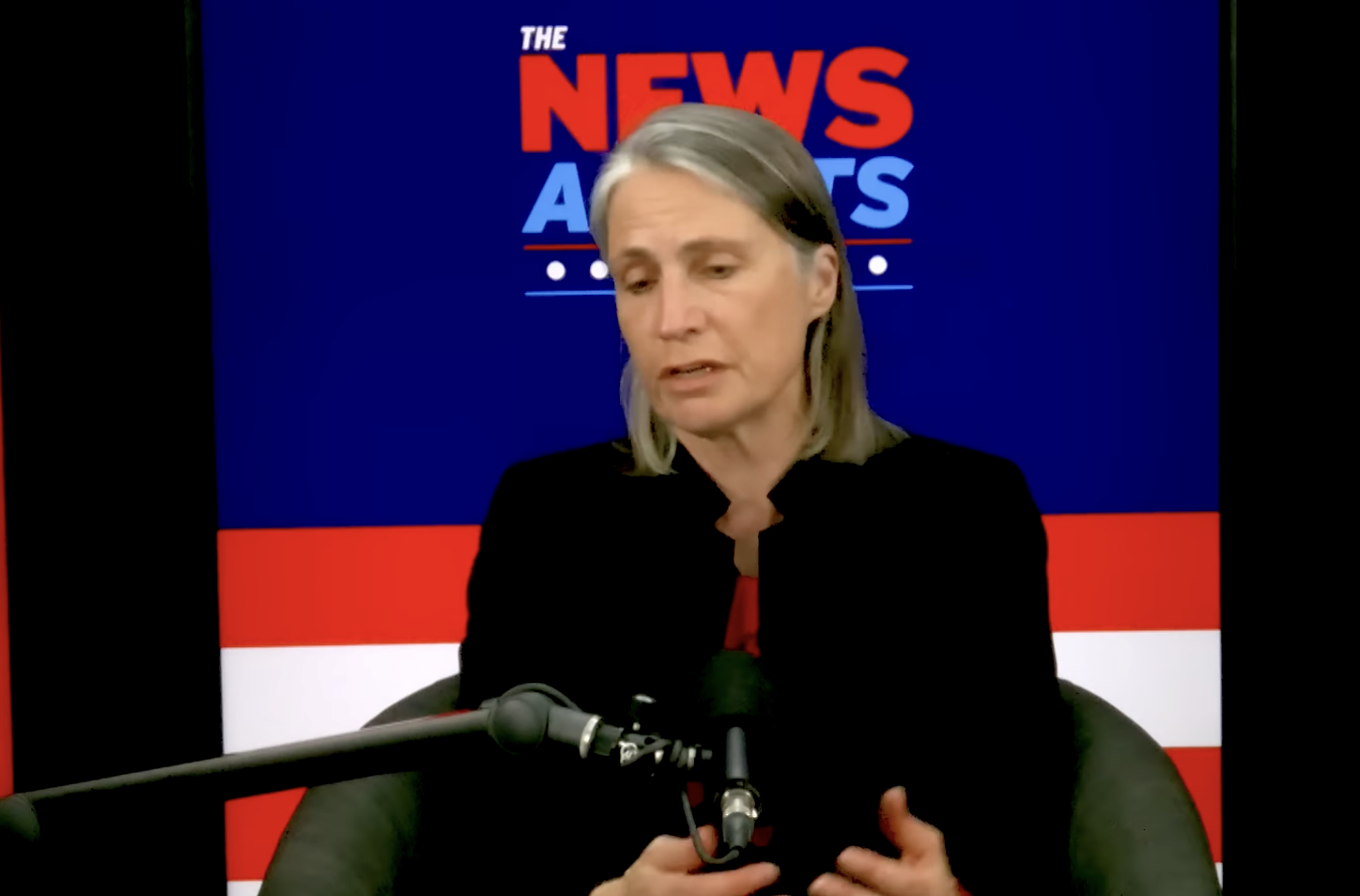
Fiona Hill is a Durham-born Russia expert who served on Donald Trump’s National Security Council, advising on Russia strategy and matters of national intelligence — before testifying as a witness in his first impeachment in 2019. She has since co-authored the UK’s Strategic Defence Review. The News Agents spoke with her about the world Trump is making. Below is a lightly edited narrative of that conversation.
The Special Relationship — With Israel, Not Britain
The conversation opened with a hot-mic moment: the British Ambassador to the United States, Christian Turner, had been overheard telling schoolchildren that America’s only truly special relationship was not with Britain but with Israel — particularly after the US and Israel went to war together against Iran without congressional approval and with the UN entirely sidestepped.
Hill didn’t push back on that characterisation. The US-Israel relationship, she explained, is rooted in deep historical, demographic, and political ties. America was one of the first countries to recognise the creation of Israel, and the largest Jewish population outside Israel — around seven million people — lives in the United States. But she noted that the relationship has become markedly closer and more specific since Trump’s first term, increasingly centred on the government of Benjamin Netanyahu rather than Israel as a broader concept.
This, she argued, is part of a much larger shift in how the world order is being reorganised — and how America sees its alliances. She pointed to the Suez Crisis of 1956 as an early inflection point: France and Britain launched a military operation in the Middle East that America disapproved of, and the episode taught two countries very different lessons. France concluded that the special relationship wasn’t so special, and charted its own course — including its independent nuclear deterrent. Britain took the opposite approach, doubling down and trying to pull America ever closer. Decades later, in 2003, that logic reached its logical conclusion when Tony Blair and the British government became deeply involved in the decision to go to war in Iraq alongside the United States.
Fast forward to today, and the dynamic has inverted in a way that carries its own sharp irony. Britain is now being criticised — not for starting a war America disapproves of, but for failing to support a war Trump launched with Israel that had no congressional authorisation and bypassed international institutions entirely.
An Emboldened and Unconstrained President
Hill was unusually frank about the difference between Trump’s first and second terms. In the first administration, she said, there were real constraints. People around Trump — John Bolton, H.R. McMaster, Director of National Intelligence Dan Coats, CIA Director Gina Haspel, Mike Pompeo — were willing to push back. Trump himself had a different risk calculation: he was more cautious, more aware that things could go wrong.
That caution is gone. What she has watched in the first year of this second term is a president emboldened by his ability to impose his will, at home and abroad, with minimal resistance. The people now surrounding him may privately know better, but they are not pushing back — and in many cases, they cannot, given the pace and volume of Trump’s output across Truth Social and his direct phone calls with allies and enemies alike.
The attack on Iran, Hill argued, is a case in point. It was widely known — within US intelligence circles, within Israel’s own retired military and intelligence community — that Iran would close the Strait of Hormuz if struck. This was not a surprise. It was one of the central reasons previous administrations had avoided such action. The premise that there would be no response, she said, was “magical thinking.” And yet the operation went ahead, with allies unilaterally shut out of the decision.
She placed this alongside a cascade of other moments — the confrontation with Zelensky in the Oval Office, the moves on Greenland, the fight with the Pope — that together signal something has changed. Trump, she said, is now genuinely uninhibited. He does not appear responsive to public opinion, to voter opinion, or to the counsel of those around him.
Putin, Flattery, and the Nature of an Asset
The conversation turned to the relationship that has long animated questions about Trump’s motivations: his bond with Vladimir Putin. Hill was in the room — one of only a handful of people — during their meetings ahead of the famous Helsinki summit press conference in 2018.
The question of whether Trump is a Russian “asset” is often framed in espionage terms — a controlled agent, a spy. Hill reframed it. The real answer, she suggested, lies in vulnerability. Putin, as a trained KGB officer, understands that the most valuable asset is someone whose weaknesses can be exploited — wittingly or unwittingly. And Trump’s weaknesses are not secret. His response to flattery is well-documented. His appetite for recognition from figures he considers powerful is a defining feature of his psychology.
Putin has been extraordinarily disciplined in managing this. He doles out access and praise carefully, making himself slightly hard to get, slightly aloof — never fawning, never pandering. The same is true of Xi Jinping. And it is, Hill noted with some irony, also true of the British royal family, who hold a kind of global cache that Trump cannot acquire and genuinely respects.
What Putin has on Trump, in her view, is not blackmail material — though she noted there is no shortage of documented embarrassments. It is something more durable: he holds the thing Trump most wants, which is genuine respect from someone Trump considers a peer. That makes Trump susceptible to manipulation in ways that don’t require coercion.
She went further. When she was in the first administration, she would occasionally notice Trump picking up and circulating ideas that were, on examination, Russian propaganda. This was precisely what she described during the impeachment hearings. Russia amplifies material into Trump’s information ecosystem because they know he is receptive to conspiracy theories, to memes, to narratives that confirm what he already suspects. He does not fact-check. There is no quality control. The result, she said, is that the biggest risk right now is how many different actors — not just Russia — can manipulate Trump by feeding him things he wants to hear.
The Media, Infallibility, and the Limits of Normal Coverage
Hill was pointed about the challenge facing journalists covering Trump. She endorsed the argument — made by political scientist Timothy Snyder — that the media needs to distinguish between things that are newsworthy because they are true, and things that are simply being said by Trump. When Trump claims Iran has collapsed, or that NATO has failed, or that a missile strike on a girls’ school in Iran was perhaps carried out by Iran itself, those claims need to be contextualised and challenged — not simply reported as news events.
She compared Trump’s media strategy to Putin’s at the Valdai Discussion Club: the entire apparatus is designed to keep journalists and commentators in a state of anticipation, waiting for access, unable to think about anything else. Trump has replicated this model — making himself simultaneously ubiquitous and inaccessible in any meaningful sense, while dividing media outlets against one another by selectively granting favour.
Her broader point was about infallibility. Every other world leader — the Pope, Putin, Xi, prime ministers — gets interrogated, contradicted, and held to account. Trump does not. And he explicitly believes he should not be. His own stated position is that the only check on his behaviour is his own moral judgement. That, Hill said, should give everybody pause.
NATO, European Defence, and the End of the Special Relationship
On the question of NATO and European security, Hill was neither apocalyptic nor reassuring. American involvement may diminish for a period, she acknowledged — but she does not believe it disappears permanently. What she does believe is that Europe cannot afford to wait for it to return.
She pointed to genuine momentum: discussions around European defence bonds, a European defence bank, expanded use of the Joint Expeditionary Force (the UK’s existing framework with Nordic, Baltic, and Canadian partners). She drew a historical analogy to the post-war period, when the European Coal and Steel Community was built from necessity — the suggestion being that a comparable institution for defence and strategic industries is not impossible now.
On the UK specifically, she was candid. Britain has been, in her words, “mesmerised” by the idea of the special relationship for decades — and is only now beginning to reckon with the fact that it has not really existed for a long time. The genuinely special relationship Trump wants with Britain is a personal one — with the King and the royal family. The institutional, political, diplomatic relationship is something different, and the UK will have to rebuild it on different terms.
That said, she was careful not to write off the transatlantic relationship entirely. Below the level of political tension, there is substantial appetite — including from American states — for continued economic ties with the UK. She had recently spoken with representatives from the British-American Chamber of Commerce and found that around ten or eleven US states were actively seeking to deepen investment relationships with Britain independently of the federal government. The UK remains one of the largest investors in the United States.
King George and the Revolutionary Moment
Hill closed with a striking metaphor. Trump, she suggested, has become a kind of King George — treating American states, European allies, and Canada alike as colonies to be managed from the centre, dispatching ICE and the National Guard like Hessian soldiers. The parallel is deliberately absurd, but also deliberate: 250 years ago, the colonies decided they had had enough of being governed by a distant, erratic monarch whose legitimacy they no longer accepted. What is needed now, Hill implied, is something of that same spirit — not rebellion, but a fundamental rethinking of how democracy is organised, from the bottom up.
She is not confident that the institutions will hold automatically. Trump has spent years undermining public faith in elections, to the point where a significant portion of the American population no longer believes their votes matter or that results are legitimate. That erosion of democratic trust is, she argued, itself a form of damage that will persist long after Trump leaves office — and that will make reconstituting anything like normal politics genuinely difficult.
The task ahead, as she sees it, is not simply replacing one president with another. It is rebuilding the conditions under which democratic self-governance can function — and that will require a refresh of American democracy from the states upward, not just from the White House down.

