

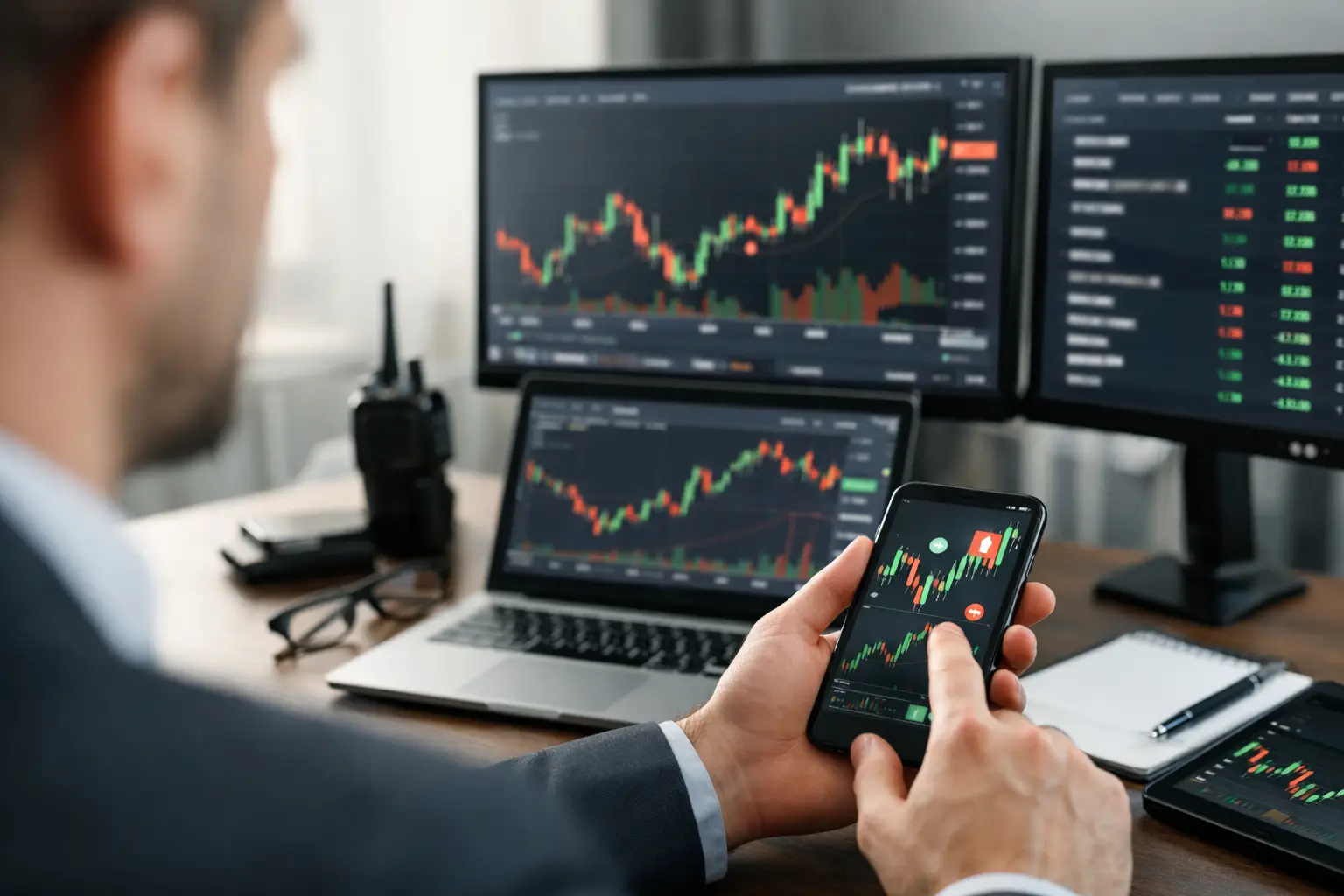
A trade alert hits your phone at 10:17 a.m. Buy calls. Tight window. Fast-moving name. Big upside. That is usually the moment when people realize the problem with most so-called best trade alert services: the alert itself is not the product. The real product is the thinking behind it, the timing of it, and whether you can realistically execute it without getting chopped up.
That matters because traders do not need more noise. They need context, structure, and a repeatable process. If a service sends flashy entries with no framework for position size, adjustment, time horizon, or exit logic, it is not helping. It is outsourcing your discipline to a push notification, which is a great way to light money on fire.
What the best trade alert services actually do
The best trade alert services are not just signal factories. At their best, they function like a sharp trading desk for self-directed investors. They explain why the setup exists, what has to happen for the thesis to work, where the trade breaks, and how the idea fits into the broader tape.
That last part gets ignored far too often. A bullish alert on a semiconductor name means something very different when the Fed is leaning hawkish, Treasury yields are spiking, and the market is punishing duration. The same exact setup can be smart in one environment and reckless in another. Good alert services understand market regime. Weak ones act as if every chart lives in a vacuum.
A serious service also respects that not every reader is a day trader. Some investors want short-term options ideas. Others want swing trades, hedges, income trades, or defined-risk entries around earnings and macro events. If all alerts are built for one speed and one personality type, the service will only work for a narrow slice of users.
Why most traders pick the wrong service
The usual mistake is chasing excitement instead of process. Traders see screenshots, big percentage gains, and a stream of urgent commentary and assume they are looking at edge. Sometimes they are just looking at survivorship bias with better branding.
There are three traps here. First, a service can have a few spectacular winners and still be unusable in real life if alerts come late or exits are vague. Second, options alerts can look incredible on paper while being nearly impossible to fill at posted prices. Third, aggressive alerting can create the illusion of expertise simply because something is always happening.
A good service should make you calmer, not more frantic. If every alert feels like a siren, that is not an edge. That is cortisol.
How to evaluate best trade alert services without getting played
Start with transparency. You want to know what kind of trader the service is built for, what instruments it covers, and how it handles both winners and losers. If a provider loves posting gains but gets very quiet about stops, adjustments, and failed theses, that is a red flag.
Execution quality matters just as much as the idea itself. Ask whether alerts are sent in real time, whether entries include price zones instead of fantasy fills, and whether exits are staged or all-or-nothing. The more liquid the names and contracts, the more useful the alert stream will be for ordinary traders.
Then look at the educational layer. This is where the difference between a service and a gimmick becomes obvious. If you are paying for access, you should be getting more than ticker symbols and urgency. You should be learning how the trader is framing support and resistance, volatility, macro catalysts, sector flows, and risk-reward. Over time, the best services teach pattern recognition. The weak ones teach dependency.
The alerts should match your style, not someone else’s ego
This part is simple, but people still ignore it. A great scalper can run a terrible service for swing traders. A strong options strategist can be completely wrong for someone who prefers stock positions and slower decision-making. Fit matters.
If you work a full-time job, an alert that requires execution within thirty seconds is not practical. If you are trading a smaller account, frequent premium-selling strategies may tie up too much buying power. If you do not understand multi-leg options structures, blindly copying advanced adjustments is asking for trouble.
The best trade alert services make their intended use clear. They tell you whether the focus is momentum trading, swing setups, options income, event-driven trades, or portfolio hedging. Even better, they explain what kind of market conditions favor their approach. Every strategy has weather. The honest services tell you when the forecast is bad.
What separates useful alerts from expensive entertainment
Useful alerts include context before the trade and management after the entry. That sounds basic, but it is surprisingly rare. Plenty of services are very good at the adrenaline hit of the entry and very weak at the boring but crucial part that comes next.
Trade management is where money is made or lost. Does the service update the thesis when the market changes? Does it offer partial profit targets? Does it discuss rolling, hedging, or cutting exposure when volatility shifts? Does it acknowledge when a trade was early, not just wrong? Those details matter because real trading is messy.
Entertainment, by contrast, tends to be loud and selective. It leans hard on certainty. It frames every setup like a layup. It treats losses like weather events that came out of nowhere. That style sells well because confidence is attractive. It also empties accounts.
A good service should connect the dots
This is especially true now, when markets react to everything from CPI prints and Fed language to oil spikes, AI spending, election risk, and geopolitics. A clean chart setup is useful, but a setup that is connected to macro drivers is far more durable.
If a service can explain why financials may react one way to falling yields while small caps respond another way, you are getting something of real value. If it can tie earnings quality, valuation, and options pricing together instead of just yelling buy calls, even better. Self-directed investors need interpretation, not just notification.
That is why the strongest alert platforms tend to blend trade ideas with commentary, portfolio thinking, and education. A service like PhilStockWorld has long leaned into that broader framework, where trade alerts are part of an ongoing conversation about market structure, options strategy, and what the bigger picture is saying. For serious traders, that is far more useful than a random alert feed dressed up as expertise.
Beware the false promise of constant action
One more thing. More alerts do not mean more opportunity. Sometimes they mean lower standards.
A disciplined trader may only find a handful of strong setups each week. A service that pumps out trade after trade can keep subscribers engaged, but it can also encourage overtrading. That is especially dangerous in choppy markets where false breakouts, headline reversals, and volatility crush can punish even decent entries.
This is where restraint becomes a competitive advantage. A credible service should be comfortable saying there is no trade here, or this setup is interesting but not mature, or the risk-reward is not good enough yet. That kind of selectivity may look less exciting on social media, but it tends to look much better in a brokerage account.
How to choose a service you can actually use
Think less about finding a guru and more about finding a framework. The service should fit your schedule, your risk tolerance, your account size, and your level of options knowledge. It should also make sense in the way you process information. Some traders want fast alerts with clean levels. Others want more commentary and market reasoning before putting on a position.
You should also know whether you want ideas, education, or both. If you only want alerts, be honest about the risk that comes with blind following. If you want to improve as a trader, prioritize services that show their work. Over time, that gives you a chance to develop judgment instead of renting someone else’s.
The best trade alert services do not promise to be right all the time. They give you a disciplined way to think, a realistic way to act, and enough context to know when not to trade. In this business, that is a lot more valuable than a hot pick at 10:17 a.m.
If you are evaluating a service, ask the one question that usually cuts through the marketing fast: would this still help me if I stopped copying every trade tomorrow? If the answer is yes, you may have found something worth paying for.

