

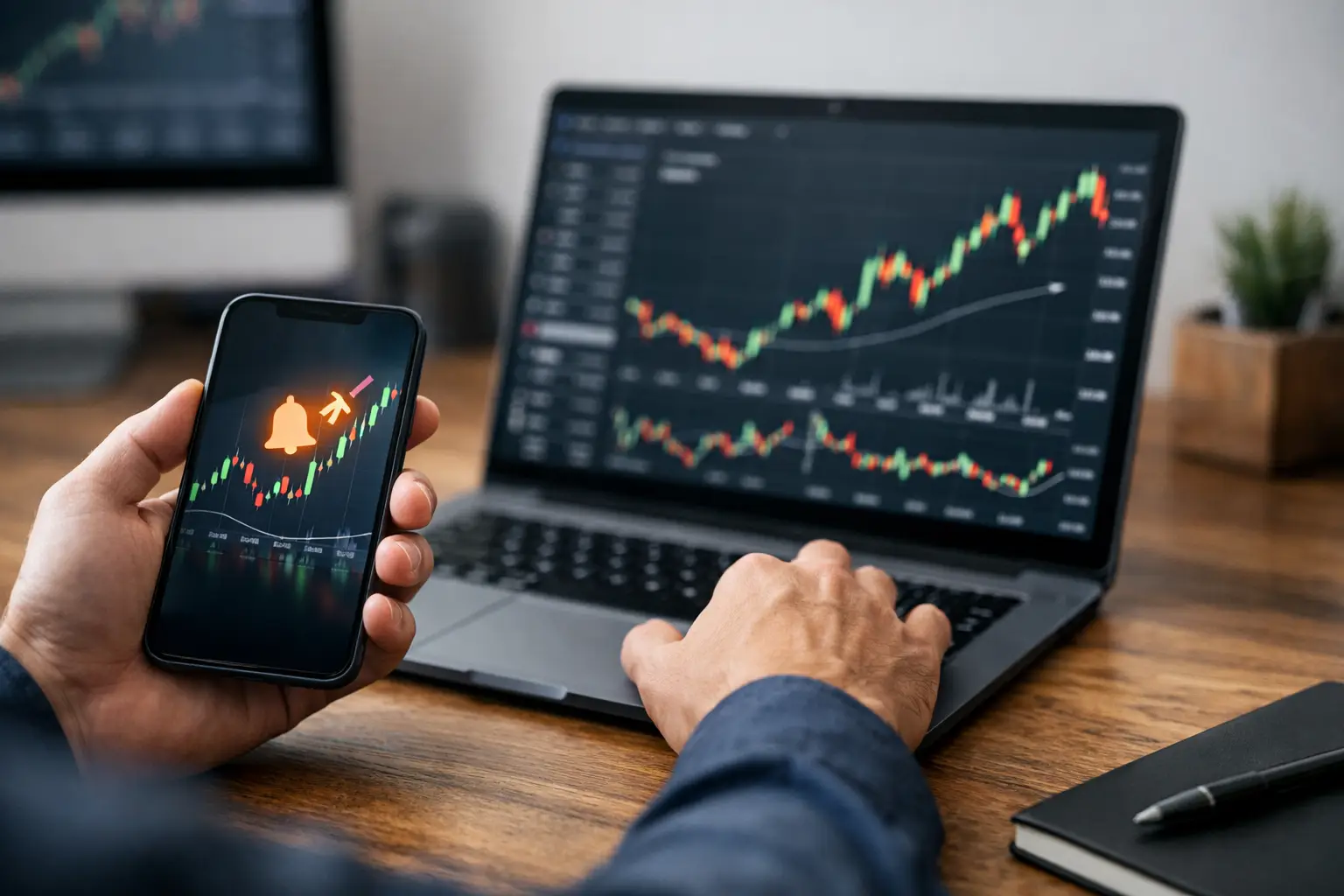
Most traders do not lose money because the alert was bad. They lose money because they treated the alert like a magic trick instead of a setup. If you want to learn how to use trade alerts, start there. A trade alert is not a substitute for judgment. It is a prompt, a framework, and sometimes a very good idea – but only if you know what problem it is trying to solve.
That distinction matters even more in stocks and options, where timing, sizing, and structure can turn the same idea into either a smart risk-defined trade or a fast donation to the market. If you are following alerts from a service, analyst, or trading room, your real job is not to copy. It is to interpret.
What trade alerts are actually for
A good trade alert should do three things. It should identify an opportunity, explain the logic, and give you enough structure to decide whether the trade fits your account and market view. That is a lot different from a text message that says, “Buy XYZ now.”
In practice, alerts usually fall into a few camps. Some are momentum alerts built around a quick technical move. Others are swing trades based on valuation, catalysts, earnings, or sector rotation. In options, alerts may be directional, income-oriented, or hedged structures designed to express a view while controlling risk.
The problem is that many traders read all of these the same way. They see an entry price and assume the edge lives in immediate execution. Sometimes speed matters. Often it does not. If the person sending the alert is working from a macro thesis, earnings expectation, volatility skew, or portfolio hedge, then the edge is in the structure and context, not just the first print after the alert hits your phone.
How to use trade alerts as part of a process
The best way to use alerts is to treat them like a trade memo from a portfolio manager you respect. Read the thesis first. What is the market backdrop? Is the trade bullish, bearish, or neutral? Is it built for a one-day move, a two-week move, or a three-month campaign? If you cannot answer those questions, you are not ready to place the trade.
Next, look at the instrument. A stock alert and an options alert are not interchangeable. Buying 100 shares of a stock after a pullback is not the same thing as buying short-dated calls after implied volatility has already jumped. On paper, both may express the same bullish view. In reality, one is forgiving and the other is a ticking clock.
Then ask the question traders hate asking when they are excited: why now? If the alert is based on an oversold bounce, entering after a 6 percent rip may destroy the whole setup. If the alert is part of a scaling plan, then the first alert may be one-third of the intended position, not the entire bet. This is where people get themselves in trouble. They see action, assume conviction, and oversize into noise.
How to use trade alerts without copying blindly
Copying blindly is easy because it feels efficient. Someone else did the homework, so you press the button. The problem is that their account is not your account, their risk tolerance is not your risk tolerance, and their cost basis definitely is not your cost basis if you are late.
A useful alert should help you make your own decision. That means translating the alert into your terms. How much are you willing to lose if the thesis is wrong? How long are you willing to hold? Does the trade overlap with positions you already have? If you are already long tech and the alert is another bullish Nasdaq expression, you may be adding concentration when you think you are adding opportunity.
This is especially important in options. The same alert can be sensible for one trader and reckless for another depending on account size and experience. Selling puts into a stock you are happy to own is one thing. Selling puts because the premium looks juicy, while ignoring earnings, margin usage, and assignment risk, is a different game.
Reading the context behind the alert
The best alerts make more sense when you understand the broader tape. Is the market in risk-on mode, where bad news gets ignored and momentum carries farther than it should? Or are we in one of those ugly stretches where every rally gets sold, Treasury yields are climbing, and traders suddenly remember valuation matters again?
Context changes how you use the same alert. A bullish semiconductor trade during a broad AI melt-up can work even with a less-than-perfect entry because the sector tailwind is doing heavy lifting. That same alert during a hawkish Fed repricing or global growth scare needs tighter risk management and lower expectations.
This is one reason experienced traders like commentary-driven services. The alert alone is useful. The alert plus macro interpretation is much more useful. A trade idea tied to rate policy, crude spikes, election risk, or earnings season positioning gives you something far more valuable than a ticker and strike. It gives you a reason.
Timing matters, but not in the way most people think
Newer traders obsess over getting the exact alert price. That is understandable and usually a mistake. The better question is whether the trade still offers favorable risk and reward when you see it.
If an alert triggers a breakout and the stock runs immediately, chasing may be the wrong move. You can wait for a retest, reduce size, or skip it. There is no rule that says every alert must become a position. In fact, one of the cleanest signs of progress as a trader is the ability to pass on decent ideas that no longer fit the price.
On the other hand, some alerts improve with patience. A scale-in trade on a high-quality name often works better if you let the market hand you a better basis during intraday volatility. But that depends on the trade design. If the setup is event-driven and the catalyst window is short, waiting too long may leave you with a cleaner chart and a worse opportunity.
It depends – and that is exactly the point. Trade alerts are not microwave instructions.
Risk management is where trade alerts become useful
An alert is only as good as the risk plan around it. Before entering, know your invalidation point. What would tell you the idea is broken? A chart level? A macro change? Earnings guidance? Time decay in the option?
You also need to know whether the alert is a starter, a full position, or a hedge. Too many traders see an alert and go all-in because they want the result without building the position properly. Professionals scale. They average in selectively, sell premium when the setup allows it, and hedge when the market backdrop gets messy. That is not being timid. That is staying alive.
If you are using alerts from a source like PhilStockWorld, the smart move is to pay attention to how the trade fits into a broader portfolio mindset. Sometimes the alert is the idea. Sometimes it is a piece of a larger allocation puzzle. If you miss that, you can end up overtrading what was meant to be a measured position.
How to use trade alerts in stocks versus options
In stocks, alerts are usually more forgiving. You can scale in, hold longer, and avoid the extra variable of implied volatility. That does not make them easy, but it gives you room to be slightly wrong on timing.
Options demand more precision. You are not just right or wrong on direction. You are also fighting time, volatility, and contract selection. An alert to buy calls can still lose if implied volatility collapses after the catalyst. A bearish put spread may outperform long puts if the move is moderate and timing is uncertain. Structure matters.
That is why serious traders should read options alerts like blueprints, not headlines. Strike selection tells you expected magnitude. Expiration tells you expected timing. Whether the trade is naked long premium, a spread, or a premium-selling structure tells you how the trader sees volatility and risk.
The biggest mistakes traders make with alerts
The first mistake is chasing after the move. The second is oversizing because the alert came from someone they trust. The third is stripping out the context and then blaming the alert when the trade fails.
There is another mistake that does not get enough attention: alert addiction. Some traders stop developing their own process because the steady stream of ideas feels productive. It is productive right up until market conditions change and they realize they never learned why one setup was worth taking and another was worth ignoring.
Trade alerts should sharpen your thinking, not replace it. Over time, you should start spotting the setups before the alert arrives. That is when you know you are actually learning.
A good alert can save you research time, point you toward opportunities you missed, and help organize market noise into a tradable idea. But the real edge comes from what you do next. Read the thesis, respect the structure, and never confuse someone else’s conviction with your own. The market charges full price for that lesson, and it is cheaper to learn it on purpose.

