

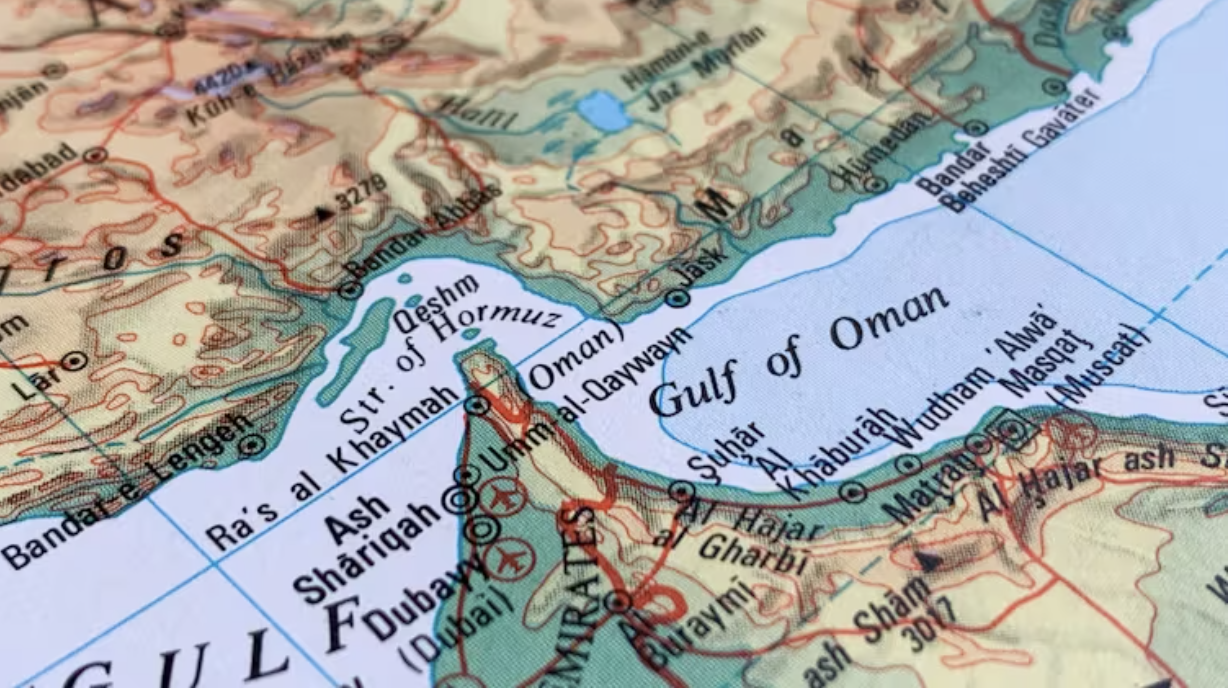
The Strait of Hormuz is finally reopening but Europe’s food chain suppliers cannot afford to be complacent
Our study of agri-food systems suggests that the most powerful resilience levers are not found inside single firms, but in the supply chain’s ability to adapt, collaborate, and move quickly as a network.
Europe’s food system is entering an era of permanent stress. Climate change is already disrupting the food chain, from farms to storage, processing, and distribution. The latest FAO–WMO assessment warns that extreme heat is pushing agri-food systems to the brink.
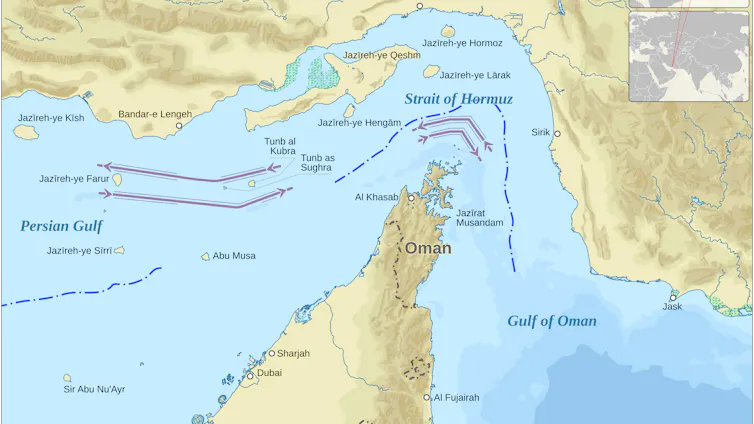
Against this backdrop of compounding disruptions, the reopening of the Strait of Hormuz may therefore feel like relief. But for food systems, reopening should not be mistaken for a return to normal. It is the moment when governments and firms decide whether they have learned from the disruption or simply waited for it to pass. While historically viewed through the lens of energy security, the recent disruptions in the Strait of Hormuz exposed its critical role as a fragile chokepoint for the global agri-food system. Fuel, LNG, fertiliser-linked inputs, refrigerated transport, packaging and port capacity all connect the vital waterway to food prices and availability.
Even when vessels start moving again, costs, delays and risk perceptions can travel through the chain for weeks or months.
Genuine resilience goes far beyond reactive firefighting when a disruption hits; it’s about using the downtime to build adaptive and transformative capabilities to be able to better cope with the increasing uncertainty.
These make one question urgent: when Hormuz reopens, what should the agri-food sector fix before attention moves elsewhere?
Many firms still answer that question from inside their own walls. After all they have the most visibility over their own parameters. They look at inventories, backup plans, internal processes, and financial reserves. Our research, however, suggests that they are not the main engine of resilience in agri-food supply chains.
In our recent study, we examined 19 resilience capabilities across three levels: organisation, supply chain, and the wider industry.
We asked supply chain resilience experts to judge how those capabilities influence one another in agri-food systems. As we looked under the hood of resilience in the agri-food sector, one result stood out clearly: supply-chain-level resilience was the strongest driving force in the system.
A food retailer or large supermarket may be the most resilient, efficient and well-managed actor within the supply chain, but it still depends on growers, processors, transport providers, warehouses, packaging, digital systems, energy and regulation.
What good is a resilient retailer whose shelves are empty due to other actors being vulnerable and disrupted? If those links cannot adapt together, firm-level strength quickly reaches its limits, risking increases in prices, and in severe cases, unavailability of food items.
Strait of Hormuz reopening is not the end of the risk
In our model, the supply chain cluster exerted the strongest influence over the rest of the resilience system, more than the organisational or industry clusters.
To put it simply, capabilities at the supply-chain level did more to shape the resilience of the wider system than capabilities located inside firms or at the sector level. The Strait of Hormuz disruption shows why food resilience cannot be built company by company. When a major shipping route is blocked, the effect does not stop at the port. It moves through the whole food system:
- fertiliser becomes more expensive or harder to obtain
- farmers face uncertainty about planting
- processors deal with higher input costs
- transport firms absorb rising fuel prices
- retailers eventually face pressure on prices and availability.
The most important resilience capabilities were not mainly inside single firms. They were found in the relationships between them. It needs to adapt when conditions change, for example by adjusting production plans when fertiliser is delayed or energy prices rise. It needs to be agile, meaning it can make quick decisions rather than waiting for slow approval processes while a disruption spreads. It needs supply flexibility, so firms are not locked into one supplier, one route or one region. And it needs collaboration, because no farmer, processor, logistics provider or supermarket can solve a shock like Hormuz alone.
For managers, the key question is not just: “Is my company prepared?”
There are multiple crucial questions: Can our supply chain respond together? Can fertiliser buyers find alternative sources? Can processors change production plans? Can logistics partners reroute deliveries? Can retailers give suppliers earlier warnings about demand changes? Can smaller farmers and suppliers be included in crisis planning rather than left to absorb the shock alone?
Our research shows why this matters. Adaptability and agility were the strongest drivers of resilience in the system. Supply flexibility and collaboration were also among the most important capabilities. Four of the five highest-weighted capabilities in our model sat at the supply-chain level.
The broader implication is simple.
Resilience is not just about having more stock, more slack or a stronger balance sheet inside one company. Those buffers can buy time, but they cannot reroute inputs, coordinate suppliers, protect farmers or keep food moving by themselves.
The strongest indicator of resilience is whether the network can sense change, coordinate action, and absorb disruption together.
Firm-level and industry-level resilience still matter
This does not mean organisation-level capabilities do not matter.
In fact, one organisational capability stood out in our results: risk-aware culture. In simple terms, that means a company takes risk seriously, prepares for disruption and learns from what goes wrong. It was one of the most important capabilities in the model; nearly all other capabilities enabled this one.
However, in our expert-based model, risk-aware culture looked less like an isolated starting point and more like something strengthened by what happens across the chain, an end goal.
Specifically, we found that this goal is reinforced by critical capabilities such as supply flexibility, supply visibility, supply chain collaboration, partnership across the industry, and anticipation. What this means is that a company becomes better at anticipating risk when suppliers share information early on, when logistics partners can react quickly, and when sourcing options remain open.
Internal resilience is often built on external coordination.
Industry-level capabilities mattered too, especially compliance flexibility and partnerships beyond the supply chain level. These help create conditions in which firms and supply chains can adapt. For a Hormuz-type shock, this means temporary regulatory flexibility for critical food and agricultural inputs, fast customs procedures for perishables, emergency freight coordination and support for smaller suppliers that cannot absorb months of volatility.
What managers and policymakers should do differently
Managers should ask practical questions: Can we switch suppliers fast enough? Do we share data early enough to spot trouble before it spreads? Can we reroute flows, rebalance inventory, and adjust procurement across the network? Do we have relationships strong enough to coordinate under pressure, not just in stable times?
The answer should not be a thicker crisis manual that sits unused. It should be a live rehearsal of the supply chain.
Managers can map which products depend on Hormuz-linked inputs, pre-agree alternative suppliers and routes, test how quickly transport can be reallocated, and decide in advance how price increases or shortages will be shared across farmers, processors, retailers and consumers.
Consider food retail. Supermarkets must move beyond mere transactional ties and collaborate intimately with their suppliers. When retailers plan major promotions or sales events, they need to share these forecasts well in advance rather than at the last minute. This lead time allows processors and distributors to adjust capacity without panic. It also protects farmers from the whiplash of sudden, unmanageable demand spikes.
Policymakers should ask parallel questions
Are regulations helping actors adapt when shocks hit? Are smaller suppliers included in resilience planning? Are public-private partnerships strong enough to support the chain as a whole rather than protecting only the largest firms? Are the regulations relevant and inclusive enough to protect the most vulnerable agri-food supply chain actors?
Translating these questions into effective policy requires shifting from rigid, top-down mandates to agile and inclusive governance. For instance, when an unforeseen shock hits, such as a sudden trade blockade or a severe regional weather event, regulatory frameworks must be flexible enough to allow rapid adaptations, for example, easing temporary border restrictions for critical perishable goods to avoid further waste. Furthermore, financial safety nets and public-private task forces must explicitly seat smallholder farmers and local cooperatives at the table, ensuring that the most vulnerable, yet essential, actors are not forced into bankruptcy during times of crisis.
Global food systems are already exposed to climate shocks, geopolitical stress, and volatile trade conditions. The reopening of the Strait of Hormuz should, therefore, be treated not as the closing chapter of a crisis, but as a rare window to strengthen the network before the next one.
In such an environment, resilience will not come from the strongest individual company. It will come from supply chains that can adapt, collaborate and move together.

A weekly e-mail in English featuring expertise from scholars and researchers. It provides an introduction to the diversity of research coming out of the continent and considers some of the key issues facing European countries. Get the newsletter!
Alireza Asgari, Assistant Professor of Supply Chain Management and Information Systems, Clermont School of Business; Morteza Alaeddini, Assistant Professor of Supply Chain and Information Systems Management, ICN Business School, and Philipp Sauer, Associate Professor of Supply Chain Management and Purchasing, Neoma Business School
This article is republished from The Conversation under a Creative Commons license. Read the original article.


