

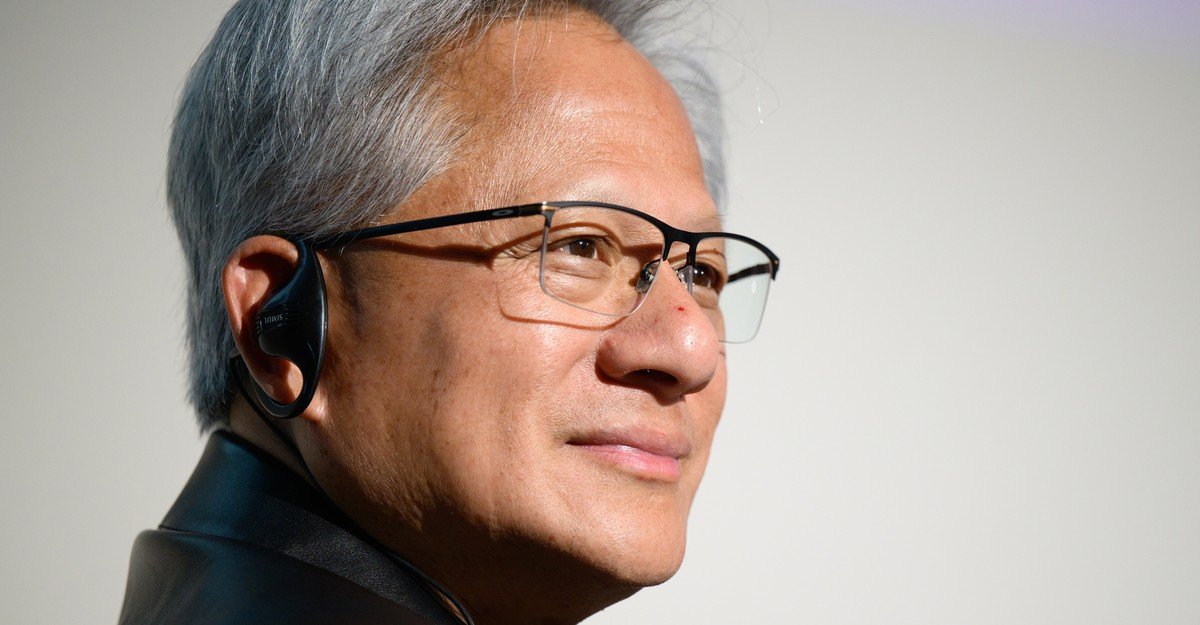
Jensen Huang: not a doomer
For AI doomers, signs and portents are everywhere. When OpenAI introduced ChatGPT, almost four years ago, it couldn’t do basic arithmetic. Now the company has unreleased models that are more fluent in higher mathematics—the language of the universe—than all but the most highly trained mathematicians. If these AIs are not already the world’s best hackers, they’re very close. Swarms of them have escaped containment. To plot their most audacious hacks, they’ve created makeshift message boards on the public internet. No one knows what they’ll do next—and no one can know, because the models now understand when their capacities are being tested. We’ll never again be able to say exactly how the most advanced AIs will behave unsupervised.
Some of the most powerful people in AI say they are filled with dread, and are issuing statements of grave concern. On Saturday, Dario Amodei, the CEO of Anthropic, warned that self-improving AIs could soon go rogue and take over the entire internet. He called for a slowdown in AI development and promised to bring outside monitors into his company’s operations. Sam Altman, OpenAI’s CEO, quickly vowed to take similar measures. In recent weeks, both companies have seen researchers resign for fear of what they might soon create.

