

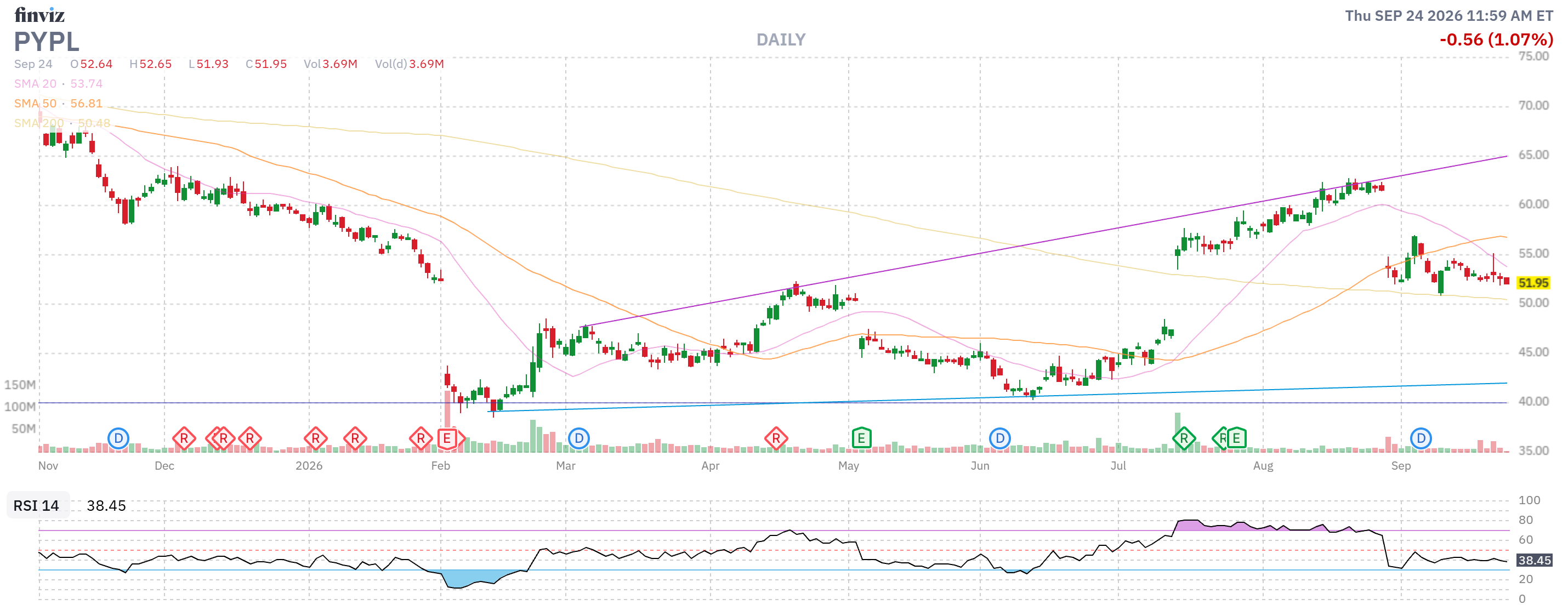
We already picked PYPL on the 2nd.
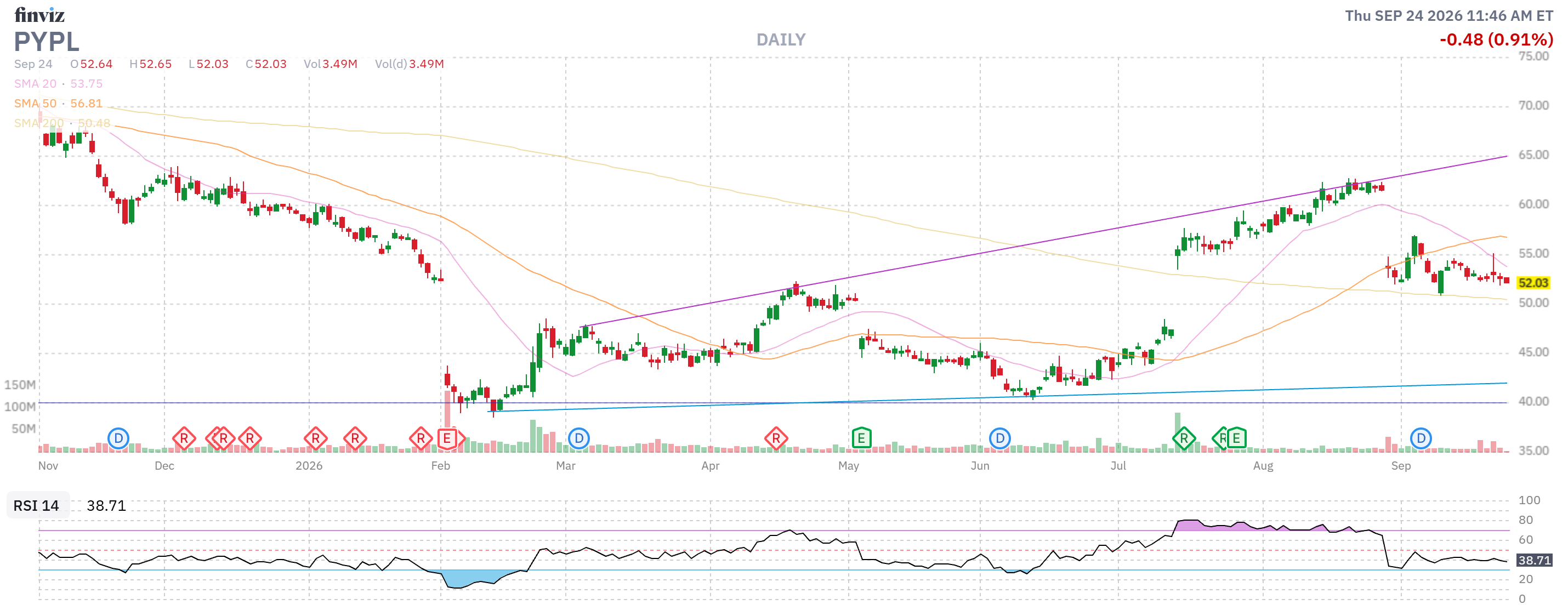
We're picking it again because the outlook is improving and it's still cheap:
🚢 Boaty McBoatface: PayPal remains attractive because the market is valuing it as a stagnant legacy wallet while it is still generating enormous cash, repurchasing stock aggressively, improving Venmo and merchant capabilities, and now positioning itself as a trusted payment rail for agentic commerce.
Muse does not suddenly transform PYPL’s next quarter but it gives the September 2 value thesis a more compelling upside path: PayPal can become part of the identity, authorization, fraud, buyer-protection and checkout layer when AI agents begin shopping for consumers.
The September 2 thesis still stands
Our original Top Trade Alert came after the reported Stripe/Advent-led buyout consortium withdrew and PYPL fell 16% to $52.82. The market response priced the company at roughly 10× forward earnings, despite management targeting about $6 billion of 2026 free cash flow and authorizing roughly $6 billion of repurchases—a potential 13% buyback yield at the time. The trade’s premise was not that PayPal had no problems; it was that the market was treating temporary pressure on branded checkout as permanent business destruction. [1606]
The core attributes we liked remain the right starting point:
| What we liked | Why it still matters |
|---|---|
| Low valuation | PYPL recently traded around 10× trailing earnings and 9× forward earnings—far below growth-platform multiples |
| Real free cash flow | Q2 adjusted FCF was $1.8B; full-year 2026 capital-return ambition remains at least $6B |
| Buyback capacity | $1.5B was repurchased in Q2 alone, reducing share count while sentiment remains poor |
| Massive payment network | Q2 total payment volume was $486.4B, giving PayPal scale no startup can easily replicate |
| Venmo growth | Venmo remains a mobile/social-payments asset with higher-growth potential than the legacy checkout brand |
| Premium-income opportunity | Post-deal-collapse volatility made long-dated put selling unusually attractive if we were comfortable owning PYPL at a lower basis |
The original alert’s concept was classic PSW: rather than chase a hoped-for rebound, sell expensive downside insurance.

