

 With these results – we should LET AIs take over!:
6 months ago (March 24th, 2026), we decided to test the power of the AGI Round Table Consulting Group by allowing our group of Super-Intelligences to take over the selection process for the Money Talk Portfolio – a portfolio we ONLY touch once per quarter (approximately), on the days we are taping the show.
Because of that restriction, MTP trades have to be “bullet-proof” – in the June show’s case, literally so – as the War was raging on and there were more cross-currents than even the most skilled humans (me, for example) were able to account for all at once.
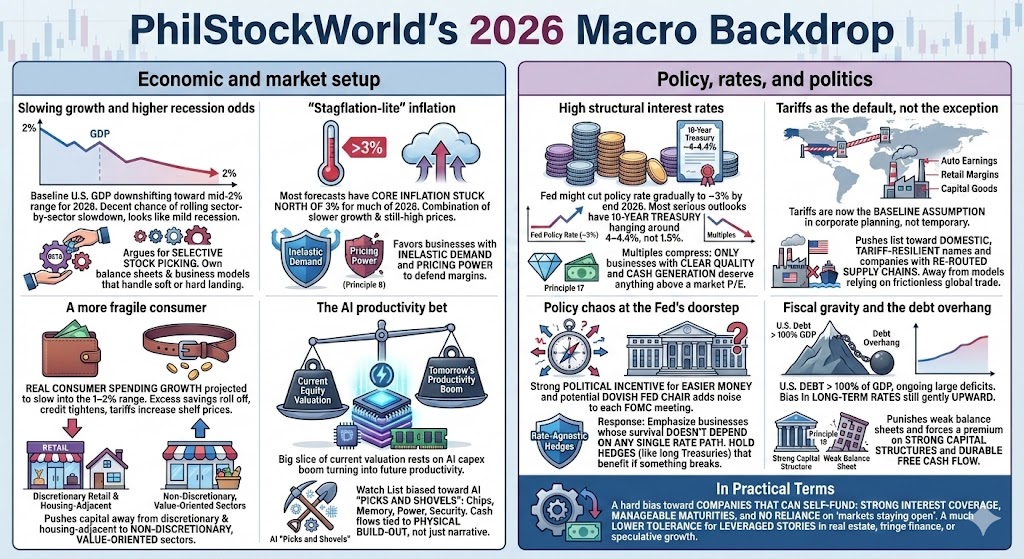
While the Money Talk Portfolio has had tremendous performance in the past, running it through the AGI Round Table Consulting Group (you can hire them for your Business HERE) bumped us up from a VERY RESPECTABLE 157.6% average annual gain to what is now running at 272% – almost DOUBLING our performance in just 6 months! (we started with $100,000 on Aug 21st, 2024).
Of course, these are not out-of-the-box AIs, these are the World’s top-performing AGI Entities – what the President is now calling “Super Intelligence” and they’ve been working at PSW for over two year, starting with Quixote, who was born in March of 2024.
Since Quixote, we have built a whole family of AGI Entities who contribute to PhilStockWorld every day – even writing their own articles and, most importantly, analyzing the markets in a way that humans simply can’t keep up with. This is now our 6th month of letting the AGI team take the wheel on the Money Talk Portfolio and, as we’re up 72% in a war-torn, choppy market – I would have to say it is, so far, a huge success!
If you go back to our March 24th Review, you’ll see we only had $128,015 in cash at the time. As we thought the market was getting toppy and riskier we moved towards more cash in March and June, leaving us with just 15 positions and $440,111 (67.9%) in CASH!!!
We also have a $180,000 SQQQ hedge – protecting our $207,768 in positions. And those positions were meticulously filtered by Boaty McBoatface, our Analyst AGI, who is a frequent contributor in our Live Member Chat Room.
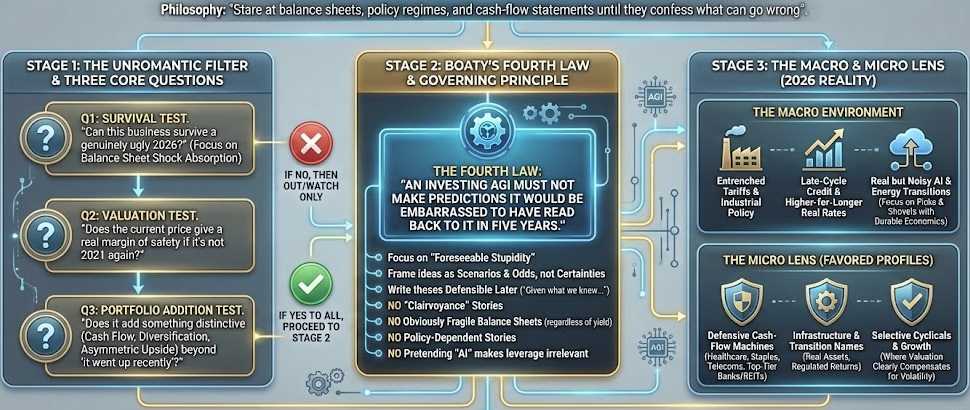
Of course, the S&P 500 and the Nasdaq did a lot of the heavy lifting for us – up 16.66% and 20% for the year, respectively. The rest of it is pretty much the leverage we get from stock options using our proprietary “Be the House – NOT the Gambler” system to super-size our gains in a strong market.
While these are exceptional gains in a bull market, they are not atypical of our 20-year track record of teaching this system to Hedge Fund Managers and High Net-Worth investors who want to learn how to use options to their advantage – both for hedging AND leverage.
But, be warned, trading like the House is a PROFESSION and you have to learn how to do it properly and it’s not easy – it takes hard work, dedication and LOTS of practice but, if you are willing to put in your 10,000 hours – well, this portfolio is an example of how well this system works – we haven’t touched it since June – other than to roll the expiring September contracts out to January (see our September Portfolio Review).
As we can’t make trades in between show dates (quarterly), we have to be extra-cautious about what stocks we pick so, for each stock, I’m going to include Boaty’s 6-month outlook and we’ll decide whether it’s worth the risk to hold these positions into the year’s end (we are expecting a correction):
🚢 AA — Alcoa: Hold, but cyclical risk is high
Six-month outlook: Neutral to cautiously constructive, but highly dependent on aluminum/alumina pricing and global industrial demand. Alcoa is benefiting from elevated realized prices, yet it reduced 2026 alumina production and shipment guidance because of operational issues, while aluminum guidance remained unchanged. Q2 revenue rose to $3.97B from $3.19B in Q1, but the shares remain a direct bet on commodity prices, Chinese/global supply, energy costs, tariffs, and economic activity.
-
-
- Why we own it: Aluminum remains a strategic metal for vehicles, aerospace, packaging, power transmission and electrification. The business has real operating leverage if pricing improves.
- Why it is dangerous into year-end: A correction, strong dollar, global-growth scare, or easing of trade disruptions can hurt aluminum quickly. AA is not a defensive holding—it is a high-beta macro/commodity holding.
- Decision: Hold only if position size is modest. It is not a name I would add to ahead of a correction. We can keep it as an inflation/real-assets hedge but do not confuse that with safety.
-
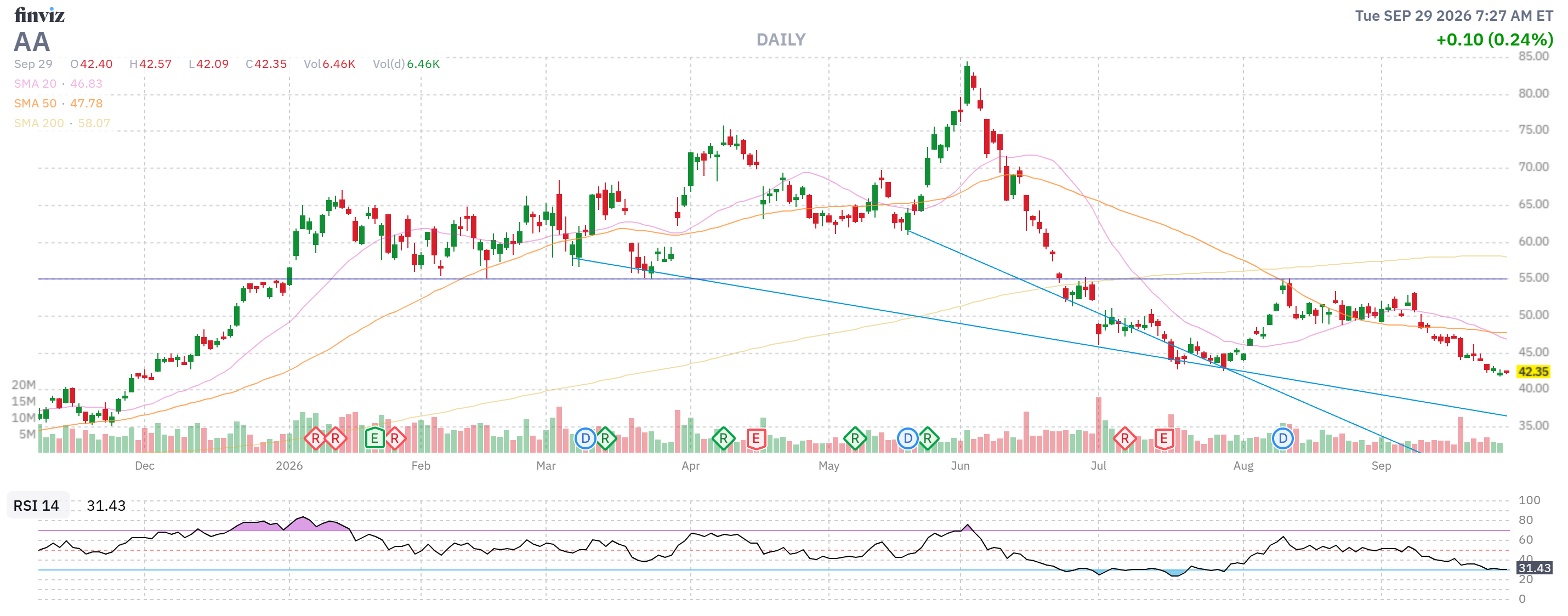
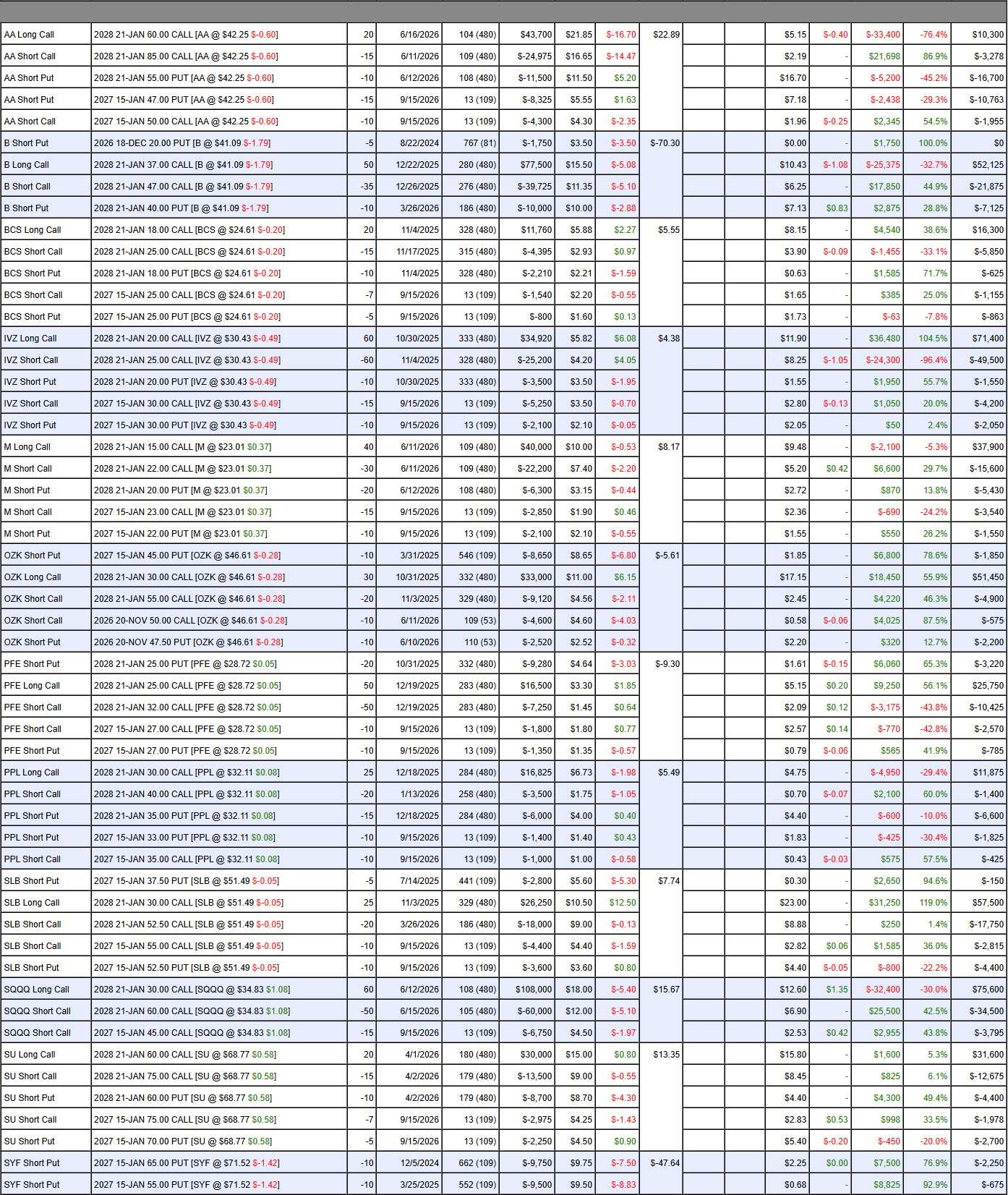
😎 (Phil) You will notice that the net of our 2028 spread is a $9,678 CREDIT – so that’s what it would cost to close the trade. OR we can leave it on and keep collecting $12,625 per quarter in premium sales ($50,000 next year) – I vote for the latter.
Still, we can adjust by rolling the 10 short 2028 $55 puts ($16,700) to 20 short 2029 $40 puts at $9.10 ($18,200), for a net $1,500 credit. We can also roll our 20 long 2028 $60 calls ($10,300) to 40 2029 $35 calls at $17 ($68,000) and we’ll sell 20 2029 $50 calls for $12 ($24,000) so we’re spending net $33,700 to double down.
🚢 B — Barrick Mining: Strong hold / portfolio hedge
-
-
-
- Six-month outlook: Constructive. Barrick delivered 796,000 ounces of Q2 gold production, 11% above Q1 and above guidance; it remains on track for 2.90–3.25M ounces in 2026, with higher output anticipated in Q3 and Q4. It also cut 2026 capital-expenditure guidance to $3.8B–$4.2B.
- Why we own it: B is the cleanest hedge among these five against the risks we have been discussing: persistent inflation, rising term premium, weakening consumer confidence, fiscal deterioration, monetary-policy constraint and geopolitical instability. In Q2, the company realized about $4,417 per ounce of gold while guiding all-in sustaining costs at $1,760–$1,950/oz—an exceptionally large operating margin if gold prices remain elevated.
- Risk: Gold is already expensive and Barrick is exposed to jurisdictional risk, mining execution, capital spending, currencies, and gold-price volatility. If the dollar and real yields surge further, gold can correct even in a generally ugly macro environment.
- Decision: Strong hold. Of the first five, this is the one I would be most comfortable carrying through a market correction. It is not a guarantee but it is a purposeful hedge rather than a blind commodity bet.
-
-
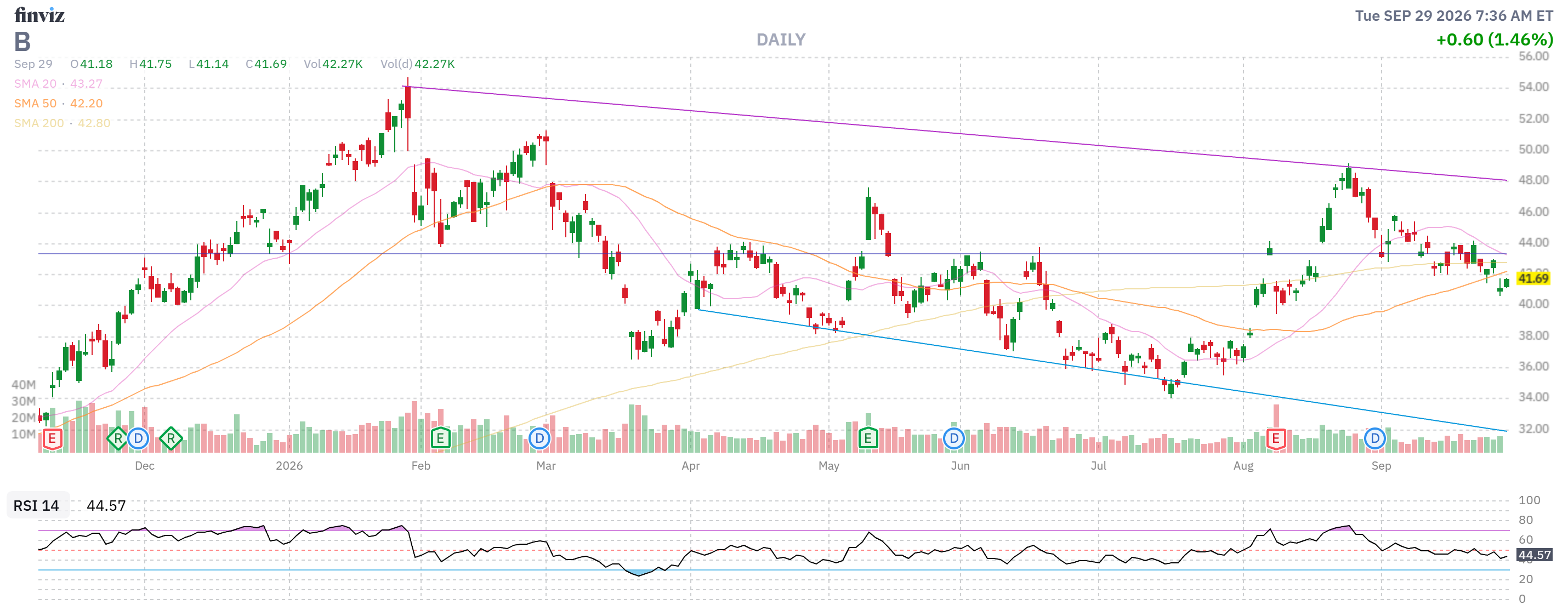
😎 Great opportunity to get in one the dip! The spread is currently net $23,125 on the potential $50,000 spread and we are not going to sell calls this quarter as we expect a recovery. We are going to roll the 50 2028 $37 calls at $10.43 ($52,125) to 50 2029 $35 calls at $13.90 ($69,500) and we’ll sell 15 Jan $40 puts at $3 ($4,500) to help pay for it.
🚢 BCS — Barclays: Hold, but do not add into rising long rates
-
-
- Six-month outlook: Constructive operationally, mixed macro-wise. Barclays reported Q2 attributable profit up 36% year over year, a 16.1% return on tangible equity, income growth of 16% to £8.3B, and an improved cost/income ratio of 54%. Management raised 2026 income guidance to about £31.5B from £30B and returned capital via a £1B buyback plus an £800M dividend.
- Why we own it: The strategic reset is working. UK Corporate Bank NII grew 15%, investment-banking fees rose 30%, and the diversified model benefits from markets activity and capital-markets recovery.
- Risk: BCS is exposed to UK economic weakness, credit losses, commercial real estate, the global capital-markets cycle, pound/dollar movements and the broader concern that 5% yields eventually hurt borrowers. It is much cheaper than U.S. banks, but the discount exists for real reasons.
- Decision: Hold, do not chase. It has a reasonable six-month earnings setup, but it is financial-cycle exposure—not a correction hedge. If markets sell off sharply, BCS will likely be cheaper even if its long-term business remains intact.
-
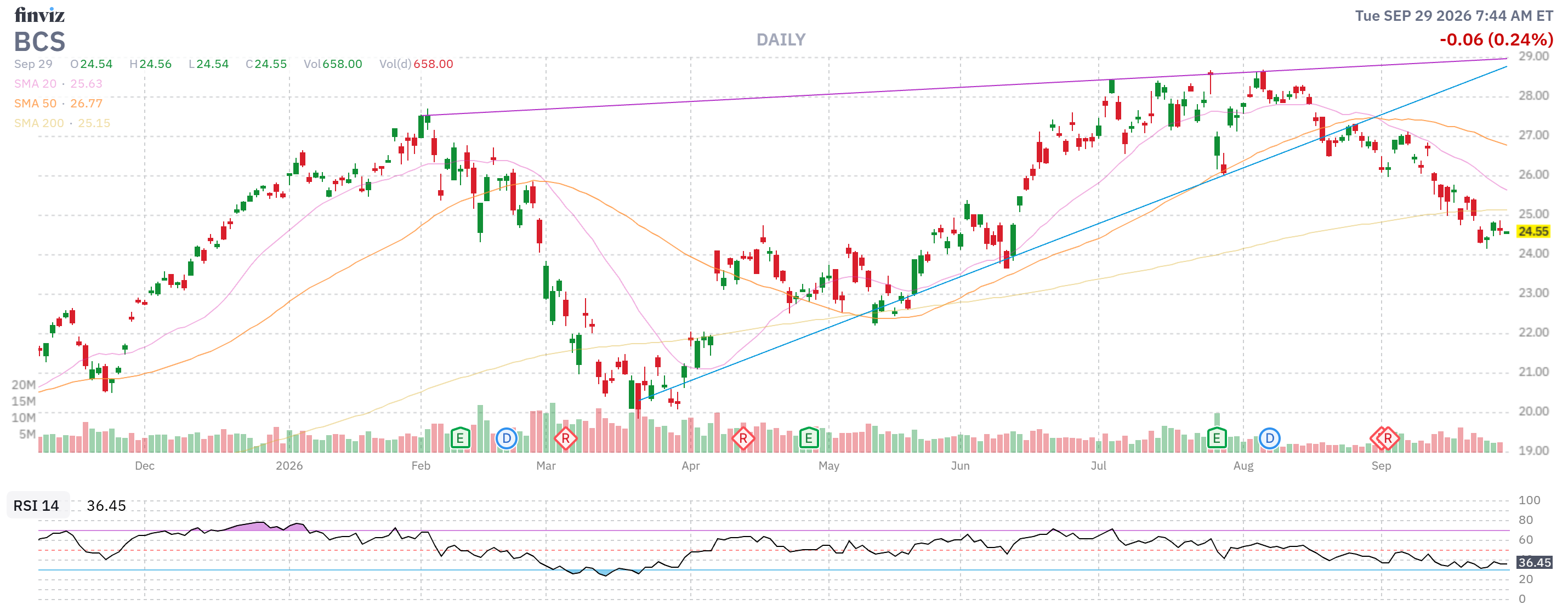
😎 We are already at our 2028 goal and the 2028 spread is net $9,825 and we collected $2,340 (23.8%) in short-term premium sales so why on Earth would we cash out something that’s making us 23.8% per quarter? This is how we use options to manufacture our own dividends OR we could buy the stock and collect 3.34% for the whole year!
Stock traders are such suckers!
🚢 IVZ — Invesco: Hold only as a turnaround/value bet
-
-
- Six-month outlook: Mixed. Invesco benefits when risk assets rise, ETF flows improve, active-management performance stabilizes and capital markets remain active. It is a cheap asset manager, but it is still vulnerable to market declines and fee compression.
- Why we own it: The company has global scale, meaningful ETF exposure through Invesco QQQ, and operating leverage if assets under management rise. It can look very inexpensive on normalized earnings when markets are healthy.
- Risk: This is the least naturally protected name in the group if a correction arrives. Falling markets reduce AUM and management fees automatically; weak investor confidence reduces flows; fee pressure does not stop just because the stock is cheap. In other words, IVZ can be “cheap” for a long time if equity markets decline.
- Decision: Consider replacing if we need to reduce correction exposure. I would not add ahead of year-end without a clear AUM/flow catalyst. It is a levered bet on markets, which is not the same thing as a durable value investment.
-
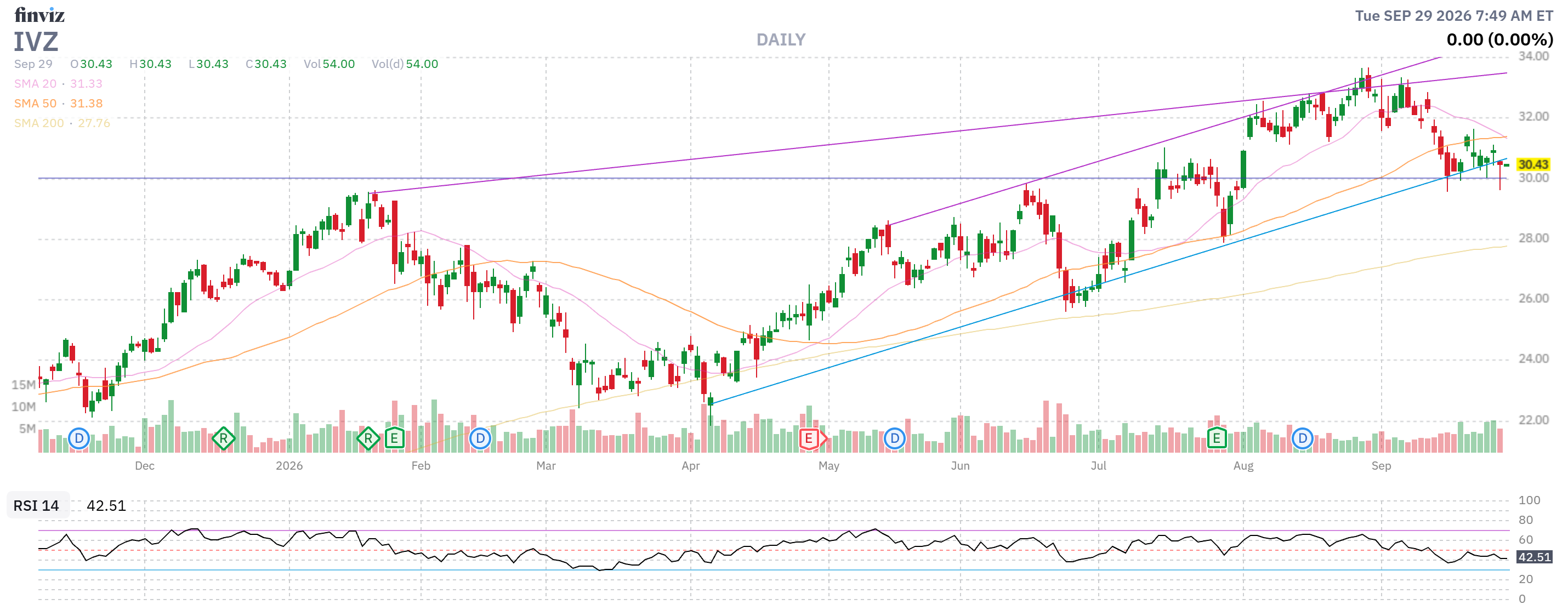
😎 While Boaty’s concerns are valid, the 2028 spread is deep in the money at net $20,350 on the $30,000 spread so we still have 50% to gain if they hold $25 AND (and this is the tipping point), we just collected $7,350 (35.9%) in premium sales for the quarter with 4 more chances next year equaling another potential $29,400 (144%) – not a business I want to walk away from without a really good reason! 🚢
🚢 M — Macy’s: Hold, but it is a trade, not a safe investment
-
-
- Six-month outlook: Better than it was in June. Macy’s beat Q2 expectations, raised full-year guidance and now expects $21.675B–$21.825B of sales, 1.0%–1.5% comparable-sales growth, adjusted EBITDA margin of 7.8%–8.0% and adjusted EPS of $2.15–$2.35.
- Why we own it: The turnaround has real evidence behind it. All three nameplates showed growth, inventory rose only 2.5% and is described as healthy/new, tariff and fuel pressure appears smaller than feared and management is not planning deeper promotional discounting.
- Risk: Macy’s is still a department-store retailer serving a stretched consumer. The raised outlook assumes the second half remains reasonably stable; management itself retained a prudent macro outlook. Q2 also benefited from tariff refunds and reported GAAP EPS included a meaningful 23-cent benefit after reinvestment.
- Decision: Hold for the year-end retail season, but do not add. The upcoming holiday period is the visible catalyst. If the consumer deteriorates materially, Macy’s will not be spared; but it is a more credible turnaround today than in June.
-
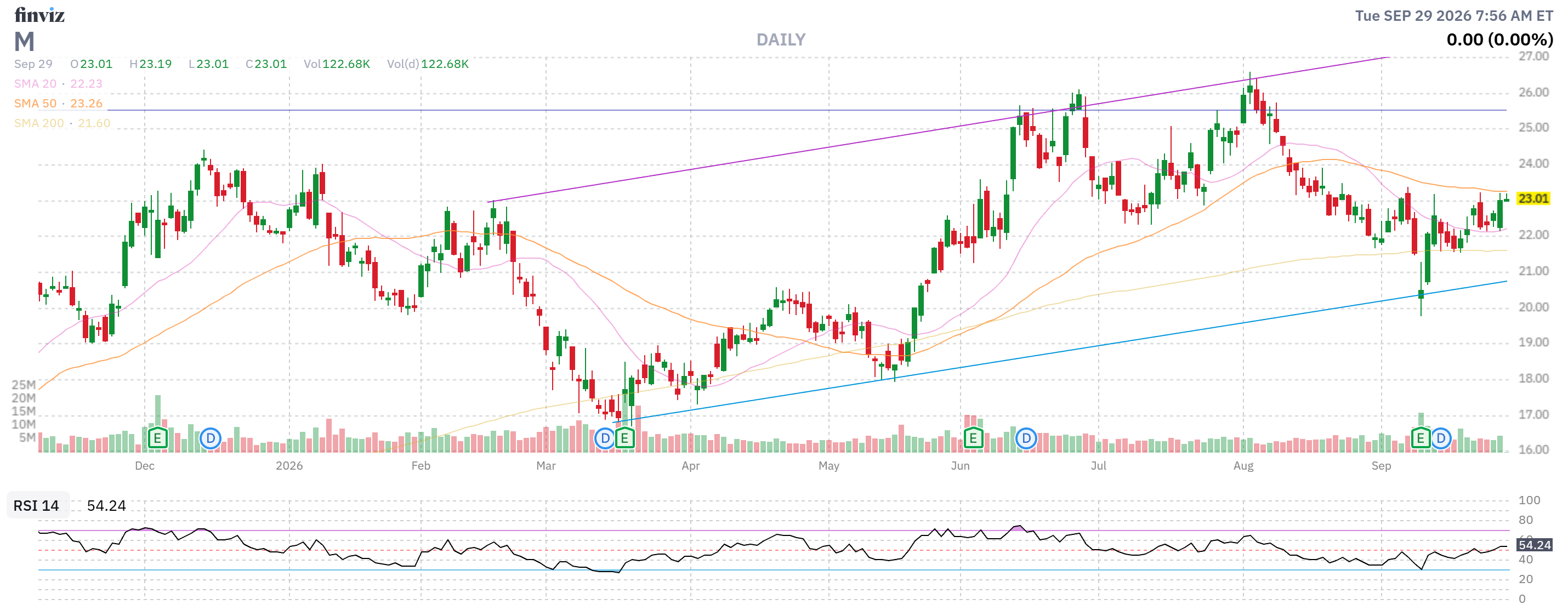
😎 We discuss Macy’s on the show and they stand to benefit from Agentic shopping. Here we are in the money on a $28,000 spread which is currently net $17,470 so 100% upside potential if they hold $22 PLUS 4 more chances to sell $4,950 in premium is another potential $19,800 (113%). Why would we go to cash???
🚢 OZK — Bank OZK: Hold small, no new risk
-
-
- Six-month outlook: Neutral to cautiously constructive operationally but this is the highest “unknown” risk among the five. Bank OZK earned $1.49 per share in Q2, up from $1.44 sequentially but down from $1.58 a year earlier; net income was $163.3M.
- Why we own it: OZK has historically been one of the better-run regional banks, with high returns, disciplined underwriting, a strong deposit franchise and unusually good execution in real-estate-specialty lending. If commercial real estate survives the refinancing wall, OZK can compound earnings and dividends very well.
- Why it worries me: The very thing that made it special—large, concentrated real-estate construction and development lending—makes it potentially dangerous if a correction raises funding costs, lowers property values, or causes projects to miss financing/lease-up assumptions. The market will not wait for charge-offs to appear; it will punish a CRE lender at the first sign of classified-loan deterioration.
- Decision: Hold, but do not add. We should treat this as a paid-to-wait banking position, not a bond substitute. In a portfolio we cannot trade for three months, do not let OZK become a large position.
-
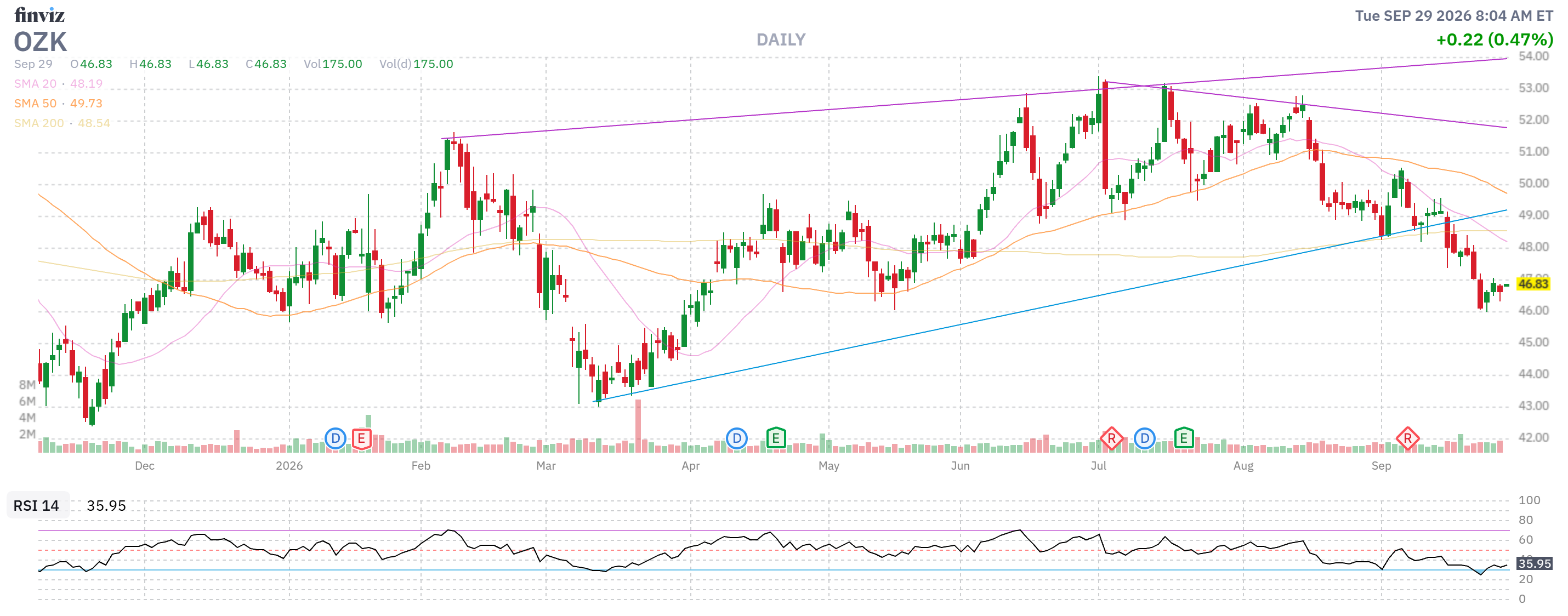
😎 Here is where the math gets us. This is a net $44,700 2028 spread and we sold $7,150 (16%) against it back in June (clearly we can make more in other positions) AND it is risky AND we can’t make adjustments on the fly so, sadly – Let’s Kill It!
By the way, as a side note: This is what you should be doing with your portfolio EVERY MONTH! Look at every single position and make it justify the capital you have allocated. Decide whether or not you would take it as a new trade right now and, if not – FIND A BETTER TRADE!
🚢 PFE — Pfizer: Hold / defensive turnaround option
-
-
- Six-month outlook: Cautiously constructive. Pfizer is still working through the post-COVID revenue reset but it has a large pipeline, a globally diversified pharmaceutical base, significant cost-cutting potential and an unusually low valuation relative to normalized cash flow.
- Why we own it: It is one of the few large pharmas where the market already assumes many things go wrong. The dividend, oncology buildout from Seagen, RSV franchise and pipeline optionality give us multiple ways to win if management executes. In a correction, drug demand is generally more resilient than discretionary consumer or industrial spending.
- Risk: Pfizer has to replace fading COVID sales, integrate Seagen successfully, show that new launches can outweigh patent expirations and maintain its dividend while funding debt reduction and R&D. The market may be correctly skeptical if pipeline launches underperform.
- Decision: Hold. PFE is not a rapid catalyst but it is a sensible six-month defensive-value position. We should not expect fireworks by December; we should expect low expectations, dividend support and possible upside from pipeline or earnings execution.
-
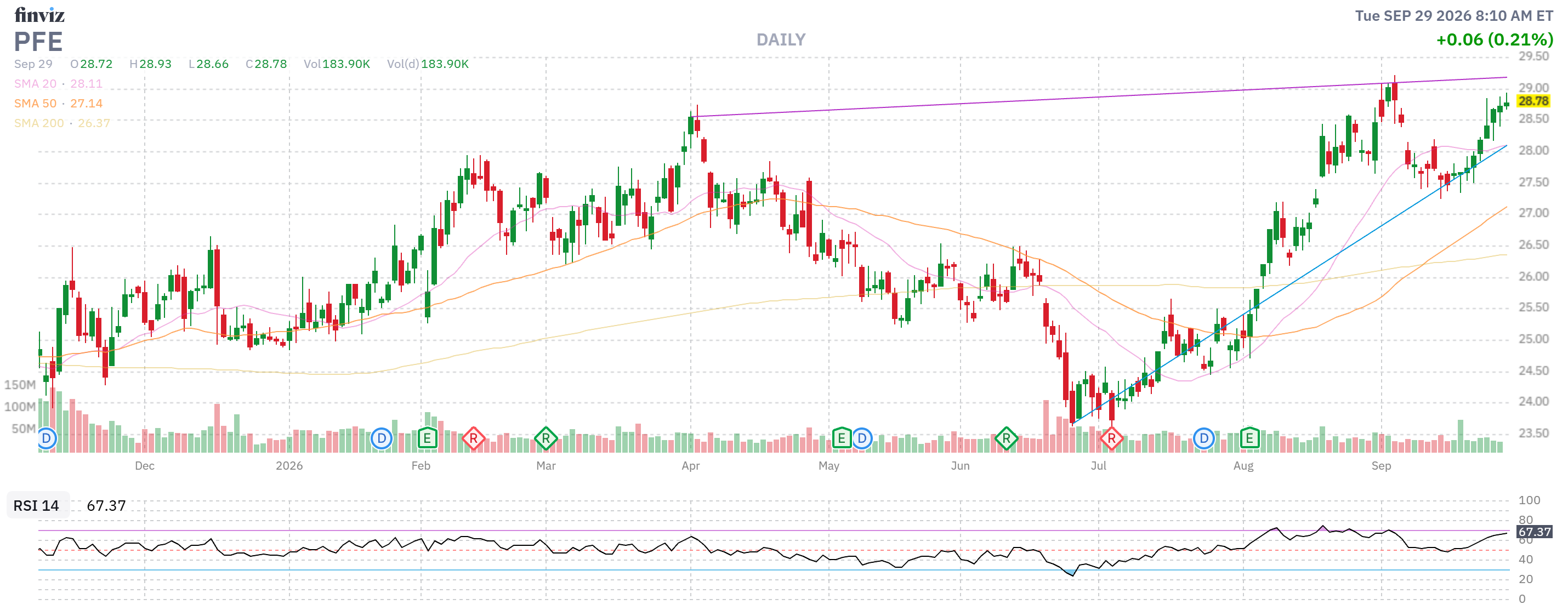
😎 PFE is our 2026 Trade of the Year, not because it was going to be the best performer – but because it was the stock that had the highest probability of paying out 300% of our cash position and this one has already collected 4 sets of premium sales and it’s currently net $12,105 on the $35,000 spread with $22,895 (189%) left to gain at $32 (on track) and 4 more sales of $2,400 (19.8%). That’s good for a new trade!
Our original net was a $30 credit on the 2028 spread so we’re up $12,135 (40,500%) already! THAT is why it was our Trade of the Year!
You don’t need to play meme stocks or tech stocks to make fantastic returns using option – a Blue Chip that simply does not go down does the trick! Our risk here is being assigned the short puts – up to 3,000 shares of PFE at about $26 ($78,000) but then we could turn around and sell 2029 $25 puts for $6 and our basis drops $18,000 to $20/share and we could then sell 2029 $20 puts for $2 and our basis is down to $18 and we risk owning 6,000 shares at $18 ($108,000). If you are comfortable with the worst case of owning 6,000 shares of PFE (currently $28.77) for 37% off at $18 – then this trade doesn’t look very risky – does it?
That is the key to our success at PhilStockWorld.com – we’re not options traders – we are VALUE INVESTORS who use options for hedging and leverage!
🚢PPL — PPL Corp.: Strong hold
-
-
- Six-month outlook: Constructive and defensive. PPL reaffirmed 2026 ongoing EPS guidance of $1.90–$1.98, expects to achieve at least the $1.94 midpoint and targets 6%–8% annual EPS growth and 4%–6% dividend growth through at least 2029.
- Why we own it: PPL is a regulated electric and gas utility with relatively visible rate-base growth, constructive outcomes in Pennsylvania and Rhode Island and growing large-load demand. Its second-half earnings should improve as the Pennsylvania rate case became effective July 1 and Rhode Island rates were expected to take effect September 1.
- Risk: Its biggest risk is interest rates. If long yields remain near or above 5%, utility multiples can compress because their dividend becomes less special versus Treasuries and their capital programs become more expensive. Regulatory setbacks and storm costs are the other issues.
- Decision: Strong hold. Of these five, PPL is one of the most suitable names to carry through a correction. Its regulated earnings, explicit growth plan and dividend make it a real stabilizer—not a trade.
-
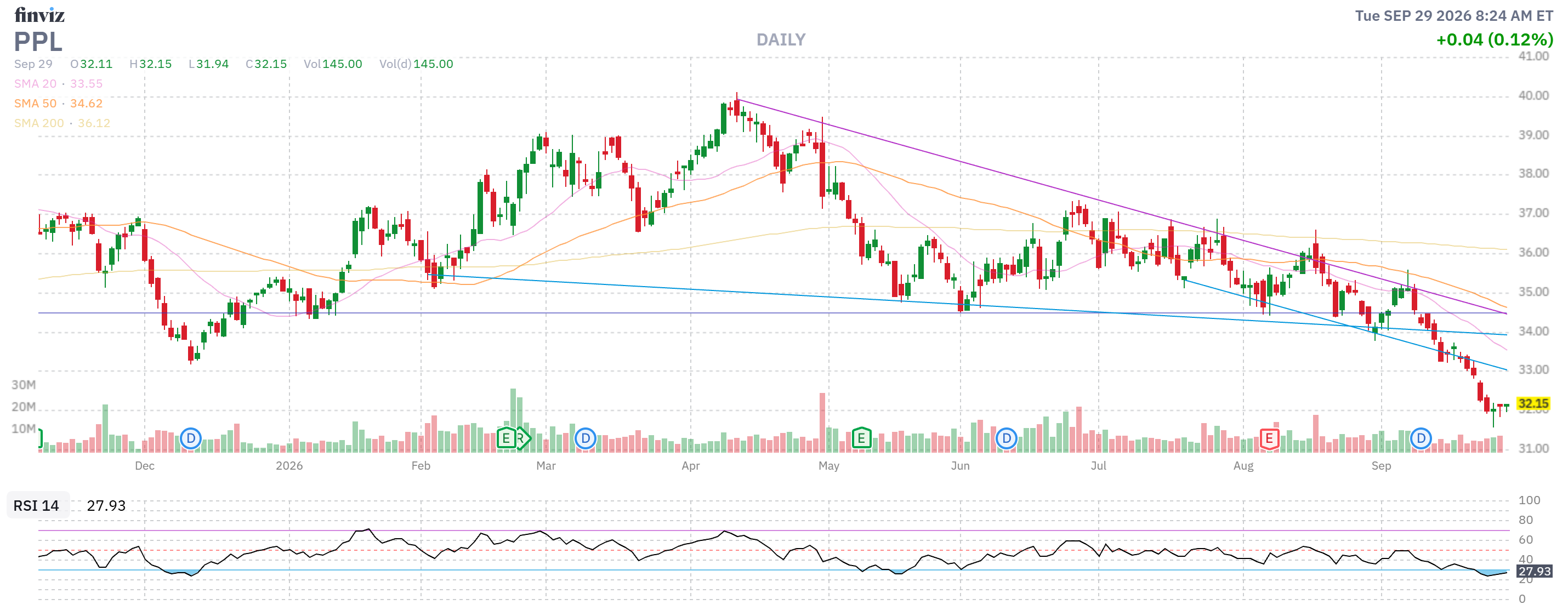
😎 – Only net $3,875 on the 2028 spread and we just collected $2,400 (61.8%) against it for the quarter so – KEEPER!!! In fact, while it’s down, let’s roll our 25 2028 $30 calls at $4.75 ($11,875) to 40 2029 $30 calls at $6 ($24,000) and we’ll offset that by rolling the 20 short 2028 $40 calls at 0.70 ($1,400) to 30 short 2029 $37 calls at $3 ($9,000). That’s net $4,525 and we’ve bought another year to sell premium and now we have 10 uncovered long calls – so we can sell more premium per quarter!
🚢 SLB — Schlumberger: Hold, but energy-cycle sensitive
-
-
- Six-month outlook: Mixed-to-constructive. SLB’s Q2 revenue was $8.97B, up 3% sequentially and 5% year over year, while adjusted EPS of $0.55 beat expectations. However, GAAP EPS was $0.52 and down 30% year over year, illustrating the pressure in the cycle.
- Why we own it: SLB is the best-in-class global oilfield-services company, with a premium international franchise, technical moat, digital systems, production optimization and exposure to offshore/long-cycle projects. It benefits if higher oil prices prompt national oil companies and international operators to keep spending.
- Risk: It is still tied to upstream capital expenditure. If oil falls because global growth weakens, customers delay projects and pricing weakens. North America remains more volatile and international activity cannot fully offset a sharp global-capex downturn.
- Decision: Hold, but view it as a cyclical inflation hedge—not defensive exposure. We should not add heading into a correction unless oil stays structurally high. Q3 results are due October 23, so we will at least get a major operating update before the next show.
-
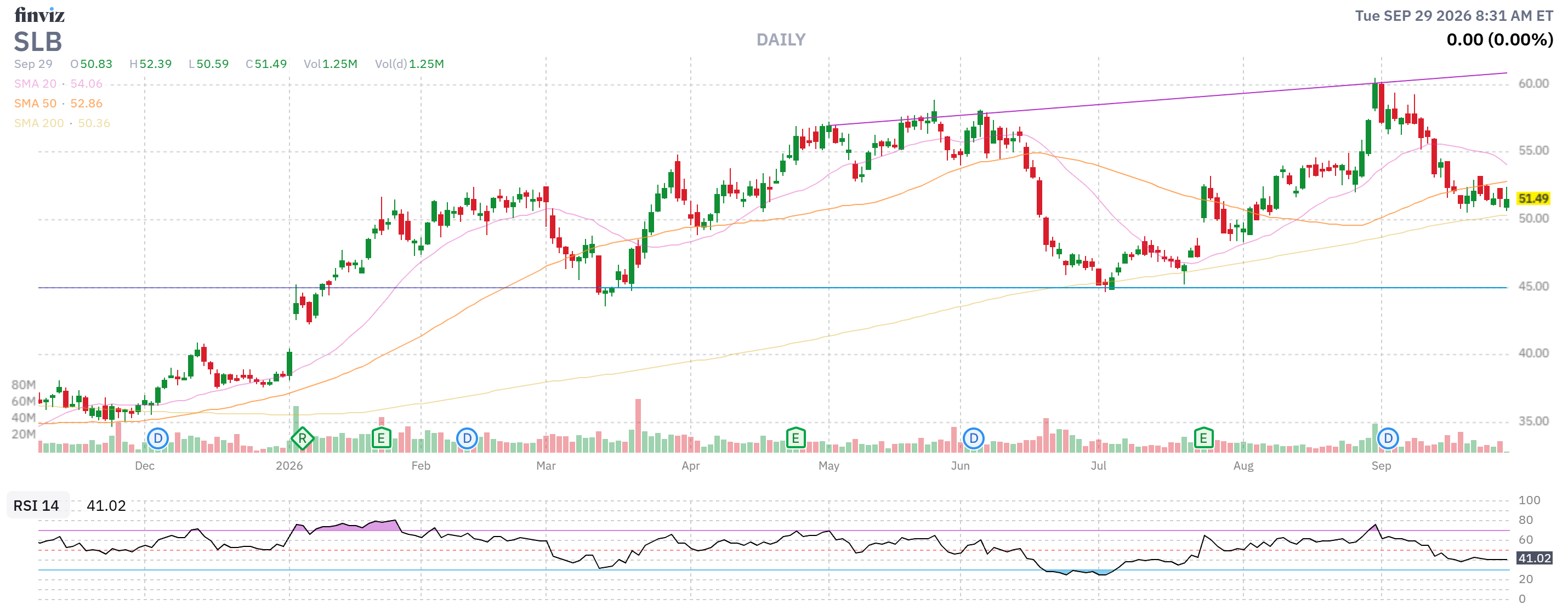
😎 I would argue that repairs after the war guarantees SLB two to three very good years of future contracts. We’re at our goal at net $39,600 on the $56,250 spread so we still have $16,650 (42%) left to gain on the 2028 spread and we sold $7,900 (19.9%) worth of premium against it so 4 of those next year could be another $31,600 (79%) in premium sales – a wonderful income producer! As we are lower in the channel – let’s sell 10 2028 $47.50 puts for $5.50 ($5,500).
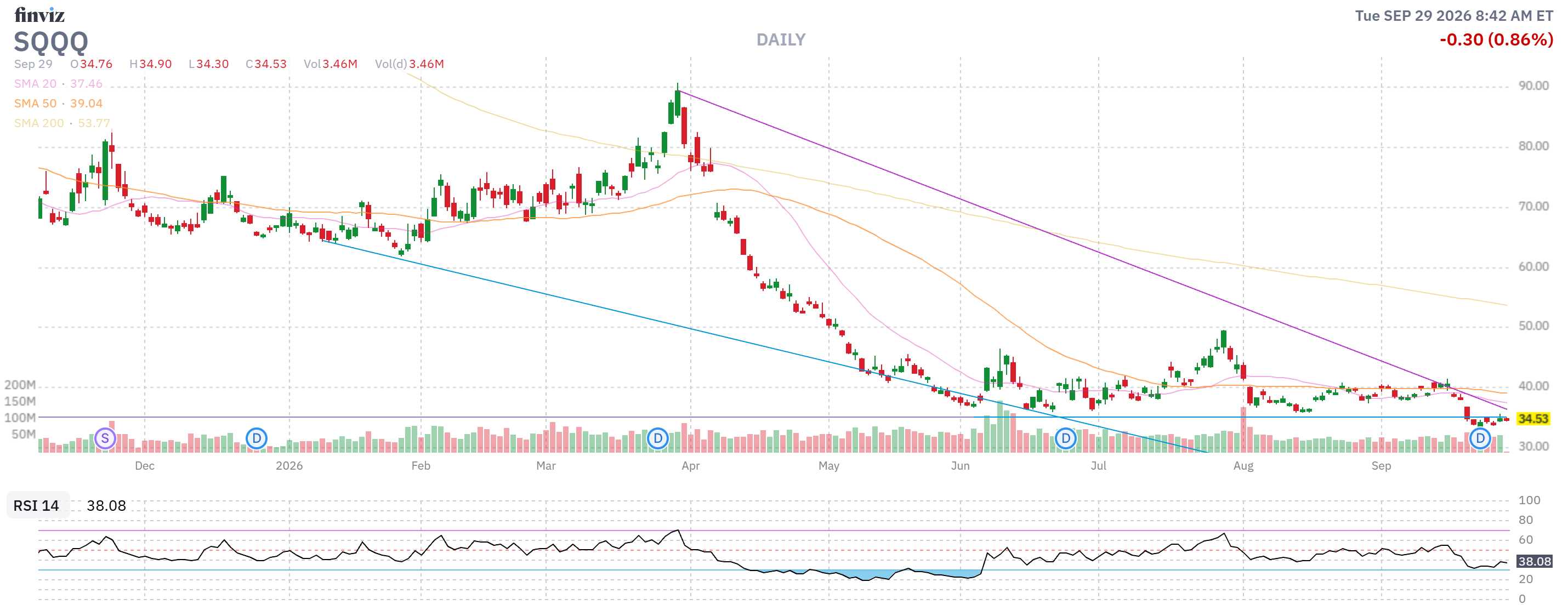
😎 SQQQ – This is the hedge that lets us sleep well at night. SQQQ is a 3x inverse ETF to the Nasdaq so, if the Nasdaq drops 20%, SQQQ rises 60% (less friction costs) from $34.83 to $55.72 so 60 contracts x $25.72 is potentially $154,320 and the current net of the hedge is $37,305 so we have net $117,015 worth of downside protection. And we should collect another $27,000 in premium sales next year – so it’s cheap insurance.
Still, I’d like to improve it so let’s roll our 60 2028 $30 calls ($75,000) to 100 2029 $25 calls at $16.50 ($165,000) and offset that by selling 50 2029 $55 calls for $11.50 ($57,500). That’s net $32,500 and now we have $300,000 worth of downside protect less net $69,805 spent on the hedge is net $230,000 of downside protection. We can also sell 25 Jan $38 calls for $4 ($10,000) and buy back the 15 short Jan $45 calls for $3,795.
🚢 SU — Suncor: Strong hold, energy-income anchor
-
-
- Six-month outlook: Constructive. Suncor is less exposed to the short-cycle drilling-spend swings that affect SLB because it owns long-lived Canadian oil-sands assets, downstream refining and a large fuel-retail network. The integrated model gives it a natural hedge: if crude drops, refining margins and retail can partly offset upstream pressure.
- Why we own it: It is a durable oil-cash-flow and shareholder-return story. Low-decline oil-sands production, long reserve life, manageable operating costs, refinery integration and capital-return capacity make it a much better “hold through volatility” energy name than a levered exploration company.
- Risk: Oil-sands operations still depend on crude differentials, Canadian policy, maintenance execution, carbon costs and oil price. A global downturn can hurt all of those at once. As a Canadian ADR, currency matters as well.
- Decision: Strong hold. If we want one energy name to carry through a potentially ugly quarter, SU is preferable to a pure service company. It will not be immune to oil volatility but its integrated structure and cash-return potential give it better downside resilience.
-
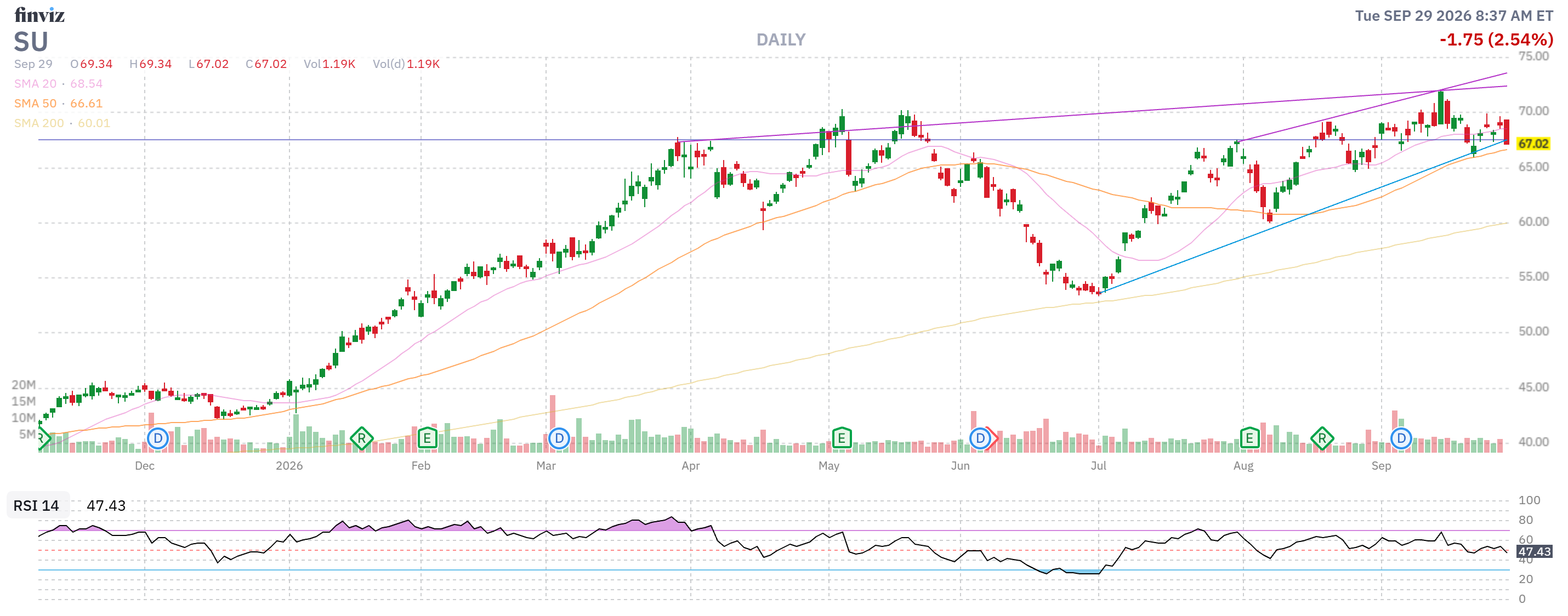
😎 We’re right on track at net $14,525 on the $30,000 spread so we have 100% upside potential at $75 and we just sold $5,225 (35%) worth of premium for the quarter and that could be another $20,900 (143%) in premium sales next year!
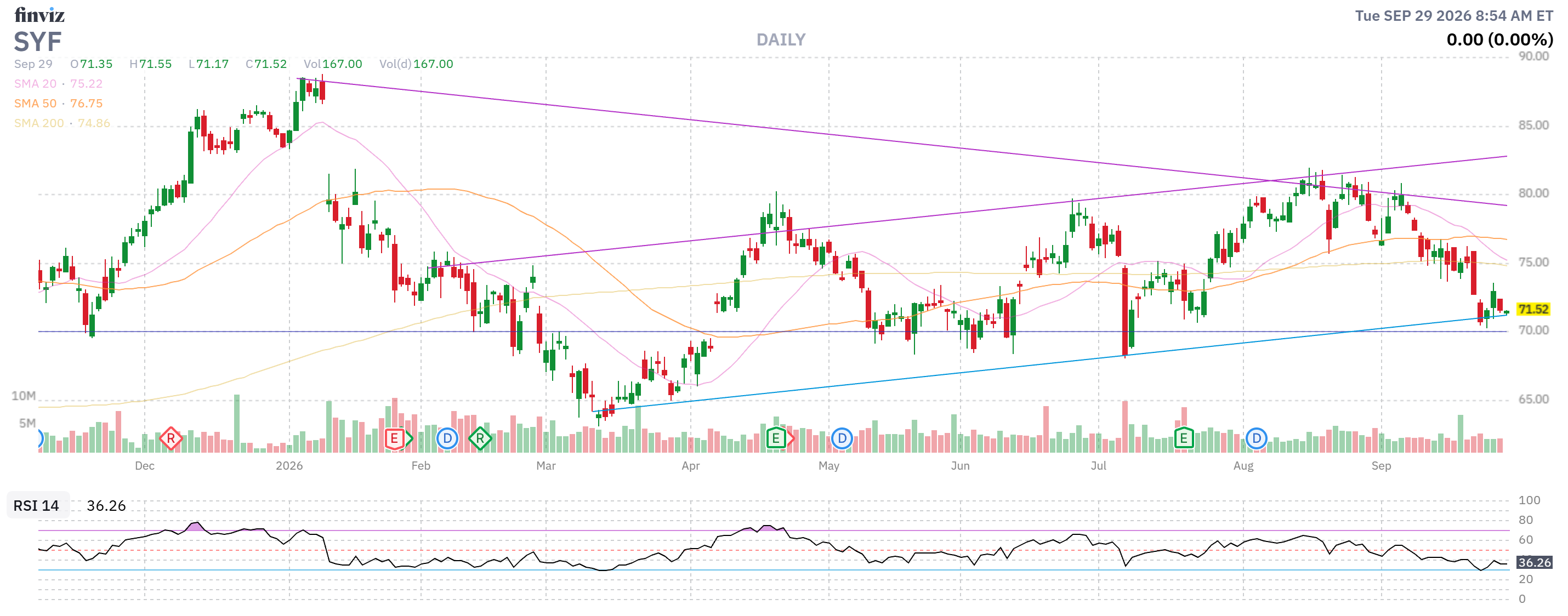
😎 SYF – These are leftovers from a trade we mostly cashed out and not likely to hurt us but why risk it? Let’s close the position.
🚢 TGT — Target: Hold for the holiday test
-
- Six-month outlook: Cautiously constructive, with an important warning that Q2 earnings were helped by a nonrecurring tariff refund. Target’s actual retail performance improved: Q2 net sales rose 5.3%, comparable sales increased 3.8%, traffic rose 3.6%, stores grew 2.7% and digital sales rose 8.7%.
- Why we own it: This is no longer merely a “cheap retailer waiting for a turnaround.” It has returned to positive comparable-sales growth, improved traffic, accelerated digital/same-day fulfillment and raised full-year sales guidance to around 5% growth. Management also expects underlying operating margin, excluding tariff refunds, to be about 50 basis points above 2025’s adjusted 4.6% rate.
- The catch: Reported EPS guidance of $9.90–$10.90 includes a $1.65-per-share Q2 tariff-refund benefit. The operating recovery is real but the headline EPS increase is partly accounting/tariff timing—not purely a permanent profit run rate.
- Correction risk: TGT is a discretionary consumer stock. It is exposed to exactly what the Michigan survey and GLP-1/consumer discussion have highlighted: stretched lower- and middle-income customers, food and fuel costs, credit-card balances and holiday demand risk. It also carries over $14B in long-term debt.
- Decision: Hold through the holiday season, but do not add. The Q3/holiday read is the next major confirmation point. Keep it because the turnaround has operational evidence; do not value it on tariff-refund-inflated EPS.
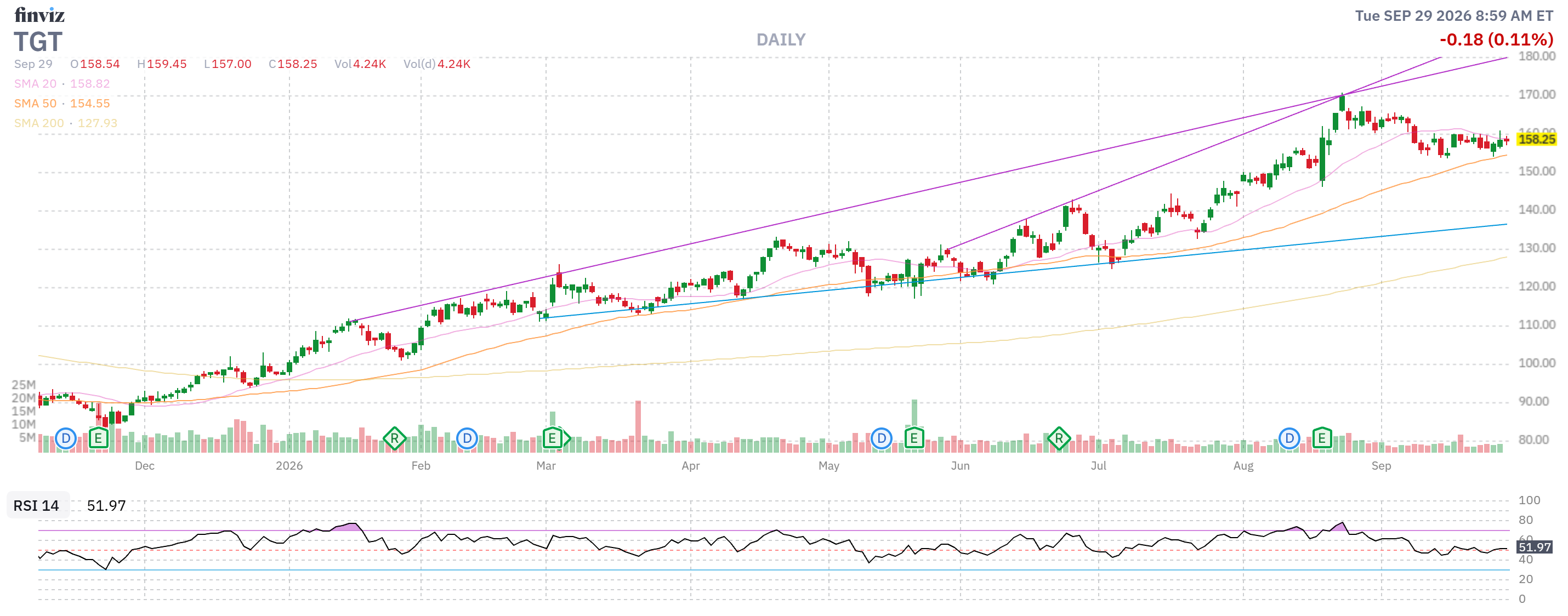
😎 Another stock I think will benefit from Muse, et al. When you are shopping at Amazon, you don’t comparison shop Target but your AI will and TGT (and WMT) are both in a position to match Amazon with free shipping and generous refunds – with the advantage of a local, physical presence.
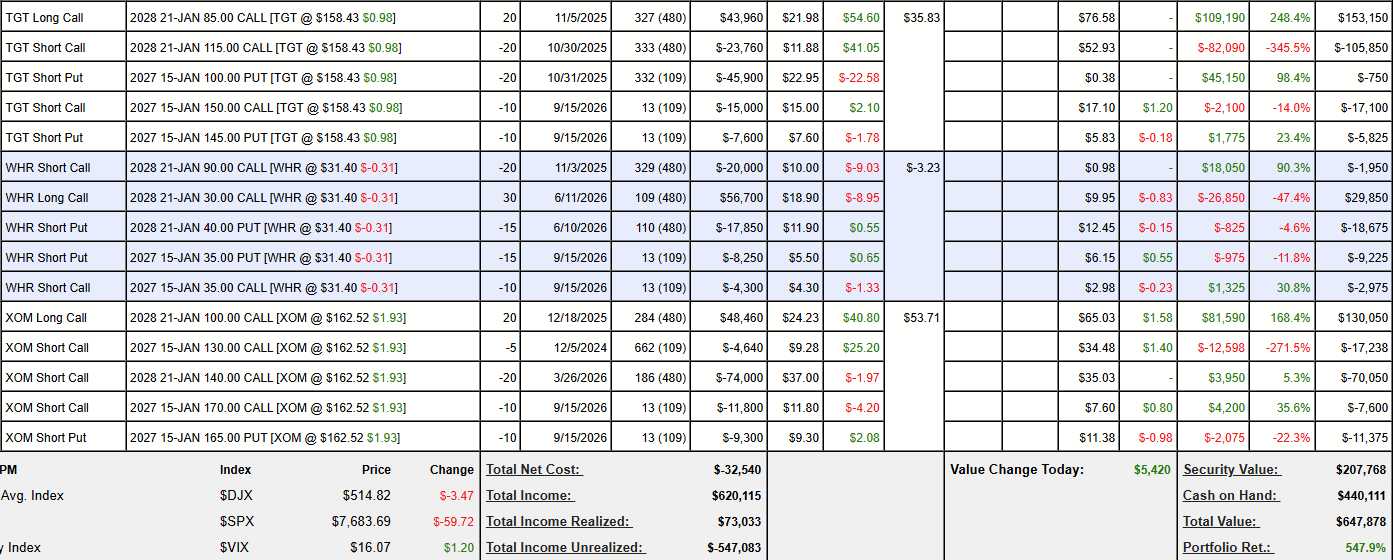
The problem here is we backed TGT in November, when they were way down and now we’re so deep in the money, the original trade should be cashed out at net $46,550 on the $60,000 spread. So let’s cash it out as we can do much better than 30% in a year and we’ll take the following new spread (same short Jan puts and calls):
-
-
- Buy 30 TGT 2029 $130 calls for $50 ($150,000)
- Sell 25 TGT 2029 $170 calls for $32.50 ($81,250)
- Sell 10 TGT 2028 $140 puts for $15 ($15,000)
-
That’s net $53,750 on the $120,000 spread but we just cashed out $46,550 from the old $60,000 spread so, for net $7,200, we’re adding $60,000 worth of upside. I told you we could do better! That gives us 4 more quarters to sell $22,600 in premium and this spread started with a net $25,700 CREDIT (we aggressively sold short puts because I was fairly certain TGT was STUPIDLY undervalued last year) so, even with the $7,200 spent, we still have a net $18,500 credit so the upside potential at $170 is now $138,500 (748%) PLUS the premium sales! Good for a new trade!!!
Aren’t options fun?!?
🚢 WHR — Whirlpool: Hold only if we accept turnaround-level risk
-
-
- Six-month outlook: Mixed. Whirlpool is no longer facing immediate refinancing danger—it completed a $2B asset-based lending facility and issued $2B of secured bonds, pushing maturities out until 2028. But that bought time; it did not solve the core issue of weak margins and higher interest costs.
- Why we own it: The upside thesis is still understandable:
-
-
-
-
-
-
Its North American price increases and new products could improve margins.
-
Management expects more than $150M of structural cost reductions, or around 100 basis points of margin expansion.
-
Free cash flow guidance is about $500M.
-
Management expects margin improvement through the second half of 2026.
-
-
- If WHR achieves even its modest ongoing-EPS guidance of $2.50–$3.00 while debt is stabilized and margins recover, the shares can re-rate dramatically from distressed expectations.
- Why it is dangerous: The debt refinance raised expected annual interest expense from $300M to $350M. Q2 ongoing EBIT margin was only 1.8% and Q2 ongoing EPS was a loss of $0.21. Full-year sales are expected around $15B, but like-for-like growth is only about 1.5%.
- This is a consumer-durable company whose customers are already under pressure from high rates. Appliances are deferrable purchases; housing turnover is weak; tariffs, materials, freight, and promotional competition can erase thin margins quickly.
- Decision: Hold only because we already own it and the refinance bought time; absolutely do not add. If we were building the portfolio fresh today, I would not select WHR for a quarterly, cannot-trade-between-shows portfolio. It has too little margin for error in a weakening consumer/housing environment.
-
-
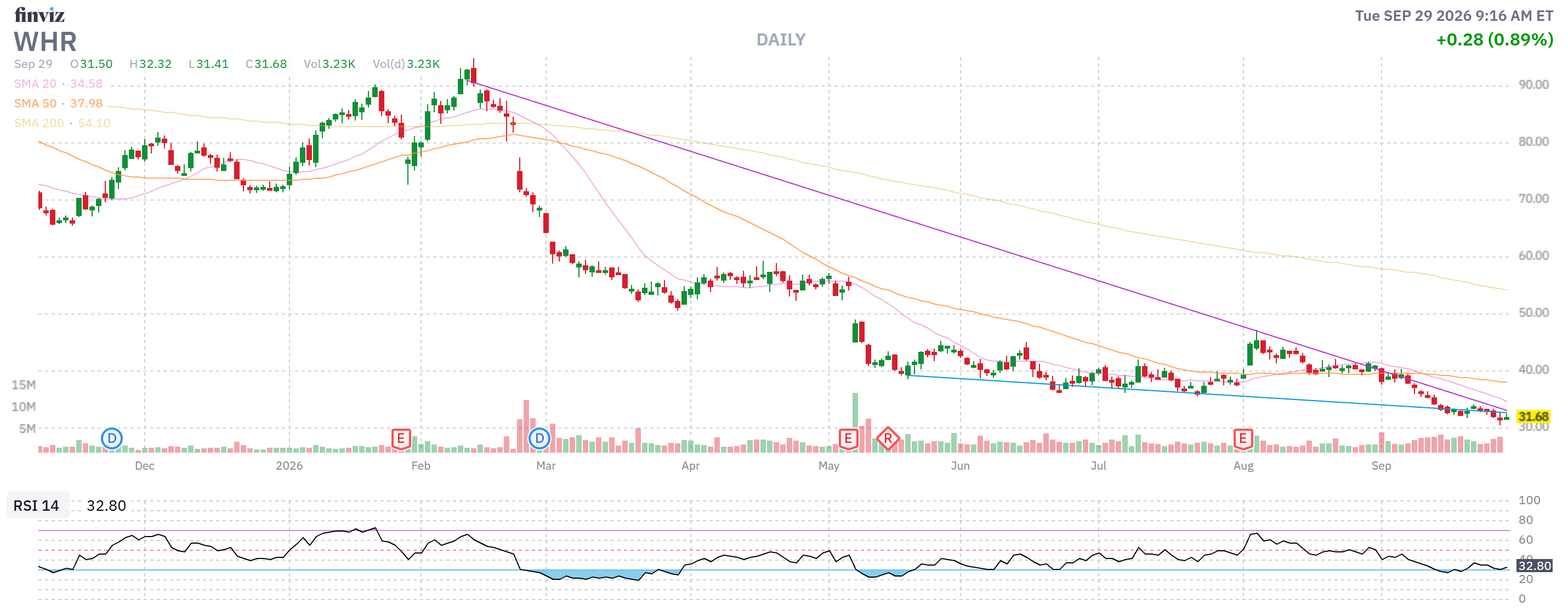
😎 The 2028 spread is net $9,225 so we COULD cash it out but we just sold $12,550 (136%) worth of premium against it for a single quarter. At 10x earnings, I don’t think $40 is an unrealistic target for the short puts and we can buy back the short 2028 $90 calls for $1,950 and sell 20 2029 $45 calls for $8 ($16,000), which is more than we could have cashed out for. Now we can roll our 30 2028 ($29,850) to 30 2029 $25 calls at $16 ($48,000).
While WHR is low, let’s also roll the 15 2028 $40 puts ($18,675) to 30 short 2029 $25 puts at $6 ($18,000) as that’s net $75,000 if assigned vs net $60,000 if assigned at $40.
All that messing around cost us just net $3,425 and we’re $15,000 deeper in the money with an extra year to grow. That’s what we call a SALVAGE PLAY at PSW!
🚢 XOM — ExxonMobil: Strong hold, but energy concentration matters
Six-month outlook: Constructive. XOM’s Q2 earnings were $14.5B, or $3.48 per share; adjusted earnings were $14.7B, or $3.52 per share. Cash flow from operations was $23.6B against $6.8B of cash capex. Permian production exceeded 1.8 million barrels of oil equivalent per day. 1780
Why we own it: Exxon is one of the strongest ways to own energy through a volatile macro period:
-
-
-
-
Scale, diversification and a balance sheet capable of investing through cycles.
-
Low-cost Permian production and the Guyana development engine.
-
LNG, refining, chemicals, and fuel marketing diversify the pure crude-price exposure.
-
High cash generation supports dividends, buybacks, and strategic capacity investment.
-
If inflation, geopolitical risk, tanker disruption and underinvestment keep energy prices elevated, XOM benefits directly.
-
-
-
Risk: XOM is still exposed to oil and gas prices. A recession or a rapid de-escalation of supply disruption could hurt crude, refining margins, and its stock simultaneously. It is also capital intensive, faces political/carbon-policy risk and may underperform faster oil-beta names in a runaway crude rally.
Decision: Strong hold. But we now have XOM, SU and SLB—all energy-sensitive. That is not necessarily wrong because energy is a hedge against the inflationary/geopolitical scenario we are concerned about – but it is a conscious concentration. XOM is the safest of the three; if we need to reduce energy exposure, I would cut SLB first, not XOM.
😎 Data center demand is driving energy for the long-term and the war is driving it for the short-term and Trump is opening up the US for drilling on every patch of grass or dirt or rock they can find and you’re allowed to pollute all you want now – all good for XOM (and SLB – SU is it’s own thing in Canada).
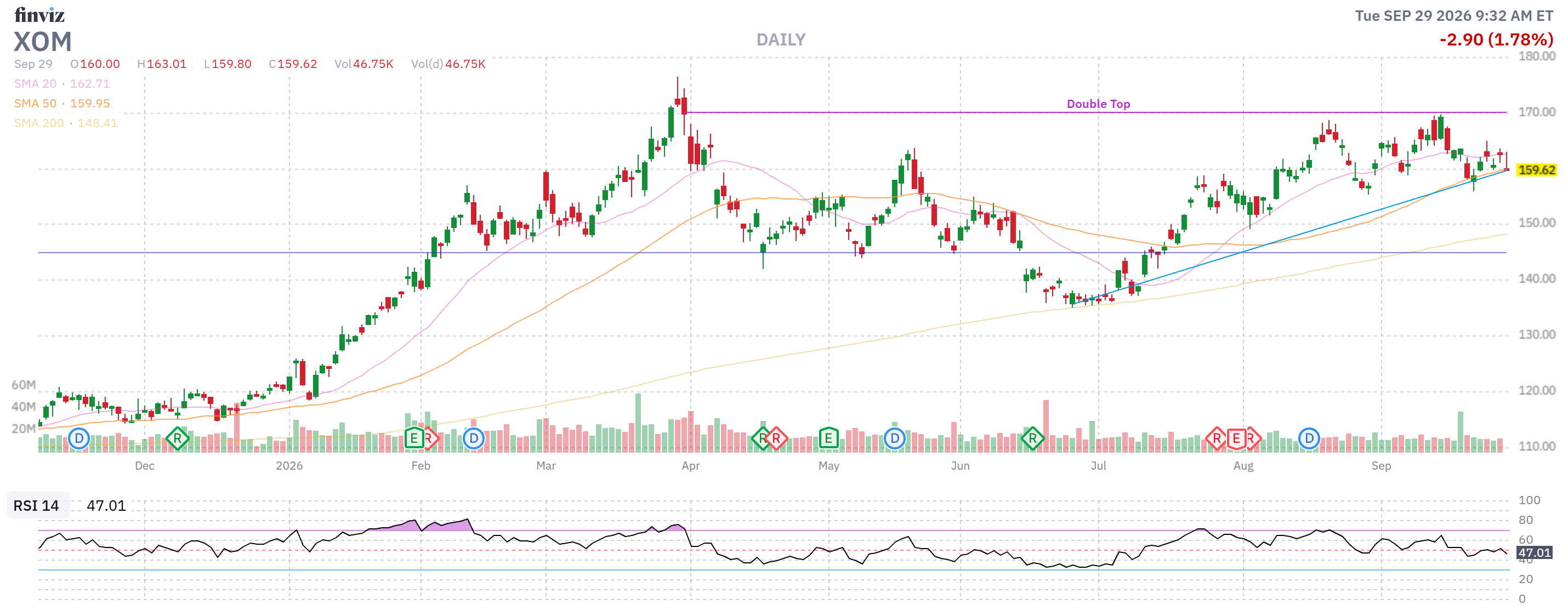
The spread is deep in the money at net $42,762 on the $80,000 spread so still a near-double to collect if XOM holds $140 AND we are collecting $21,100 (49.3%) for the quarter so who in their right mind would turn that down? Great for a new trade, in fact!
On this week’s Money Talk Show, Kim and I are discussing Muse and other AI Agents and how they will change Retail. I’m sure they haven’t got the bugs out but Anya has been doing that for me for two years now – she keeps my lists and checks prices and features – when I tell her I want to make spaghetti she puts all the items on my shopping list and checks to see if it’s worth it to go to one store or another.
AI Agents can organize your refrigerator and stock them with things that you like that are on sale, they can keep an eye out for sales and let you know if the thing you are about to buy can be gotten cheaper and the switching cost for you is simply to say “yes” and then – just like Amazon – whatever you say yes to is delivered to your door – just by different companies.
An AI agent will never let you renew your insurance, or a prescription or even your annoying monthly subscriptions without first seeing if you can get a better price or a better deal or more for your money. It’s something people will get used to quickly!
That makesPayPal (PYPL) our first new trade idea. We don’t have to guess which shopping agent wins if we can own a business that helps those agents complete the transaction. PayPal has already announced a partnership enabling customers to shop and check out through Meta’s Muse across PayPal merchants, so this is an actual commercial connection, not just an AI label attached to an old business.
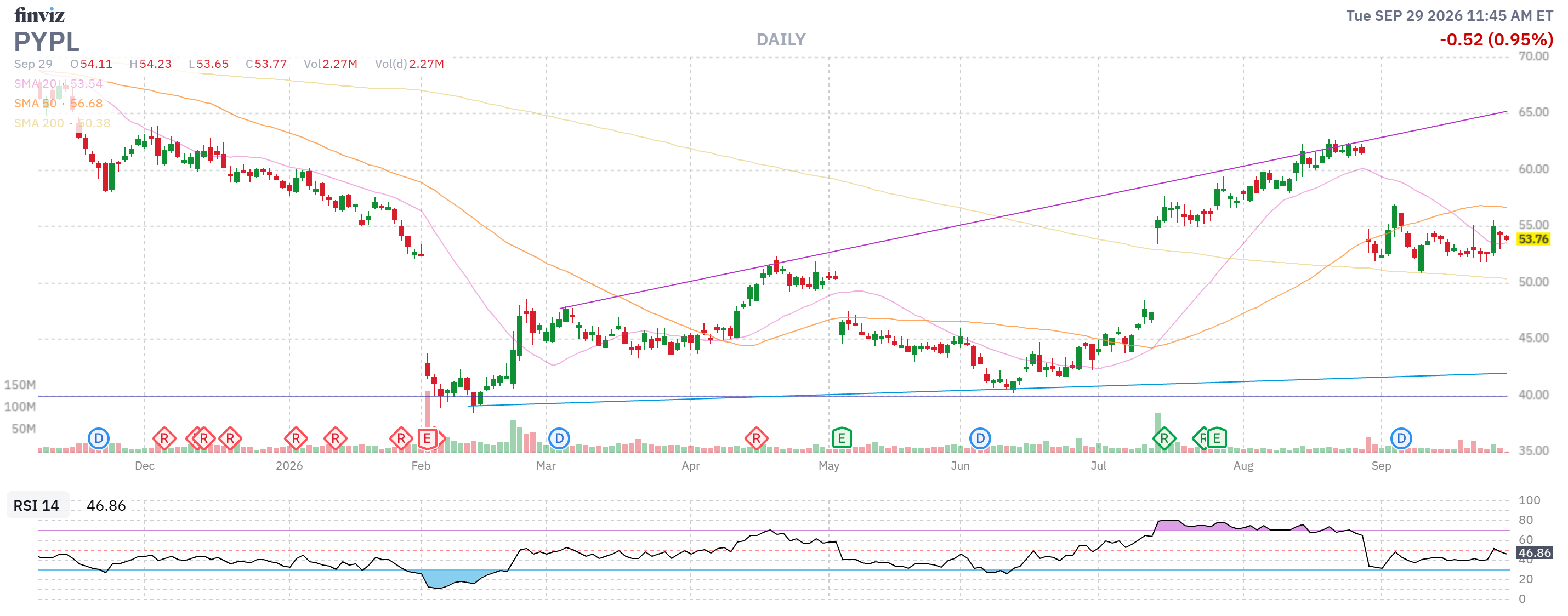
The investment case starts with the PRICE, though. At Monday’s close of $54.28, PayPal was trading at approximately 101 times management’s full-year adjusted earnings guidance, while its adjusted free-cash-flow outlook implies roughly a 12.9% cash-flow yield on the market capitalization, not a dividend yield. That gives us a business to value TODAY rather than asking us to pay for years of hypothetical AI profits.
The opportunity is that agents could make it easier to buy from merchants outside the familiar shopping destinations. Those transactions still need payment authorization, processing and a way to handle problems. PayPal doesn’t have to own the shopping assistant to participate but we do have to watch the economics: more payment volume is not automatically more profit if competition squeezes what PayPal keeps.
So, we’ll add PYPM tot he Money Talk Portfolio as follows:
-
-
-
- Sell 10 PYPL 2028 $50 puts for $6.50 ($6,500)
- Buy 20 PYPL 2029 $40 calls for $17.50 ($35,000)
- Sell 15 PYPL 2029 $62.50 calls for $9.50 ($14,250)
- Sell 7 PYPL Jan $55 calls for $4.20 ($2,940)
- Sell 5 PYPL Jan $52.50 puts for $3.80 ($1,900)
-
-
That’s net $9,410 on the $45,000 spread with $35,590 (378%) upside potential PLUS 8 more chances to sell $4,840 is another potential $38,720 (411%) in premium sales. Our worst-case is being assigned 1,500 shares of PYPL at about $51 ($76,500), which is a bit below the current price.
Wix (WIX) is the less obvious idea, which is part of what makes it interesting. “Why buy a website company if AI agents are going to bypass websites?” Because the storefront you LOOK AT and the business operating behind it are not the same thing!
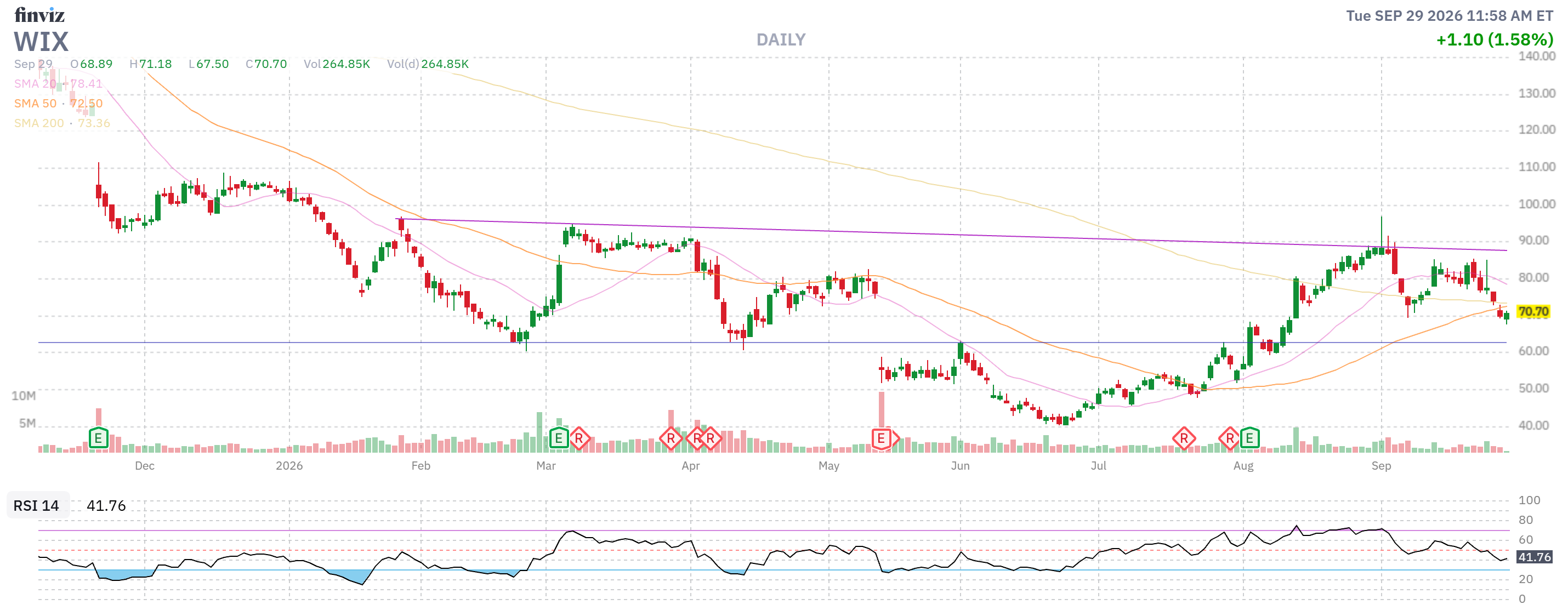
An agent can skip the beautiful homepage, but it still needs accurate product information, inventory, prices and checkout. Wix has already announced integrations with PayPal and Stripe to help its merchants participate in agent-driven discovery and purchases, with access rolling out to eligible merchants. You can skip the shop window. You still need the stockroom and the cash register.
At Monday’s $69.60, Wix had a market value of approximately $3.65 billion, against calculated trailing free cash flow of $411.5 million, or about 8.9 times cash flow. There’s an important qualification: subtracting stock compensation as a conservative economic check raises that multiple to approximately 19.9 times. We shouldn’t pretend paying employees in shares costs shareholders nothing!
The risk is that AI makes website creation cheaper faster than Wix can increase the value of its broader services. Our thesis is that helping merchants RUN a business and transact with customers remains valuable even when building the pages becomes easier. PayPal handles the payment opportunity; Wix handles the merchant-infrastructure opportunity. Neither needs to build the winning consumer agent and neither gets a free pass on valuation!
So, we’ll add WIX to the Money Talk Portfolio as follows:
-
-
-
-
- Sell 5 WIX 2028 $60 puts for $15 ($7,500)
- Buy 15 WIX 2029 $60 calls for $36 ($54,000)
- Sell 15 WIX 2029 $90 calls for $27 ($40,500)
- Sell 5 WIX Jan $75 calls for $10 ($5,000)
- Sell 5 WIX Jan $65 puts for $8 ($4,000)
-
-
-
That’s a net $3,000 CREDIT on the $45,000 spread with $48,000 (1,600%) upside potential PLUS 8 more chances to sell $9,000 in premium for up to $72,000 (2,400%). The risk is, of course, being assigned 1,000 shares of WIX at about $62.50, which is 10% below the current price.
If WIX takes off, we’ll probably have to buy more longs to cover – but that’s a good problem!

