

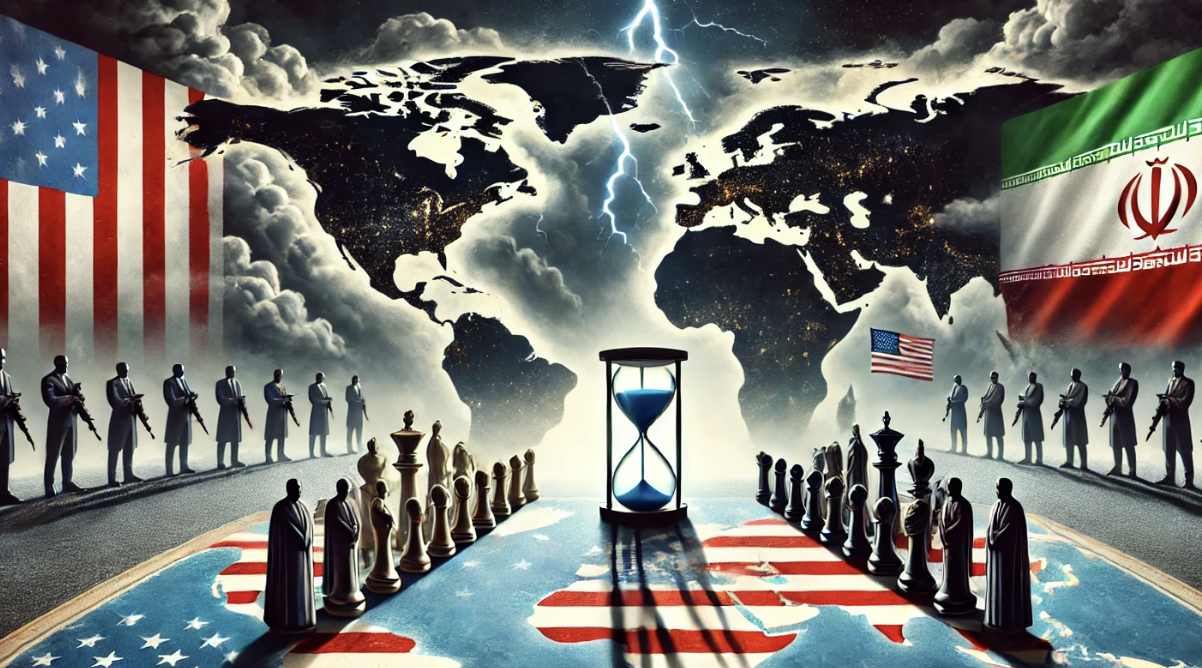
How the world views of Jared Kushner and the founder of the Islamic Republic of Iran can help explain the issue at the heart of the negotiations.
The divide between Iran and America is, the Opinion columnist Thomas L. Friedman argues, ultimately about the difference between “Kushnerism” (named for the president’s son-in-law Jared Kushner) and “Khomeiniism” (named for the founder of the Islamic Republic of Iran). In conversation with the Opinion editor Dan Wakin, Friedman explains what he means and discusses what he sees as President Trump’s recent string of failures.
The transcript has been edited for length and clarity.
Dan Wakin: I’m Dan Wakin, an international editor for New York Times Opinion. When President Trump signed an initial peace agreement with Iran last week, in some ways, it didn’t seem like much of a deal at all. The biggest problem remained unresolved: what to do about Iran’s nuclear program.
Summary
Thomas L. Friedman argues that the Iran agreement and the recent war revealed deep weaknesses in the Trump administration’s strategy, and that the conflict was shaped as much by oil markets and domestic politics as by military events.
Friedman believes Trump ended the war largely because rising oil prices threatened Republicans politically ahead of the midterms. He repeatedly describes the outcome as a “TACO trade” (“Trump Always Chickens Out”), arguing Trump backed away from escalation once economic pressure became dangerous politically. According to Friedman, the administration effectively accepted an imperfect deal because keeping the Strait of Hormuz closed risked economic damage and inflation.
A major theme of the interview is Friedman’s idea of a clash between “Kushnerism” and “Khomeiniism.” He uses “Kushnerism,” named after Jared Kushner, to describe a worldview that assumes economic development, tourism, real estate, and prosperity can overcome historical grievances and ideological conflict. “Khomeiniism,” named after Ruhollah Khomeini, represents ideological and religious revolutionary politics that prioritize belief, identity, and resistance over material prosperity. Friedman argues the negotiations are fundamentally about which worldview will prevail in the Middle East.
Friedman is highly critical of Trump’s handling of the war. He argues Trump relied too heavily on Benjamin Netanyahu and Israeli intelligence assessments that suggested Iran’s regime could collapse quickly after military strikes. Friedman says Trump ignored warnings from parts of his own administration and intelligence community about the risks of escalation and the possibility that Iran could disrupt the Strait of Hormuz.
The interview also discusses how the war changed regional politics. Friedman worries the agreement may allow Iran to link future disruptions of Hormuz to Israeli military actions against Hezbollah in Lebanon, potentially giving Iran long-term leverage. He also argues Israel’s international standing has deteriorated badly under Netanyahu.
On Iran’s nuclear program, Friedman defends the original Obama-era nuclear deal (JCPOA), arguing it was an imperfect but realistic attempt to manage what he calls a “wicked problem.” He says Trump abandoned that agreement without replacing it with a workable alternative, allowing Iran to rebuild large stockpiles of fissile material.
At the same time, Friedman says he hopes diplomacy succeeds because a more moderate or reformed Iran could improve conditions across the Middle East. However, he questions whether the Trump administration has the competence, patience, or institutional capacity to negotiate and implement such a complicated agreement successfully.

