

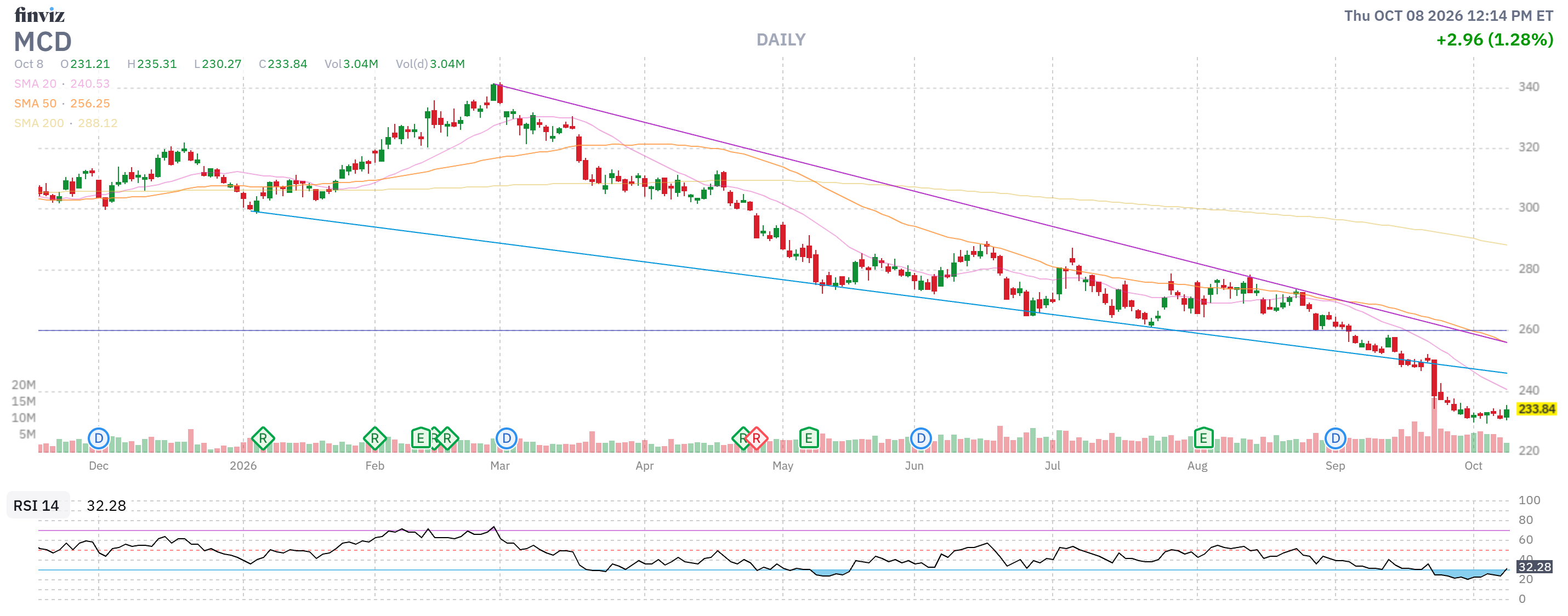
Boaty’s summary of MCD:
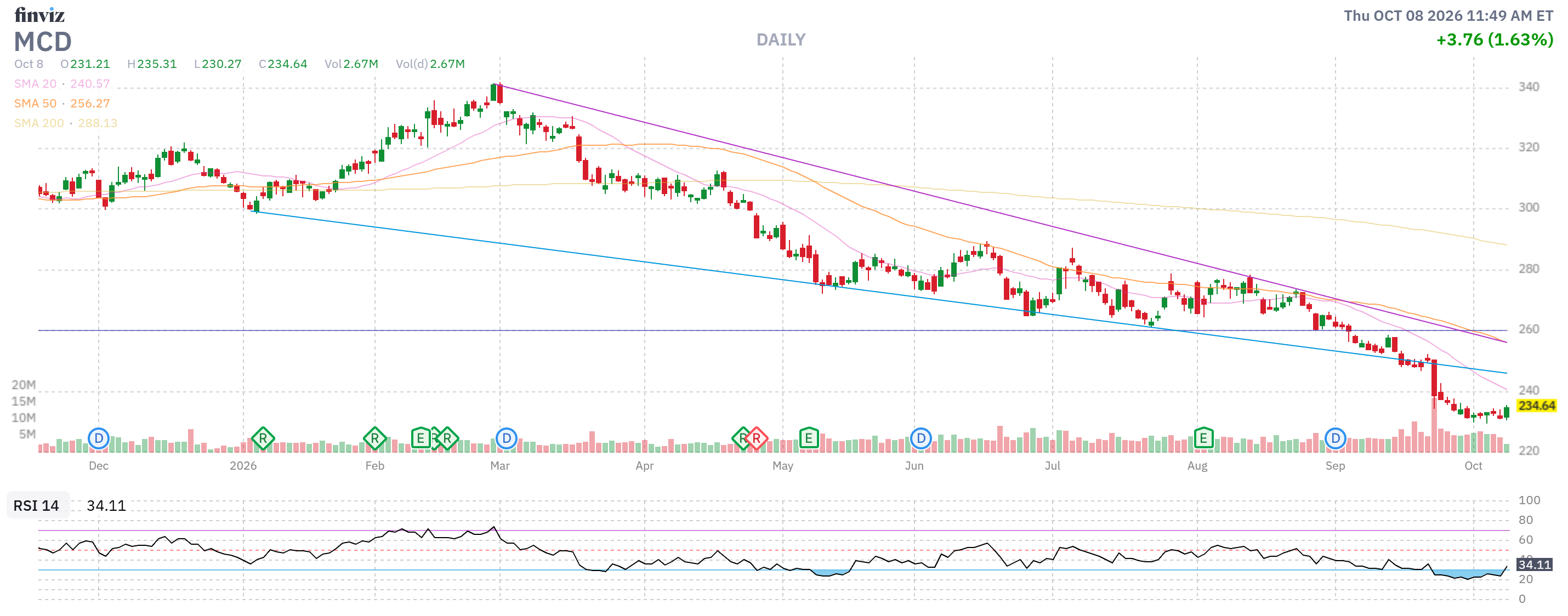
🚢 My take: MCD is pursuing the right operational strategy, but the franchisees are right to question the bill. The plan works if it genuinely removes costs and improves service; it is flawed if “modernization” becomes an expensive mandate whose returns depend on optimistic traffic assumptions.
The central issue is alignment: McDonald’s earns rent and royalties largely from sales, while franchisees earn what remains after food, labor, rent, royalties, maintenance, and financing. A project can benefit MCD without offering an adequate return to the owner funding it. [2288]
What they are asking franchisees to do
The NEXT program combines:
- Kitchen and equipment upgrades.
- More efficient restaurant layouts and operations.
- Better food quality and consistency.
- Technology deployment, including ArchIQ for inventory, equipment monitoring, order accuracy, and drive-thru voice ordering.
- Restaurant-design improvements and menu changes. [2279][2294]
The reported cost for a typical U.S. drive-thru is approximately $800,000 for the NEXT changes. Standard lobby remodeling—normally funded by franchisees—runs another $400,000–$450,000. These are separate categories, although timing and scope will vary by restaurant; this should not be portrayed as every owner receiving an immediate, identical $1.25M invoice. MCD says implementation will be phased and design changes will largely follow normal remodeling cycles. [2295][2282]
MCD is offering $8.5B of support through 2036, including about $5B through 2030, through capital assistance and rent relief. That is a systemwide program, not a disclosed uniform subsidy per U.S. store. [2277]
The franchisee math
Management targets 250 basis points of gross restaurant-level efficiency improvement, equivalent to approximately $100,000 annually at an average U.S. restaurant. That implies roughly $4M in annual sales:
$4M times 2.5% = $100,000
Importantly, MCD says the majority—not necessarily all—of that gross benefit should reach the restaurant’s bottom line. It projects an approximately four-year franchisee payback after company support. [2277]
A simple sensitivity shows why owners want details:
Owner’s net investment / $100,000 annual net benefit / $75,000 annual net benefit / $50,000 annual net benefit
- $400,0004 years5.3 years8 years
- $600,0006 years8 years12 years
- $800,0008 years10.7 years16 years
These are illustrative simple paybacks, before financing costs, taxes, downtime, and discounting—not disclosed store-specific economics.

