

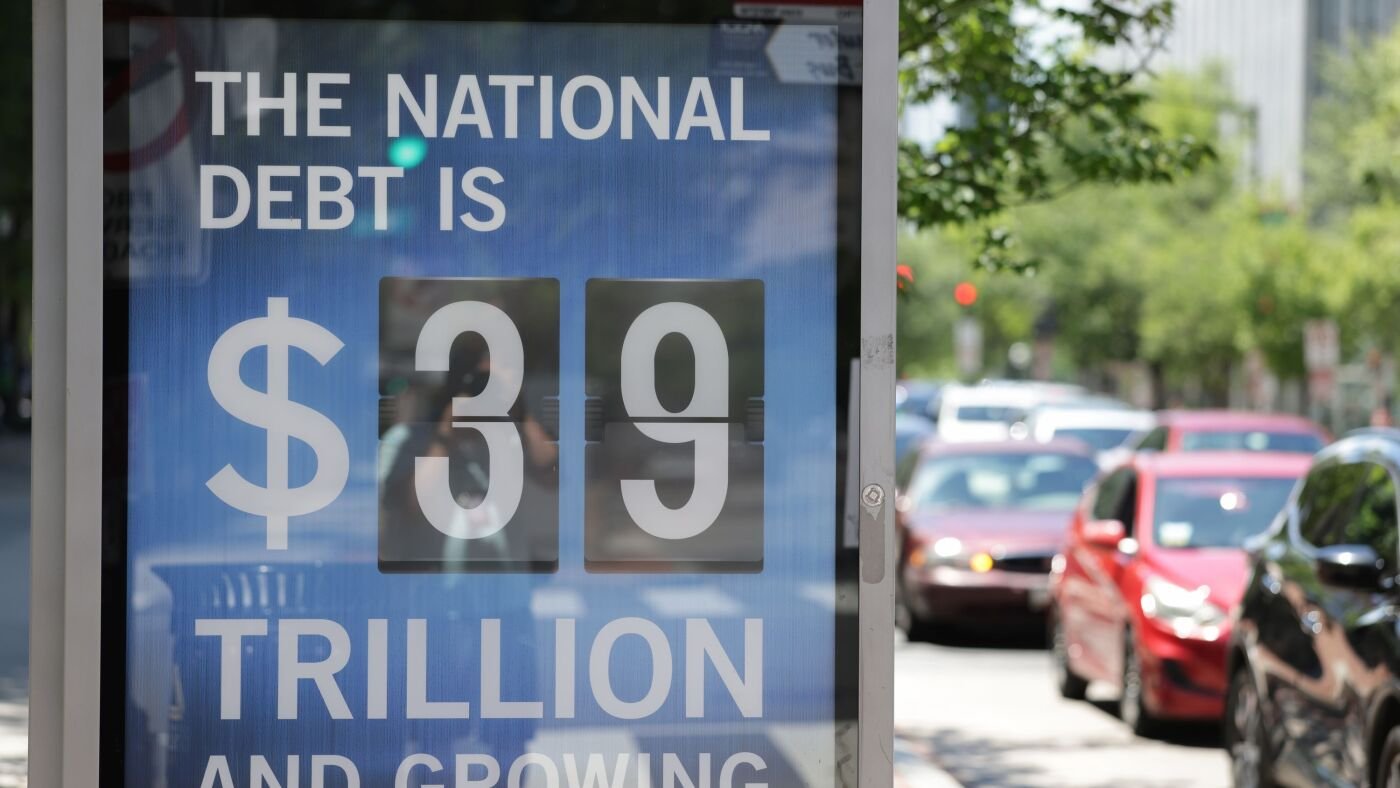
The U.S. debt tops a record-shattering $40 trillion. Yes, with a T
Transcript
AILSA CHANG, HOST:
All right. The U.S. government hit a grim milestone today. The federal debt now tops $40 trillion. That’s a new high watermark for red ink, and it shows no signs of receding anytime soon. NPR’s Scott Horsley joins us now with more on what all this government debt might mean for people’s pocketbooks. Hi, Scott.
SCOTT HORSLEY, BYLINE: Hi, Ailsa.
CHANG: Hi. OK. So 40 trillion. It’s such a huge number. I can’t really picture it, but how did we even get here?
HORSLEY: Well, it’s pretty straightforward. The government spends more than it takes in every year, and that gap has been getting bigger. Maya MacGuineas heads a group called the Committee for a Responsible Federal Budget. She says what’s really surprising is the speed at which this debt has been piling up. We’ve added a trillion dollars just since March, and we’ve added…
CHANG: Wow.
HORSLEY: …Twenty trillion in the last nine years.
MAYA MACGUINEAS: So it took the country’s history to borrow the first 20 trillion, and then we doubled that amount since 2017. And I think what is most concerning is not just the level of debt we’re at. It’s the pace at which we are continuing to add to it.
CHANG: That’s incredible.
HORSLEY: This year alone, we’re adding more than $2 trillion in new debt. You know, Congress passed a big tax cut last year, so the government’s collecting less revenue than it otherwise would. But government spending just keeps growing. Despite all the talk from the president and Elon Musk about cutting waste, fraud and abuse, most government spending is on autopilot for things like Social Security and Medicare, and those are likely to keep climbing as the population ages.
CHANG: Exactly. Social Security and Medicare, but what else is the government spending money on?
HORSLEY: Well, one of the biggest expenses now is interest payments on the debt itself. We’re spending more than a trillion dollars just on interest payments this year – more than we spend on defense, more than we spend on Medicare – and the government has to cover that interest tab before it can do anything else.
Those interest costs have jumped by about 15% from a year ago. That’s partly because there’s more debt to finance, but it’s also because the people who lend the government money are demanding higher interest rates. The interest payment on 30-year Treasuries this week was the highest it’s been in almost two decades. And Michael Peterson, who heads the fiscal watchdog group named for his father Pete Peterson, says that’s no coincidence.
MICHAEL PETERSON: They’re seeing 40 trillion. They’re seeing deficits growing as far as the eye can see, and they’re going to demand higher and higher interest rates. And when the government borrows this much, that brings up the rates for everything else, from mortgages to car loans to credit cards.

