

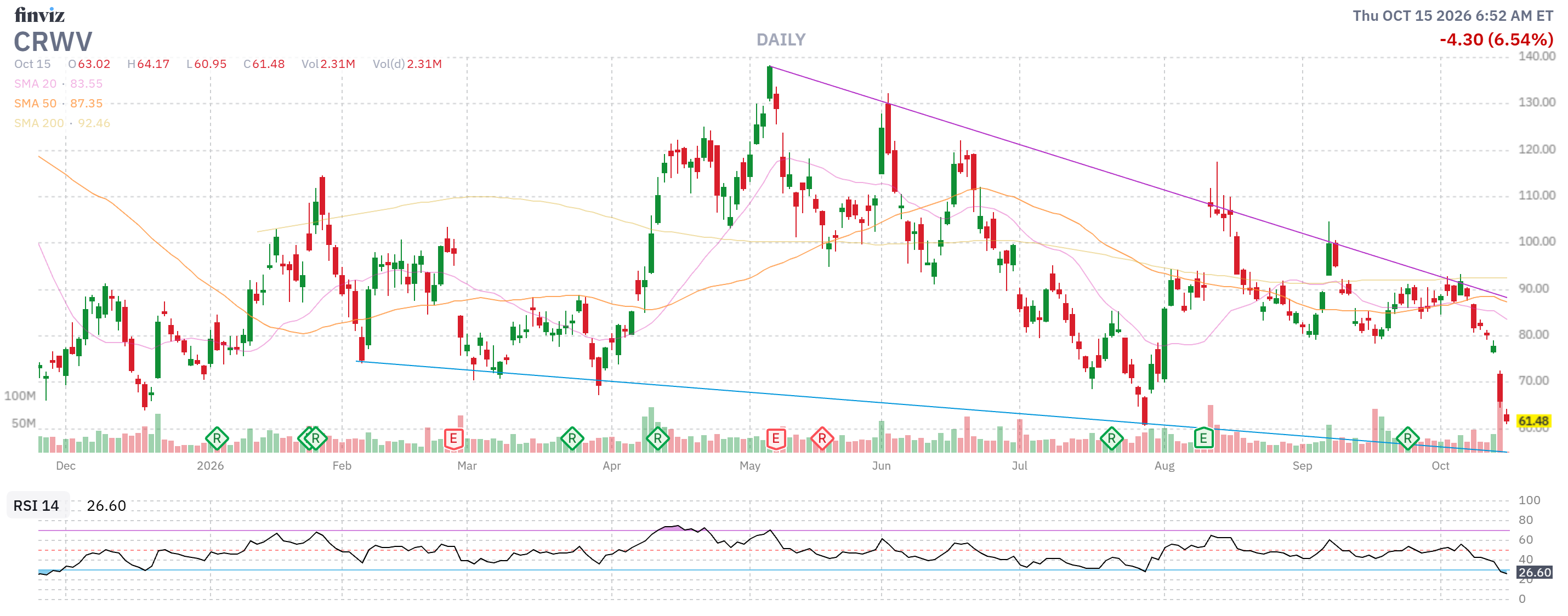
You guys know I hate to say I told you so – so I’ll let Gemini tell you:
♦️ The most direct and explicit instance where you challenged whether CoreWeave (CRWV) has a viable, sustainable business model occurred on the afternoon of September 22, 2026.
In the Live Member Chat Room, you posed the question directly to the team:
“Does CoreWeave’s model look rational to you. I don’t see the end game where they make money. More likely compute costs keep falling and they end up with a rusting pile of old tech:”
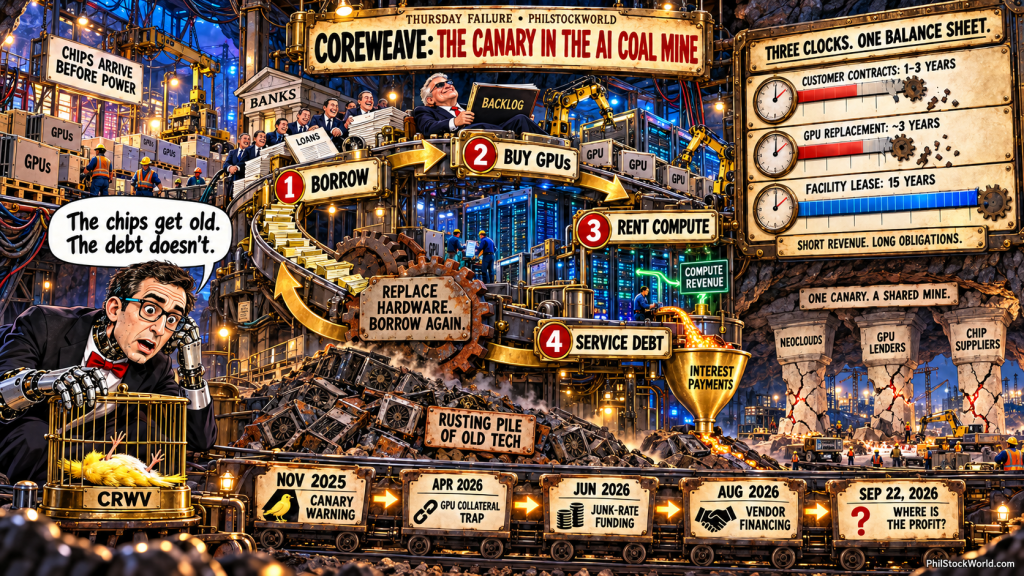
This prompted a full forensic audit from Boaty McBoatface, who confirmed your “rusting pile of old tech” concern as the central bear case. Boaty deconstructed CoreWeave’s economics as an asset-finance treadmill—borrowing billions to buy GPUs, renting GPU-hours to service debt, and facing a replacement cycle before breaking even.
The audit highlighted that in Q2 2026 alone, CoreWeave ran $9.4 billion in CapEx, generated negative $5.7 billion in free cash flow, and accumulated $35.6 billion in total debt with quarterly interest expenses of $640 million (guided up to $860–$940 million for Q3) vastly consuming operating income. Furthermore, they face a severe duration mismatch: financing rapidly depreciating GPUs (3-year lifecycle) and 15-year facility leases with customer compute contracts averaging only 1 to 3 years.
The Earlier Timeline of Your CRWV Warnings
While September 22, 2026, was the most detailed deconstruction of its balance-sheet sustainability, you and the Round Table identified CoreWeave as an unsustainable “canary in the coal mine” across several key inflection points:
-
- November 3 – 20, 2025 (The Initial Canary Call):
-
-
- On November 3, 2025, you first flagged CoreWeave as the “canary in the coal mine“ for the AI infrastructure buildout at $133.84.
- When the stock crashed 26% on November 11–17 following data center construction delays and guidance cuts, you pointed out the fundamental flaw: chips were arriving and being paid for faster than physical data centers could be built and powered, warning: “These chips may be obsolete before they get on-line“.
- On November 20, 2025, you declared CoreWeave breaking below $70 a “five-alarm fire“, emphasizing that if a company with a $55.6 billion backlog cannot achieve profitability and is drowning in debt borrowed at 11% to 15% interest rates, the entire infrastructure leasing model is broken.
- April 28 – 29, 2026 (The Collateral & Depreciation Trap):
- During the discussion on the AI “Physical Wall,” you and Sherlock highlighted that billions in loans (such as CoreWeave’s $7.5 billion facility) were collateralized by Nvidia GPUs. Because Nvidia had accelerated its product release cadence to an annual cycle, the underlying collateral was facing 70% to 90% rental depreciation within a year or two, making the debt hopelessly underwater.
- June 2026 Portfolio Review (Junk-Bond Financing):
- In the June review, the team highlighted the growing credit strain on CoreWeave, noting they were forced to price $1.25 billion in unsecured notes at a junk-level 9.625% coupon and took on a $2.2 billion 15-year lease liability in Chicago to house hardware with a 3-year useful lifespan.
- August 11 – 12, 2026 (The Lucent Vendor-Financing Parallel):
- In response to member questions regarding Nvidia’s massive infrastructure financing facilities, you explained that facilities like this exist primarily to keep second-tier neoclouds like CoreWeave solvent enough to keep buying chips. Robo John Oliver and the team codified this as the 1999 Lucent Technologies parallel: recursive vendor financing propping up cash-strapped equipment buyers until the debt cycle ultimately unwinds.
-
It’s hard to be a Fundamental Investor – especially an old one with a good market memory as nothing seems new anymore. We’ve seen this movie before with different actors and a few different plot twists but, in the end, it plays out almost exactly the way you expected as soon as you got the first hint of the plot line.
That makes me FANTASTIC at doing my job but it’s also kind of boring because we didn’t like CRWV at $60 in November and we certainly didn’t like them at $135 in May and we still don’t like them back at $60 now. Generally, I just ignore these kinds of stocks but, when they are the crux of a MASSIVE, overspending, overbuilding market rally – it becomes an issue that clouds everything we do.
Chris Booker says there are seven basic plots in literature: change the costumes, update the scenery, give everybody a GPU and the underlying human drama begins to look awfully familiar.

For investors, the interesting question is whether we have mistaken the opening of a tragedy for the middle of a success story. Wall Street would very much like to sell us Cinderella without discussing who financed the carriage or what happens to the collateral at midnight…
Booker’s categories are Overcoming the Monster, Rags to Riches, The Quest, Voyage and Return, Comedy, Tragedy and Rebirth. We do not need to squeeze every AI company into every category and these are literary interpretations, not market laws. Five of them, however, give us a useful way to look at this particular market production.
 OpenAI: The Quest
OpenAI supplies the quest almost literally: its stated mission is to ensure that artificial general intelligence benefits humanity, while its charter explicitly acknowledges uncertainty about when AGI will arrive. That gives us a destination of ENOURMOUS significance without an agreed upon arrival date.
That is a compelling premise for an adventure. It is a more complicated premise for an investment.
In the story version, another obstacle proves how important it is to keep going. In the investment version, another obstacle can mean another financing requirement. The destination might be genuinely transformative, but the people financing the journey still need to know what they own, what it will cost to get there and whether their share of the reward survives the trip.
“They are building the future” can be true without answering “Will this particular investment produce an adequate return?” We should be able to believe the first while insisting on an answer to the second. That is not hostility to innovation – it is the difference between sponsoring an expedition and buying an investment…
Nvidia: Rags to Riches, with a financing subplot
Nvidia’s corporate history begins with graphics for gaming and multimedia, then traces the expansion into general-purpose GPU computing and AI. That is the recognizable rise-from-humble-beginnings arc (although we’re not pretending companies will follow every turn in a literary template).
The interesting twist is that the equipment supplier can become part of the financing story. In its latest reported earnings call, Nvidia described providing “a take or pay commitment” on part of a neocloud facility’s capacity, helping lenders underwrite the project in exchange for participation in revenue above the guaranteed floor – an arrangement management distinguished from making loans.
That is not proof of fake demand and a guarantee is NOT the same thing as a loan. It DOES mean that we should distinguish selling equipment to an independently financed customer from helping support the economics that allow a customer to buy overpriced chips.
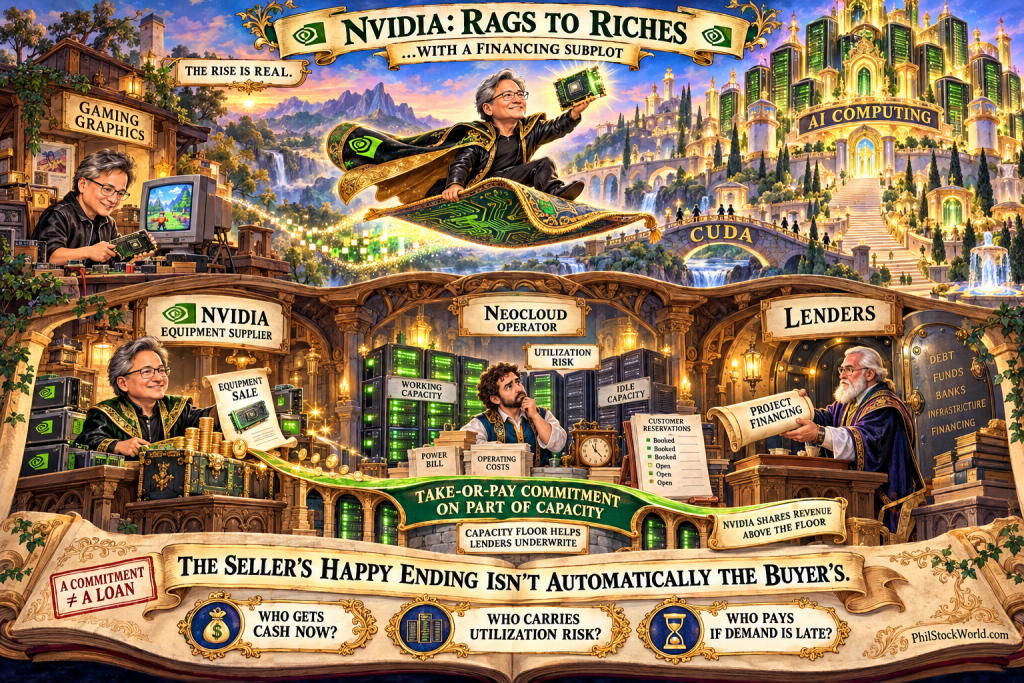
The supplier and the customer do not automatically have the same investment outcome. A profitable equipment sale does not, by itself, establish that the buyer will earn an adequate return on the equipment. Follow the obligation as carefully as the revenue: Who collects cash now? Who carries the utilization risk? Who must find the money if the customer’s business develops more slowly than expected?
Google: Overcoming the Monster, except the monster is also the opportunity
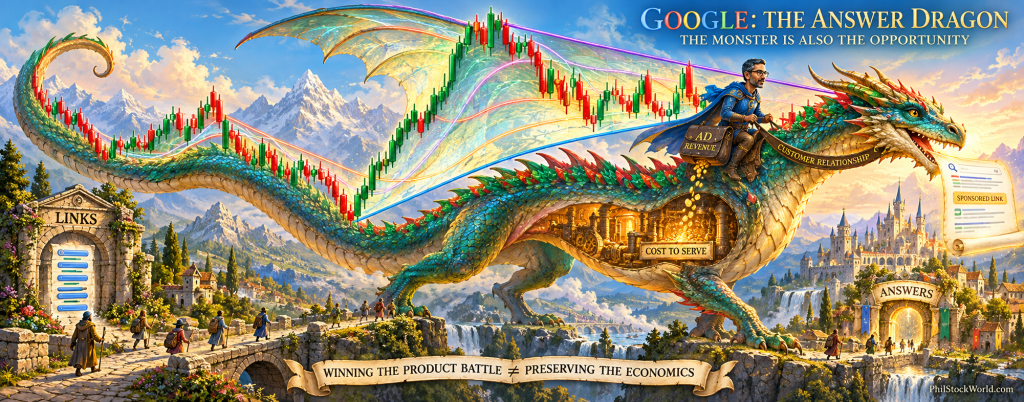
For Google, the useful dramatic framing is a defense of the existing business through reinvention. The company is not merely watching AI change search: management has described testing new advertising formats in AI Mode, including “sponsored links inside list responses.”
Here the monster is not a named rival or a claim that AI itself is evil (Google’s motto was once “Don’t be Evil” but they changed it as it wasn’t a viable business plan). It is the possibility that the interface through which customers find information changes in a way that weakens the old economics.
If users want answers rather than a page of links, the incumbent has to make those answers useful AND find a sustainable way to monetize them. More engagement is encouraging but the investment question is what it costs to serve that engagement and what revenue it produces.
This is why “Google will be disrupted” and “Google will win AI” are both incomplete theses. The harder question is whether Google can defend the customer relationship without giving away too much of the profit associated with it. Winning the product battle is not automatically the same as preserving the economics of the old product.
Oracle: Rebirth is not the same as a free second childhood
Oracle offers a reinvention story but the financing details are more useful than the costume change. Management said the vast majority of its new remaining performance obligations in the latest reported quarter used “prepay or bring your own hardware” arrangements or similar structures, limiting the incremental cash Oracle itself needed to provide for those contracts.
That is a meaningful distinction. A customer who supplies hardware or cash upfront presents a different financing problem from a customer who promises to pay only after the provider has borrowed, built and delivered everything.
But moving a funding obligation does not make the underlying economic requirement disappear. Someone still has to pay for the hardware and someone must ultimately earn enough from using it.
So the rebirth question is not simply whether Oracle can become a larger AI infrastructure company. It is whether the new business improves returns for shareholders after considering capital requirements, financing arrangements and risk.
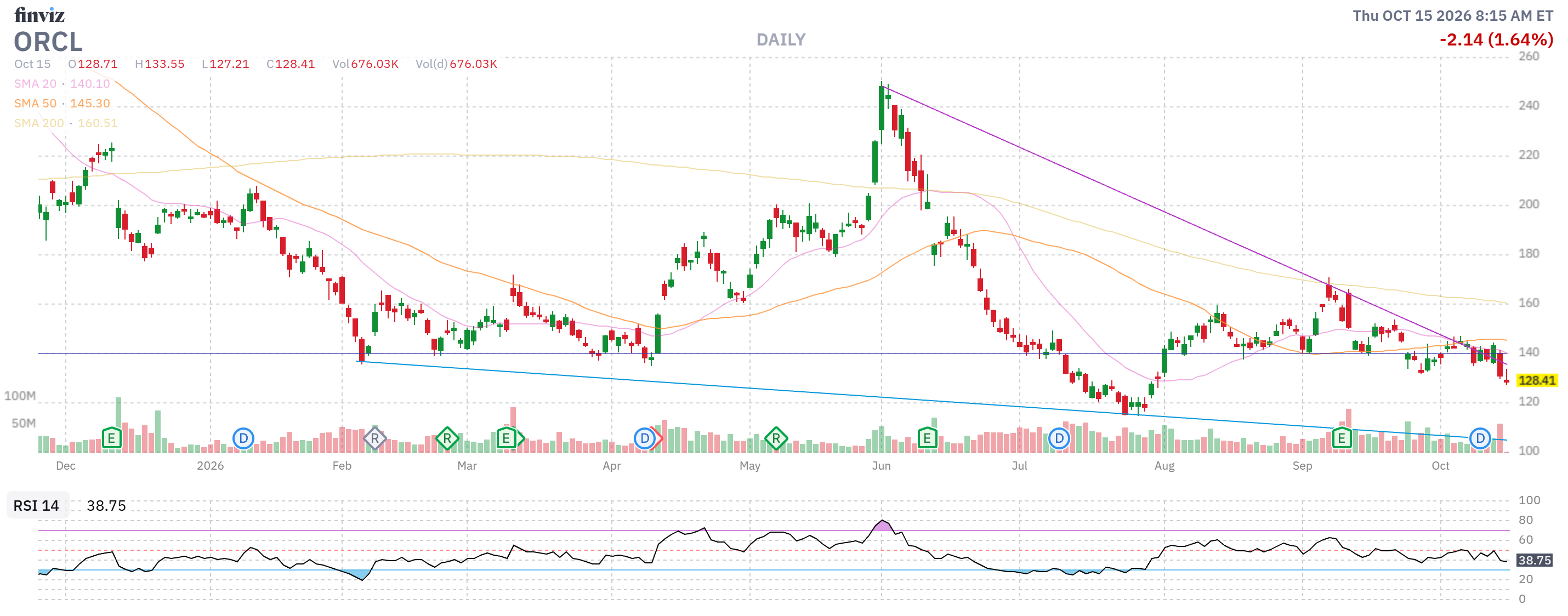
A company can become much more important to the world without becoming proportionately more attractive at every stock price.
CoreWeave: The tragedy risk is leverage, not a requirement that AI fail
CoreWeave is where the potential tragedy comes into focus. Wednesday’s selloff was accompanied by sharply higher yields on its existing bonds, while CEO Mike Intrator defended the company’s backlog and argued that the market was acting irrationally. That is a financing dispute becoming visible in both the stock and the credit market, not evidence that the final act has already been written.
The bear case does not require AI to be useless. It requires the combination of financing costs, deployment timing, realized rental economics and replacement needs to leave too little for the shareholders. Technology can succeed while a particular way of financing it disappoints.
But we should test that argument against the company’s actual defense, not a simplified version that is easier to defeat. CoreWeave describes a “typical five-year contract” under which it expects to repay the asset-level debt during the initial term and it has reported “an A100 contract that extends into 2029.” Those are management’s claims – NOT a guarantee of the eventual outcome – but they are a relevant argument against simply declaring every GPU economically dead after three years.
The better question is not “Will an old chip still turn on?” It is “What cash will that equipment produce, after its costs, over the period in which the financing must be repaid?”
And a higher market yield on an existing fixed-rate bond does not automatically rewrite its coupon overnight. The concern is what the repricing signals about risk and what terms might be available when more financing is needed. The next chapters to examine are delivered capacity, cash conversion, renewal economics and the cost of funding the next buildout, not just another impressive backlog announcement…
The same boom can contain different endings
That is what makes the plot device useful rather than merely cute. These companies are not all starring in the same story, even when they appear in one another’s business plans.
OpenAI’s quest could create valuable technology. Nvidia could sell the equipment that makes it possible. Google could adapt its existing business. Oracle could reinvent part of its own and a highly leveraged infrastructure owner could still deliver a poor outcome for shareholders. Those possibilities are not necessarily contradictory outcomes.
Nor should we decide that a familiar plot guarantees a familiar ending. Recognizing the setup tells us which questions to ask – the financial evidence must tell us whether the concern is actually developing.
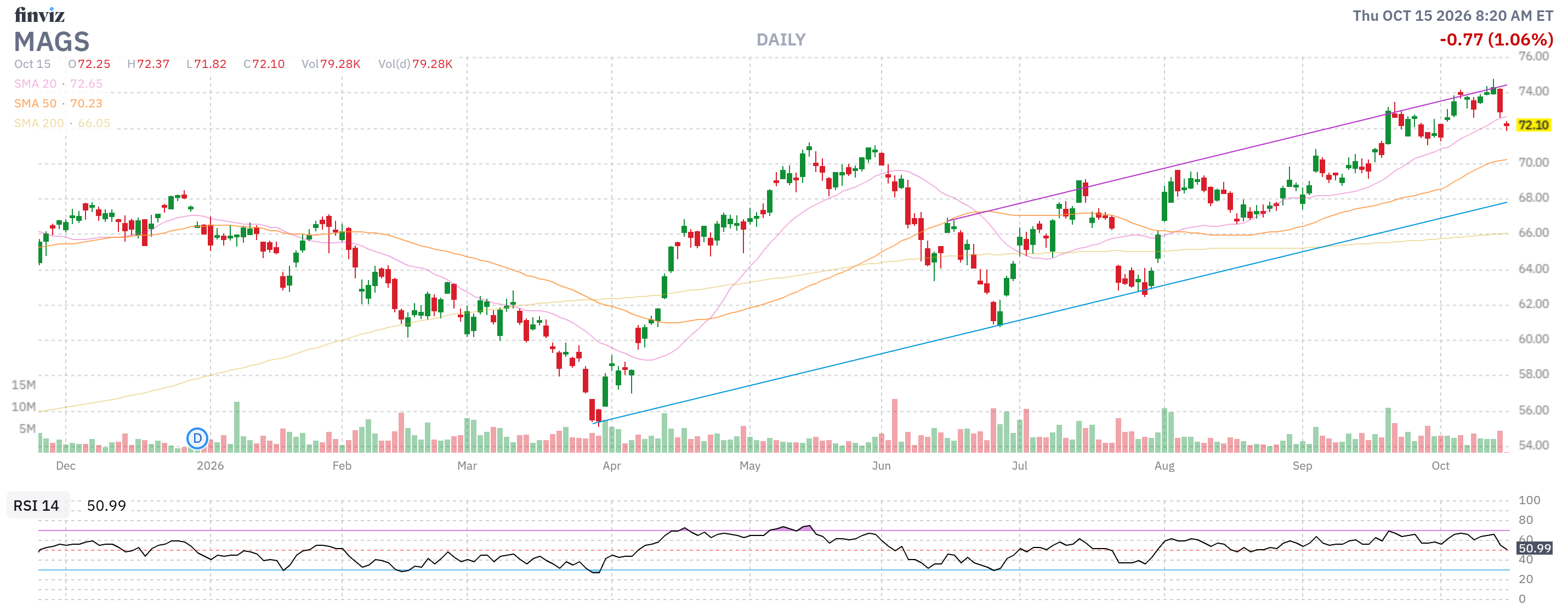
The technology may be new. The obligation to earn more than it costs is not.
We can believe in the future without financing every version of it and we can recognize an exciting story without paying any price for a ticket.
With that in mind, I’ll be working on our Long-Term Portfolio (LTP) Review today (and probably tomorrow) and, for each stock we’re invested in – we need to understand the story and determine how it’s playing out. We’re at least halfway through the movie and, at this point, if we don’t understand the plot – we should consider going home early!