
Monday Market Movement, Missing Momentum?
by Phil - February 1st, 2010 8:29 am
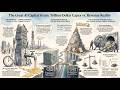
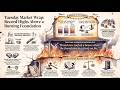
"Every civilization," Swiss historian Jacob Burkhardt once wrote, "carries within itself the seeds of its own destruction."
Dr. Hanmer Hill and Josh Bill tell us: "We believe the financial crisis of 2008 exposes a seed that can destroy Western-style free-market capitalism. The name of that seed is the credit default swap, or CDS… A surgeon could not take out a life policy on a patient he or she was about to operate on. You could not take out a fire policy on a home you did not own, and you could not take out more than one policy on a home you did own… It was, and still is, possible to buy an unlimited number of CDSs against any financial instrument, whether one owns that instrument or not. Imagine someone taking out 20 fire policies on his neighbor’s home. Common sense tells you the odds just went up that that house is going to burn, and you have just created a perverse appetite for the homes most likely to burn."
The total amount of subprime mortgages written soon rose to $2 trillion. The total value of the CDSs written against CDOs rose to $65 trillion. That’s right: $65 trillion of insurance against $2 trillion worth of high-risk mortgages. Those who profited the most sought out the worst of the worst mortgages to bet against. One big winner was hedge fund manager John Paulson. In 2006, Paulson convinced Goldman Sachs and Deutsche Bank to create extremely high-risk CDOs and sell them to others, so both he and they could bet against them. Paulson picked the mortgages. He made $15 billion. His friend George Soros (who later said "I’m having a very good crisis") made $5 billion. Deutsche Bank made $25 billion doing this. Goldman Sachs made much, much more.
In 2006, Goldman Sachs and Deutsche Bank underwrote 352 fraudulent mortgages in Sikeston, Mo. In 2009, Goldman Sachs paid Massachusetts $60 million to close an investigation into its role in creating "mortgages designed to fail at the inception."
As I mentioned this weekend in my Davos review, I find it VERY disturbing that we are seeing an extreme uptick in both lending to risky countries and CDS betting that those same countries will fail. This is kind of like playing that carnival game where you squirt water into the clown’s mouth until you pop the balloon while adding bets that the balloon will pop.
Unlike the clown game, your bet doesn’t…
Posted in Uncategorized | 119 Comments »
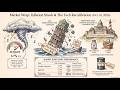
Market Snapshot + Bear Flag Chart Pattern
by markettamer - January 31st, 2010 8:33 pm
Courtesy of Market Tamer
Market Snapshot
ECONOMIC REPORTS
MONDAY 2/1 Personal Income, Personal Spending, Construction Spending, ISM Index
TUESDAY 2/2 Pending Home Sales, Auto Sales, Truck Sales
WEDNESDAY 2/3 Challenger Job Cuts, ADP Employment Change, ISM Services, Crude Inventories
THURSDAY 2/4 Initial Claims, Continuing Claims, Productivity-Prel, Unit Labor Costs-Preliminary, Factory orders
FRIDAY 2/5 Nonfarm Payrolls, Unemployment Rate, Average Workweek, Hourly Earnings, Consumer Credit
EARNINGS OF NOTE
MONDAY 2/1 ACV, APC, GCI, HUM, MNKD, PCL, SOHU, TUP
TUESDAY 2/2 AFL, ADM, CTRP, CMI, DHI, FISV, JDSU, MTW, MAN, MRO, MEE, MET, MYGN, NETL, PBG, SU, DOW, HSY, UPS, UNM, GRA, WHR
WEDNESDAY 2/3 AKAM, AMP, BDK, BRCM, CBG, CSCO, CMCSA, EFX, HMC, INSP, IP, MWW, NOV, NVLS, PFE, RL, BCO, TWX, V, WLT, YUM
THURSDAY 2/4 BEBE, BKC, CME, CI, DB, DO, GSK, HIT, K, MA, MCO, NOC, PENN, PBI, SLE, SNE, HOT, SUN, TM, UIS
FRIDAY 2/5 AET, AON, BZH, PC, TSN, WY
Stock Market Insights: The Cash Flow Statement
Cash is king! Liquidity in the form of cash tells us that the company can meet its obligations. The Cash Flow Statement is the third and last statement that we will touch upon. The statement is filed quarterly and year over year in concert with the Profit and Loss and Balance Sheet. The Cash Flow Statement is a measure of incoming and outgoing cash from its business operations for a specific point in time. The statement further defines the cash flow of the company that is indicated on the Balance Sheet. There are two methods of accounting that are used 1) accrual and 2) cash. Most companies use the accrual method which accounts for goods delivered as sales regardless of whether they have been paid for or not. The outstanding balance is shown on the Profit and Loss Statement under accounts receivable.
The Cash Flow statement typically divides the accounting for cash into three areas 1) Operating Activities 2) Investing Activities and 3) Financing Activities. It is most favorable if the company is creating their cash flow from Operating Activities as opposed to the other two. The reason is that if the company can sustain its operations from daily operations as opposed to investment returns and financing, it shows company strength. Be careful to take note of how large of an impact that depreciation has on the Operating Activities bottom line. Depreciation does not actually contribute cash to the company; it is more of an accounting item.
So, what are we looking for as investors in the Cash Flow Statement? A company with a smaller percentage of…
Posted in Uncategorized | No Comments »
Understanding Market Cycles: The Art of Market Timing
by ilene - January 31st, 2010 8:02 pm
Pharmboy, member of our team at PSW, has been writing a book on Technical Analysis. Here is the first chapter for your enjoyment/educational experience. - Ilene
Understanding Market Cycles: The Art of Market Timing
Courtesy of Pharmboy
Experts and the main stream media say that market timing is impossible. That much is true, but when TA is used, timing market movement is very profitable on a consistent basis. As a technical trader, the purpose is to find the best trades and to time the entry and exit points. After all, any trader can find the best trade in the world, but if it is not timed well, it may turn into a loss. Every stock or asset class goes through a classic market cycle. Figure 1 is a diagram of the four stages of the market cycle:
Figure 1. Four stages of the market cycle.
When looking at the charts of any stock or index, notice that it moves in cycles. By observing cycles, what to expect next is easier to comprehend. Figure 2 shows two stocks that have completed each of the four stages.
Figure 2a and b. Market stages of two companies.
2a. Amylin
.png)
2b. MEMC
.png)
For a long-term investor or trader, understanding market cycles can greatly benefit their portfolio.
Stages of a Market Cycle
- Accumulation Phase – This is the bottom (or near the bottom) of a particular stock, sector, or general market. At this stage, prices do not move upward but rather stay within a neutral trading range. At this level, the smart money begins to buy up large blocks of shares to accumulate a large position for their portfolio. They are patient enough to wait years, if needed, because it is difficult to determine how long a stock or sector will be in this stage. Regular individual retail investors do not even consider buying at this level because, in most cases, they have recently sold into the lows. At PSW, this is the stage where stocks are nominated to the Watchlist and the biggest discounts are found. Long-term oriented investors should be buying to realize the greatest long-term gains.
- Mark Up Phase – This phase follows the Accumulation phase. The way to determine if this phase is occurring is to see a stock or sector that has “broken out” of its neutral range. This means that it must break above the upper trend line of the neutral range. From this point on, an obvious increase in volume should be seen. …

Posted in Appears on main page, Immediately available to public, Permissions, Uncategorized | No Comments »
Singing “Davos Done and We Need Another Loan”
by Phil - January 31st, 2010 7:40 am
Debt-O, debt-uh-oh
Interest come and we need another loan
Debt-O, debt-uh-oh
Interest come and we need another loan
Work our lives just to lose our homes
Interest come and we need another loan
Stack default swaps till they come undone
Interest come and we need another loan
Come on Economists, tell us some more BS
Interest come and we need another loan
Come on Economists, tell us some more BS
Interest come and we need another loan
6%, 7% - it’s a credit crunch
Interest come and we need another loan
6%, 7% - it’s a credit crunch
Interest come and we need another loan
Debt-O, debt-uh-oh
Interest come and we need another loan
Debt-O, debt-uh-oh
When interest comes we’ll need another loan
It was the best of times (with the IMF predicting 3.9% Global growth) and the worst of times (with Roubini saying we’re all doomed) at Davos this week as the men who rule the world gathered to divide the spoils over card games while vying with each other for podium and TV time so they could talk their various books from the safety of the Swiss mountains. Davos, a tiny village perched on a mountain with just two main streets, lacks the protests of other Global gatherings. During the annual meeting, the town is taken hostage by thousands of police. “Anyone who looks like a protester can be thrown off the train,” says Marco Leutholz, head of the local Socialist party (and that train often overlooks steep cliffs!). Sir Howard Davies (director of the LSE) writes:
The mood is certainly better than last year, when the world was ending, but it is worse than at the beginning of last week. Alessandro Profumo of Unicredit acutely observed that Davos is likely to accentuate whatever mood you arrived in, rather as alcohol does, I guess. So those who arrived nervous about the economic prospects are leaving even more jittery. If you arrived feeling pessimistic, you will leave somewhere between suicidal and homicidal.
The market background has not helped. Anxiety about Greece has grown over the past three days. In the circumstances, it was strange to see both the Greek prime minister and his finance minister here. Maybe the subtext was to show that there can be no crisis if they are munching muesli in the mountains, but though some may have been reassured, more people asked who was at home minding the taverna.
Hey I like that guy - let’s sign him up as a regular writer! Let’s NOT sign up Bill Gates, as Captain Obvious posted on his blog: "One of the big topics of conversation here in Davos is the economy." They say retirement makes your brain…
Posted in Uncategorized | 7 Comments »
This Time Is Different
by ilene - January 30th, 2010 11:16 am
This Time Is Different
Courtesy of John Mauldin at Thoughts from the Frontline
The Statistical Recovery has Arrived
This Time Is Different
A Crisis of Confidence
Greeks Bearing Gifts
Biotech, Conversations and Babies
“Our immersion in the details of crises that have arisen over the past eight centuries and in data on them has led us to conclude that the most commonly repeated and most expensive investment advice ever given in the boom just before a financial crisis stems from the perception that ‘this time is different.’ That advice, that the old rules of valuation no longer apply, is usually followed up with vigor. Financial professionals and, all too often, government leaders explain that we are doing things better than before, we are smarter, and we have learned from past mistakes. Each time, society convinces itself that the current boom, unlike the many booms that preceded catastrophic collapses in the past, is built on sound fundamentals, structural reforms, technological innovation, and good policy.”
- This Time is Different (Carmen M. Reinhart and Kenneth Rogoff)
When does a potential crisis become an actual crisis, and how and why does it happen? Why did most everyone believe there were no problems in the US (or Japanese or European or British) economies in 2006? Yet now we are mired in a very difficult situation. “The subprime problem will be contained,” said now controversially confirmed Fed Chairman Bernanke, just months before the implosion and significant Fed intervention. I have just returned from Europe, and the discussion often turned to the potential of a crisis in the Eurozone if Greece defaults. Plus, we take a look at the very positive US GDP numbers released this morning. Are we finally back to the Old Normal? There’s just so much to talk about.
But first, I want to give you a chance to register for my 6th (where do the years go?!) annual Strategic Investment Conference, cosponsored with my friends at Altegris Investments. The conference will be held April 22-24 and, as always, in La Jolla, California. The speaker lineup is powerful. Already committed are Dr. Gary Shilling, David Rosenberg, Dr. Lacy Hunt, Dr. Niall Ferguson, and George Friedman, as well as your humble analyst. We are talking with several other equally exciting speakers and expect those to firm up shortly.
Comments from those who attend often run along the lines of “This is the best conference we have ever been to.” And each year it seems to get better.…
Posted in Appears on main page, Immediately available to public, Permissions, Uncategorized | No Comments »
Fourth Quarter GDP: There’s Your Inventory Bounce
by Phil - January 30th, 2010 3:16 am
Posted in Uncategorized | No Comments »

del.icio.us
Digg
Reddit
Stumble
Yahoo
The mood is certainly better than last year, when the world was ending, but it is worse than at the beginning of last week. Alessandro Profumo of Unicredit acutely observed that Davos is likely to accentuate whatever mood you arrived in, rather as alcohol does, I guess. So those who arrived nervous about the economic prospects are leaving even more jittery. If you arrived feeling pessimistic, you will leave somewhere between suicidal and homicidal.
Courtesy of
Export growth continued as did imports, but the import growth rate slowed dramatically from the third quarter. The latter mostly appears to account for inventory additions,


Philip R. Davis is a founder Phil's Stock World, a stock and options trading site that teaches the art of options trading to newcomers and devises advanced strategies for expert traders...
Ilene is editor and affiliate program
coordinator for PSW. She manages the Favorites backup site
(